

Why the Nutrition Facts Label Gets Misread
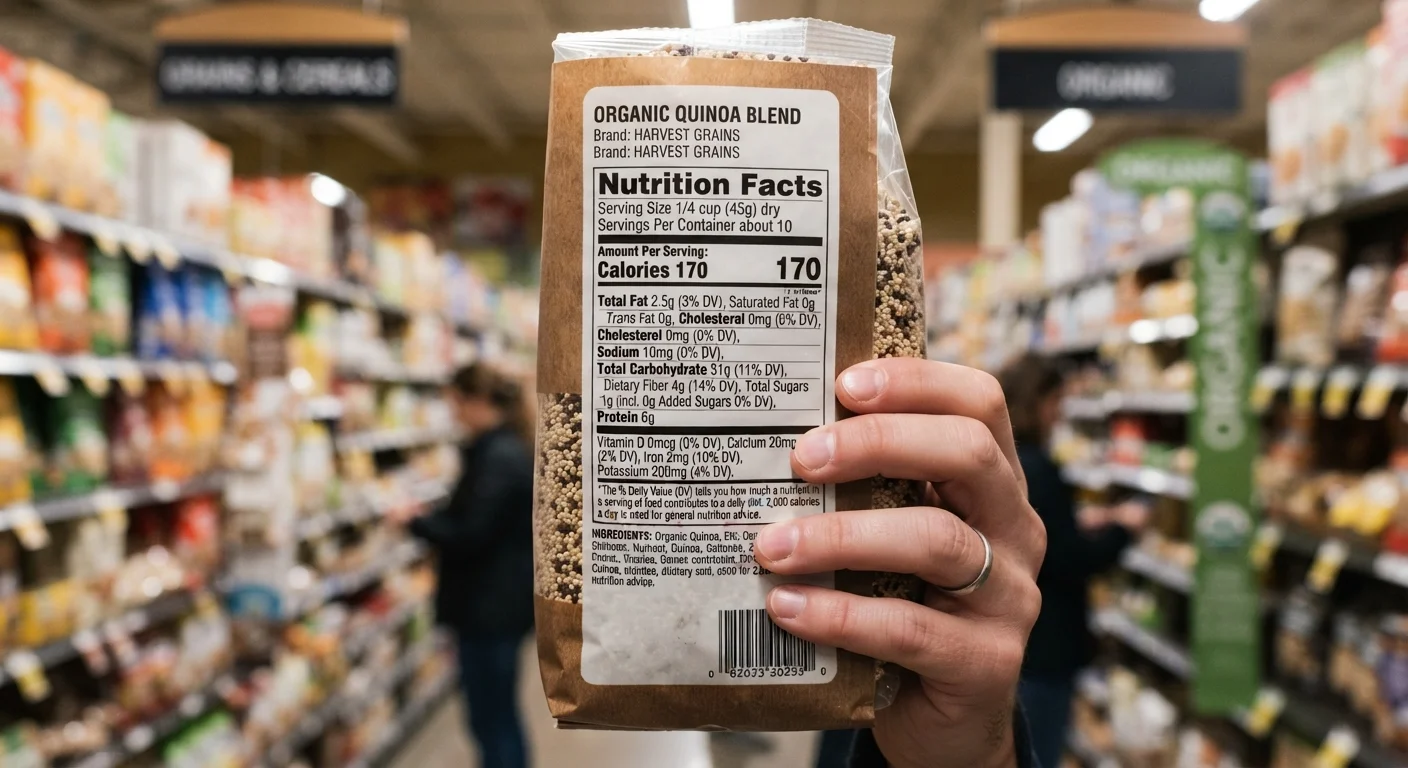
The Nutrition Facts panel has been required on most packaged foods in the United States since 1994, with a significant redesign completed in 2020. Despite decades of exposure, surveys consistently find that shoppers misinterpret key sections - most often the serving size and the % Daily Value column. The result is that a tool designed to clarify becomes a source of confusion.
Part of the problem is that the label packs a lot of information into a small space using shorthand that assumes some background knowledge. This guide walks through each section in the order it appears, explaining what it means and how to use it - without diet ideology or unnecessary complexity. If you find that nutrition headlines often leave you more confused than informed, understanding why nutrition research conflicts can provide useful context.
Labels Reflect Averages, Not Personal Needs
Daily Values on the Nutrition Facts panel are based on a general 2,000-calorie reference diet established by the FDA. Your actual calorie and nutrient needs depend on age, sex, activity level, health status, and other factors. This article is for general educational purposes and is not a substitute for personalized advice from a registered dietitian or healthcare provider.
How to Read the Label, Step by Step
Work through the label from top to bottom. Each section builds on the one above it - the serving size at the top determines what every gram, milligram, and percentage below it actually means.
What you will need
Watch Out for Multiple Servings Per Package
A single-looking package - like a small bottle of juice or a bag of chips - may contain two, three, or more servings. If you consume the entire package, multiply every number on the label by the servings per container. Overlooking this is one of the most common ways calorie and sodium intake gets underestimated.
Start with Serving Size and Servings Per Container
Before any other number makes sense, you need to know what quantity it describes. The serving size at the top of every label is a standardized reference amount set by the FDA - not necessarily a recommended portion. It reflects how much people typically eat in one sitting based on consumption surveys.
Directly below it, servings per container tells you how many of those portions are in the whole package. If a can of soup lists a serving size of 1 cup and contains 2.5 servings, the sodium figure you see applies to just one cup - not the whole can.
Read the Calorie Count in Context
Calories measure the energy a food provides per serving. The number shown is prominent on the updated label format introduced in 2020. Calories alone don't determine whether a food is nutritious - a handful of nuts and a handful of candy may carry similar calorie counts but very different nutrient profiles. For a deeper look at this concept, see how nutrient density reframes food value.
Identify Nutrients to Limit
The middle section of the label lists nutrients most Americans tend to consume in excess. Focus on:
- Saturated fat - linked in research to elevated LDL cholesterol when consumed in large amounts
- Sodium - relevant for blood pressure management across the general population
- Added sugars - distinguished from naturally occurring sugars since the 2020 label update
For a fuller explanation of why added and natural sugars are treated differently, see the distinction between added and natural sugar.
Identify Nutrients to Seek Out
Below the nutrients to limit, the label lists nutrients many Americans under-consume:
- Dietary fiber - supports digestive health and satiety
- Vitamin D, calcium, iron, and potassium - highlighted because deficiencies are common in the U.S. population
For a broader overview of what these and other micronutrients do, the micronutrient quick reference guide offers a concise lookup by vitamin and mineral.
Interpret the % Daily Value Column
The right-hand column expresses each nutrient as a percentage of the recommended daily intake for a person eating 2,000 calories per day. It doesn't tell you the absolute amount - it tells you how much this serving contributes to a full day's intake.
This column is most useful for quick comparison: scanning two cereals side-by-side and checking which delivers more fiber or less sodium per serving takes only seconds once you know where to look.
Check the Ingredient List (Just Below the Label)
The Nutrition Facts panel and the ingredient list work together. Ingredients are listed in descending order by weight - what appears first is present in the greatest amount. If added sugar appears in the first three ingredients under several different names (corn syrup, cane sugar, dextrose), the product is likely high in sugar even if the label number seems modest.
Understanding ingredient lists takes practice similar to reading a recipe - if that kind of label literacy interests you, reading a recipe without getting tripped up covers overlapping skills for decoding food language.
Use the 5%/20% Rule of Thumb
The FDA suggests a general guideline: 5% Daily Value or less per serving is considered low for a nutrient, and 20% or more is considered high. Use this shortcut when scanning labels quickly - aim for high percentages on fiber and vitamins, and low percentages on saturated fat, sodium, and added sugars.
This article is for general informational and educational purposes only. It is not medical or dietary advice. Individual nutrition needs vary. Consult a registered dietitian or qualified healthcare provider for personalized guidance.
The content on this site is provided for informational purposes only and should not be considered a substitute for professional advice. While we strive to provide accurate and up-to-date information, we make no guarantees regarding its completeness or accuracy. Always consult a qualified professional for advice specific to your circumstances before making any decisions.