

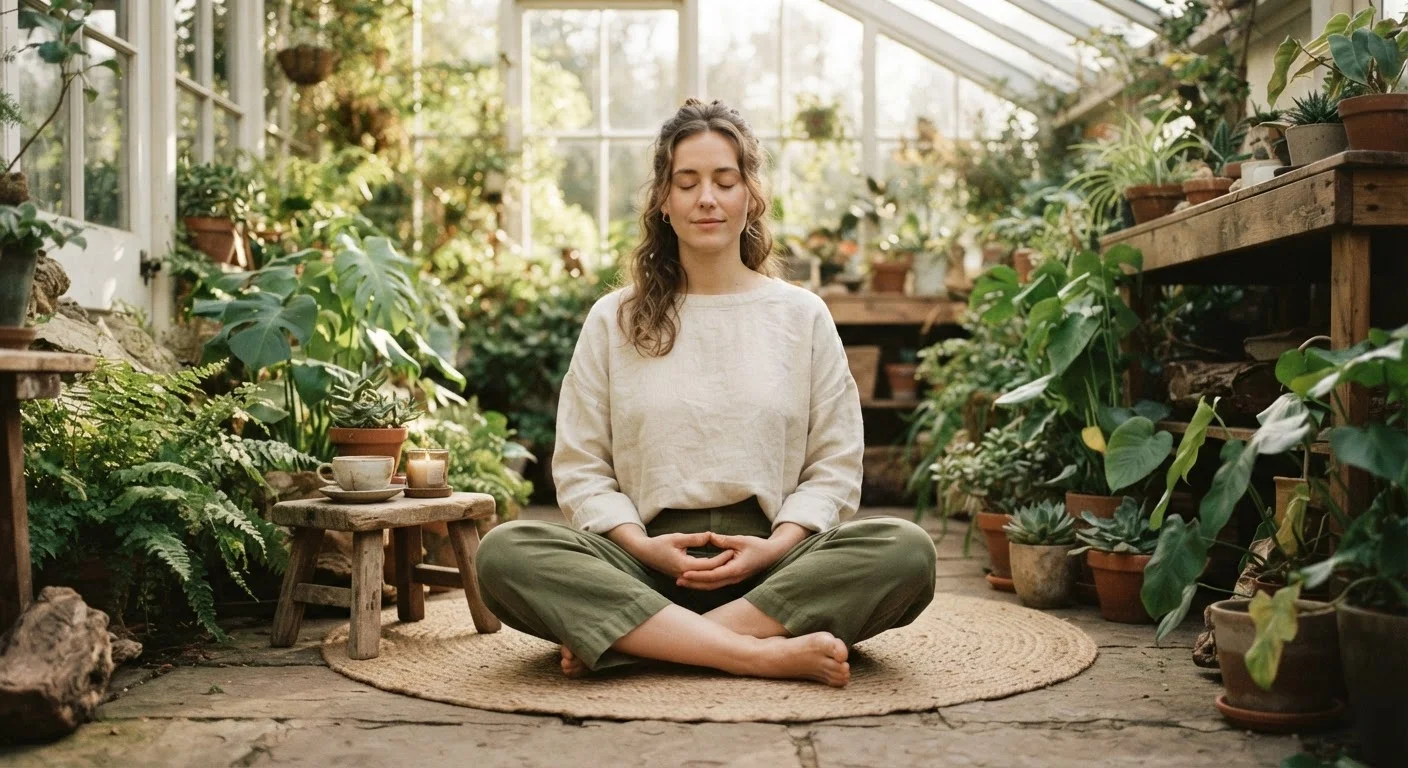
Option A
Mindfulness
A quality of awareness you can bring to any moment.
Best for: People who want to reduce automatic stress reactions throughout their everyday lives without setting aside dedicated practice time.
Option B
Meditation
A structured practice that trains and deepens mental focus.
Best for: People looking to build a deliberate mental wellness habit through regular, dedicated sessions.
What Each Term Actually Means
The words mindfulness and meditation are routinely used as synonyms, but they describe different things. Getting the distinction right makes both practices more useful - not just more accurate.
Mindfulness refers to a quality of attention: deliberately noticing what is happening in the present moment - thoughts, sensations, emotions - without judging or reacting to it automatically. It is not an activity with a start and end time. You can be mindful while washing dishes, waiting in traffic, or having a difficult conversation. The practice is in redirecting attention back to the present whenever it drifts.
Meditation, by contrast, is a formal activity. It involves setting aside time, usually in a quiet environment, to deliberately train mental focus using a structured technique. Some meditation techniques are mindfulness-based - for example, sitting quietly and observing the breath without judgment. Others are not, such as focused-attention practices, loving-kindness meditation, visualization, or mantra repetition.
A helpful way to frame the relationship: mindfulness is a capacity the mind can have at any moment; meditation is one method for strengthening that capacity. You can use our mental health glossary to explore other terms in this space that often get conflated.
How They Compare Side by Side
The practical differences between mindfulness and meditation become clearer when you look at how each shows up in daily life.
| Criterion | Mindfulness | Meditation |
|---|---|---|
| What it is | A quality of present-moment awareness | A structured, time-bound practice |
| When it happens | Any time, during any activity | During a dedicated session |
| Requires a quiet space | No | Usually yes |
| Technique variety | Single core approach | Many techniques (breath, body scan, mantra, etc.) |
| Learning curve | Low - can begin immediately | Moderate - benefits from some guidance |
| Can include the other | Yes, mindfulness can be informal | Yes, many meditations are mindfulness-based |
One important nuance: mindfulness-based meditation programs - such as Mindfulness-Based Stress Reduction (MBSR), developed in clinical settings - deliberately combine both. Participants practice formal seated meditation and apply mindful awareness to everyday activities. This is why the terms get entangled: many popular introductions to meditation teach mindfulness as the core technique.
For readers navigating stress and emotional overwhelm, it is also worth understanding how these practices relate to anxiety. Mindfulness and meditation are wellness tools - they are not treatments for clinical anxiety disorders. See our breakdown of stress vs. anxiety for guidance on telling those apart.
What the Research Suggests
Both practices have a growing evidence base, though it is important to interpret findings carefully. Research on mindfulness and meditation tends to vary in quality, sample size, and methodology - so strong, definitive conclusions remain difficult to draw.
~30%
Reduction in perceived stress reported
A widely cited meta-analysis published in JAMA Internal Medicine found mindfulness meditation programs produced moderate reductions in self-reported stress.
8 weeks
Typical MBSR program length
Mindfulness-Based Stress Reduction, one of the most researched formal programs, is structured as an eight-week group course in clinical and community settings.
~14%
U.S. adults who meditate
National Health Interview Survey data has indicated that roughly 1 in 7 American adults reports practicing some form of meditation.
That said, several well-designed studies and systematic reviews suggest that regular mindfulness practice is associated with measurable reductions in self-reported stress and improvements in attention regulation. Formal meditation programs have shown promise in supporting emotional well-being in clinical and community populations. Neither practice has been shown to replace evidence-based treatment for diagnosed mental health conditions, and individuals experiencing significant distress should consult a qualified healthcare professional.
For those looking to complement these practices with other evidence-informed habits, journaling for mental clarity is another approach worth exploring - with its own benefits and limitations honestly assessed.
This article is for general informational and educational purposes only and does not constitute medical or mental health advice. If you are experiencing significant mental health concerns, please consult a qualified healthcare professional.
The content on this site is provided for informational purposes only and should not be considered a substitute for professional advice. While we strive to provide accurate and up-to-date information, we make no guarantees regarding its completeness or accuracy. Always consult a qualified professional for advice specific to your circumstances before making any decisions.