

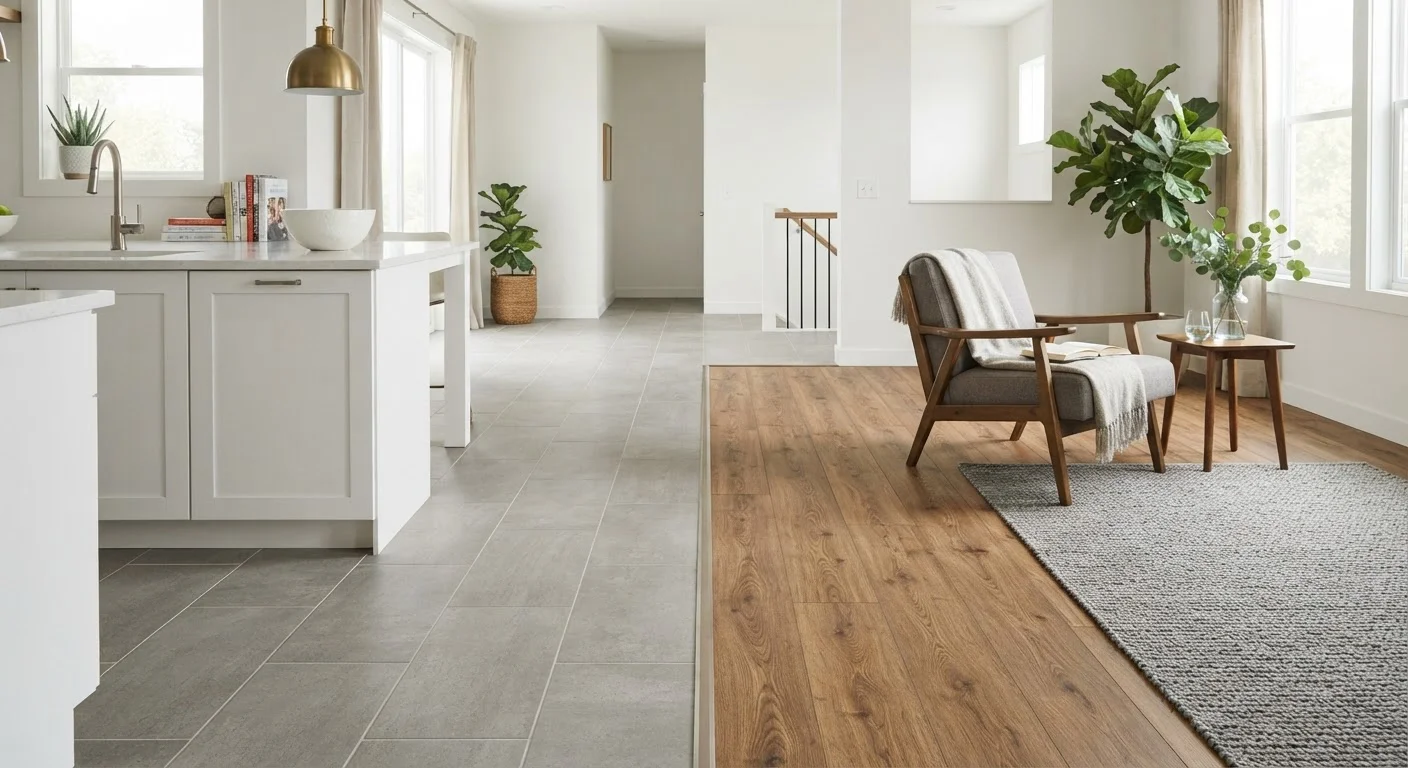
Option A
Ceramic & Porcelain Tile
The time-tested, hard-wearing classic.
Best for: High-moisture rooms, households prioritizing longevity, and homeowners who want a premium, permanent feel underfoot.
Option B
Luxury Vinyl Plank (LVP)
The resilient, comfortable modern alternative.
Best for: Budget-conscious renovators, renters, DIY-friendly installs, and anyone wanting a warmer, softer surface throughout the home.
Understanding What You're Really Comparing
Ceramic and porcelain tile have been a flooring staple for centuries. They're fired-clay products finished with a protective glaze, available in an enormous range of sizes, colors, and textures. Porcelain is denser and absorbs less water than standard ceramic, making it the preferred choice for wet areas.
Luxury vinyl plank is a multilayer synthetic product - typically a rigid core (often stone-plastic composite or wood-plastic composite), a photographic design layer, and a protective wear layer on top. It mimics the look of wood or stone convincingly while offering flexibility that hard materials can't.
Both have earned their place in American homes, but they solve different problems. Understanding those differences protects you from a costly mismatch between floor and lifestyle.
| Criterion | Ceramic & Porcelain Tile | Luxury Vinyl Plank (LVP) |
|---|---|---|
| Water resistance | Fully waterproof (porcelain); grout needs sealing | Highly water-resistant; seams vulnerable long-term |
| Durability | Extremely hard; chips under heavy impact | Dent-resistant; can scratch under sharp loads |
| Installation complexity | High - mortar, backer board, grout required | Low to moderate - click-lock floating system |
| Typical material cost | Moderate to high | Low to moderate |
| Comfort underfoot | Hard and cold without heating | Warmer, slightly cushioned feel |
| Maintenance | Grout sealing and periodic re-grouting needed | Sweep and damp-mop; minimal upkeep |
| Lifespan (well-maintained) | Decades; virtually permanent | 15-25 years depending on wear layer thickness |
| DIY-friendliness | Moderate to difficult | Beginner to intermediate |
Durability, Water Resistance, and Real-World Wear
Tile is exceptionally hard and scratch-proof - a genuine advantage in high-traffic entryways or kitchens. Porcelain, with a water absorption rate below 0.5%, is effectively impervious to moisture. However, the grout lines between tiles are porous and require sealing and periodic maintenance to prevent staining and mold. For guidance on keeping those joints in top shape, see our grout and caulk maintenance guide.
LVP's wear layer resists everyday scuffs and scratches well, though sharp objects or heavy furniture legs with narrow feet can gouge or dent the surface. Most quality LVP products handle spills and humidity effectively, but prolonged standing water - especially at seams or edges - can eventually compromise the core or adhesive in lower-quality options. Look for products with an attached underlayment and sealed edges for the best moisture performance.
0.5%
Max water absorption for porcelain tile
ANSI standards define porcelain as having a water absorption rate at or below 0.5%, making it among the most moisture-resistant flooring materials available.
12 mil+
Wear layer thickness for high-traffic LVP
Flooring industry guidance generally recommends a wear layer of at least 12 mil for residential high-traffic areas and 20 mil for commercial use.
15-25 yrs
Typical LVP lifespan with proper care
Manufacturer warranties and flooring industry estimates commonly place quality LVP longevity in the 15-to-25-year range under normal residential conditions.
Installation, Cost, and the DIY Factor
Installing tile properly is skilled work. The subfloor must be flat, structurally sound, and often covered with a cement backer board before any tile is set. The mortar bed, tile layout, spacers, grout, and sealing process can stretch a kitchen project across several days. While confident DIYers can learn tile installation, mistakes - especially in moisture-prone areas - can be expensive to correct. For hazardous subfloor repairs or significant structural concerns, consulting a licensed contractor is always advisable.
LVP's click-lock floating-floor systems are genuinely DIY-accessible for most homeowners. No adhesive, no grout, no backer board in most cases. A standard room can often be completed in a single day. Material costs for LVP generally run lower than comparable tile, and labor savings are substantial if you do the work yourself. That said, heavily textured or imperfect subfloors may still need leveling compound before installation - skipping that step causes long-term problems regardless of which flooring you choose.
Feel, Comfort, and Living with Your Choice
Tile is cold and hard - qualities that are refreshing in a warm climate but uncomfortable in northern winters or rooms where people stand for long periods. Radiant floor heating systems can resolve the temperature issue, though they add meaningful cost and complexity to any installation.
LVP offers a warmer, slightly cushioned surface. It's quieter underfoot and generally more forgiving when something fragile is dropped. For households with young children, aging adults, or anyone on their feet in the kitchen for extended stretches, this difference in comfort is worth weighing seriously.
Aesthetically, today's LVP patterns are convincing replications of hardwood and natural stone. Tile still holds an edge in authentic texture and visual depth - particularly in spaces where the look of real stone or intricate mosaic work matters to the homeowner.
Subfloor Condition Is Non-Negotiable
No matter which flooring you choose, the subfloor beneath it determines how well the material performs. Tile over a flexing or uneven subfloor will crack at the grout lines - sometimes within months. LVP over a wavy subfloor telegraphs those imperfections and can cause click-lock joints to separate. Always assess and address your subfloor before committing to either material. If you find soft spots, water damage, or significant unevenness, consult a licensed contractor before proceeding.
The content on this site is provided for informational purposes only and should not be considered a substitute for professional advice. While we strive to provide accurate and up-to-date information, we make no guarantees regarding its completeness or accuracy. Always consult a qualified professional for advice specific to your circumstances before making any decisions.