

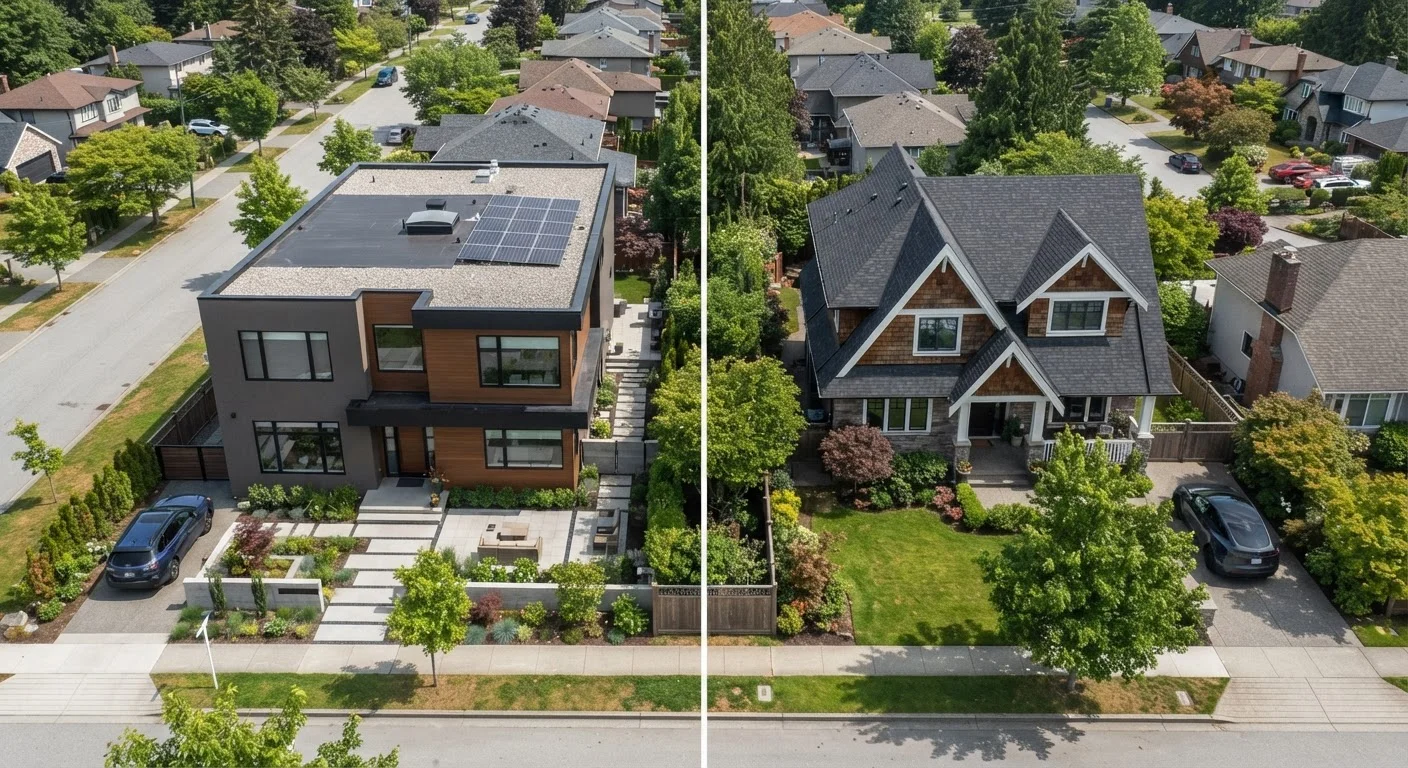
Our Verdict
Neither roof type is inherently low-maintenance - they simply fail differently. Flat roofs demand vigilant drainage management and more frequent material checks, while pitched roofs require attention to shingles, flashing, and gutter health. Your best maintenance strategy depends on your roof's specific material, climate, and age.
| Best for | Recommended |
|---|---|
| Homeowners who prefer less frequent hands-on inspection | Pitched Roof |
| Homeowners in dry or low-precipitation climates | Flat Roof |
| Those wanting longer intervals between full roof replacement | Pitched Roof |
| Homeowners with modern commercial-grade membrane systems | Flat Roof |
How Each Roof Type Handles Water - The Core Difference
Water management is the defining challenge of any roof, and flat and pitched roofs handle it in fundamentally different ways. A pitched roof relies on gravity: rain and snowmelt run down the slope and into the gutters. A flat roof - which is rarely perfectly flat, typically carrying a slight slope of around 1/4 inch per foot - depends on internal drains or scuppers to move water off the surface.
This distinction drives nearly every maintenance difference between the two types. When a pitched roof's drainage system works, water exits quickly. When a flat roof's drainage is even partially blocked, water can pond - sitting in low spots and accelerating membrane deterioration. For a deeper look at how drainage fits into overall home upkeep, see a seasonal home maintenance calendar.
| Flat Roof | Pitched Roof | |
|---|---|---|
| Inspection frequency | Twice yearly + after storms | Annually + after major storms |
| Primary failure point | Ponding water, membrane seams | Damaged shingles, flashing gaps |
| Typical material lifespan | 15-25 years (membrane dependent) | 20-30+ years (shingles); longer for metal/tile |
| Gutter dependency | Drains/scuppers critical | Gutters essential for eave protection |
| DIY-friendly tasks | Debris clearing, visual checks | Ground-level inspection, gutter cleaning |
| Professional repair frequency | Higher - membrane sensitive | Moderate - shingles more accessible |
Flat Roof Maintenance: What to Expect
Flat roofs are commonly surfaced with built-up roofing (BUR), modified bitumen, or single-ply membranes such as TPO or EPDM rubber. Each material has its own maintenance profile, but some principles apply broadly.
- Inspect twice a year - spring and fall - plus after any major storm. Look for blistering, cracking, or seam separations in the membrane.
- Clear drains and scuppers every season. Debris accumulation is the leading cause of ponding water, which can stress the membrane and eventually cause leaks.
- Check flashing carefully. Where the roof meets walls, parapets, or mechanical equipment, flashing is the most common failure point.
- Address ponding promptly. Water that sits for more than 48 hours after rain is a warning sign worth investigating professionally.
DIY-friendly tasks include clearing debris and doing visual inspections from a safe vantage point. Membrane repairs, resealing seams, and anything involving structural drainage components should be handled by a licensed roofing professional.
Don't Ignore Ponding Water
Water pooling on a flat roof for more than 48 hours after rainfall is a sign that drainage is inadequate or the membrane is deflecting. Prolonged ponding accelerates UV and thermal degradation of roofing membranes. Have a licensed roofing professional evaluate the drainage design and membrane condition before the next wet season.
Pitched Roof Maintenance: What to Expect
Pitched roofs - whether covered in asphalt shingles, metal panels, clay tile, or wood shake - benefit from natural water shedding, but they're not maintenance-free. The slope itself can make inspection physically challenging and creates specific wear patterns.
- Inspect annually, ideally in late summer or early fall. Look for missing, curled, or cracked shingles and signs of granule loss in gutters.
- Examine flashing around chimneys, vents, and valleys - these are prime leak entry points regardless of the shingle condition.
- Keep gutters clear. Overflowing gutters can back water up under the eave, causing rot and ice dams in cold climates. See why gutters deserve more attention than they get for a thorough guide.
- Check the attic for daylight, moisture staining, or soft decking - often the first signs of a failing roof visible from below.
Many visual checks can be done from the ground with binoculars or from a ladder at the eave level. Walking on pitched roofs carries fall risk and can damage some materials; leave in-depth inspections and all repairs to qualified roofing contractors.
Lifespan, Costs, and Long-Term Planning
Understanding expected lifespan helps homeowners plan proactively rather than react to emergencies. Material quality, installation standards, climate, and maintenance consistency all influence how long a roof lasts.
15-20 yrs
Typical lifespan of built-up flat roofing
Industry roofing guides generally cite 15-20 years for BUR systems under normal conditions, with single-ply membranes sometimes lasting longer.
25-30 yrs
Expected life of standard asphalt shingles
Most asphalt shingle manufacturers rate architectural shingles at 25-30 years, though actual lifespan varies with climate and maintenance.
~40%
Of roof leaks traced to flashing failures
Roofing industry professionals commonly note that flashing - not the primary roofing material - accounts for a large share of leak origins on both roof types.
Budget for periodic professional inspections - typically every one to three years depending on roof age and type - as part of your overall home maintenance plan. For a comprehensive view of all major systems your home requires, a complete home maintenance overview is a practical starting point. Permits and licensed contractors are commonly required for full roof replacements and significant structural repairs; always verify local building code requirements before beginning any major roofing project.
This article provides general home maintenance information for educational purposes. Always consult a licensed roofing professional before undertaking repairs or replacements, and verify local permit and code requirements with your municipality.
The content on this site is provided for informational purposes only and should not be considered a substitute for professional advice. While we strive to provide accurate and up-to-date information, we make no guarantees regarding its completeness or accuracy. Always consult a qualified professional for advice specific to your circumstances before making any decisions.