

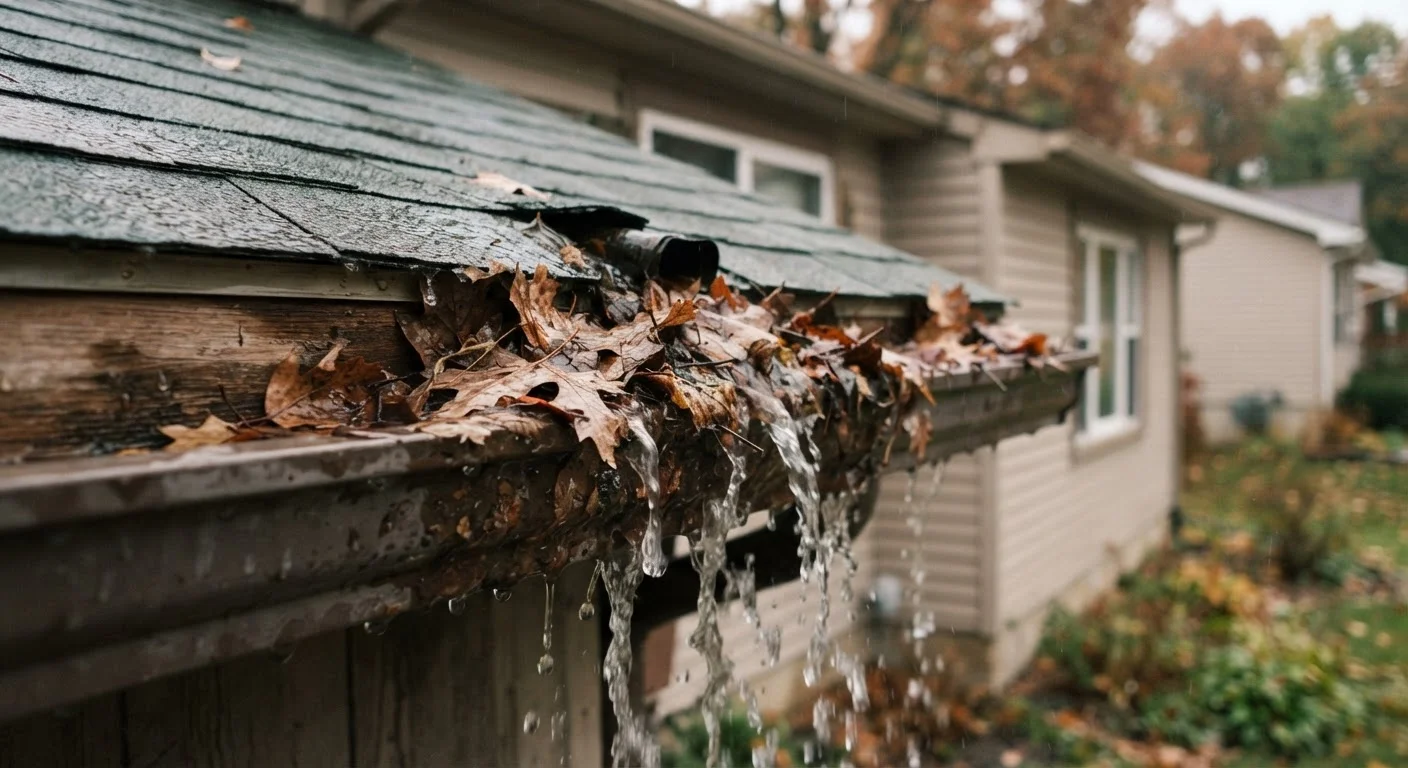
The Hidden Job Gutters Are Actually Doing
Most homeowners think of gutters as simple rain catchers. In reality, a properly functioning gutter system is doing something much more important: it's actively directing water away from your home's most vulnerable points - the roofline, siding, exterior walls, and foundation. When gutters fail, that water has nowhere controlled to go.
The consequences build gradually and quietly. Water that pools near your foundation can seep into basement walls or destabilize the soil beneath your slab. Overflow soaking into fascia boards - the wood trim behind your gutters - can trigger rot that spreads into the roof structure itself. That's a repair that escalates fast. As outlined in our complete home maintenance overview, the gutter system connects directly to the long-term health of your roof, walls, and foundation together.
Best Practices for Keeping Gutters Functional
Following a consistent routine and knowing what to look for turns gutter maintenance from a chore into a straightforward seasonal habit.
Clean gutters at least twice per year - more often if trees overhang your roofline.
Debris accumulation is the most common cause of gutter failure. Leaves, seed pods, and shingle grit compact over time, blocking water flow and adding weight that stresses hangers and joints. Regular clearing keeps water moving as designed.
Inspect and resecure loose hangers and brackets before they cause sagging.
Gutters are pitched slightly toward downspouts so water drains rather than sits. When hangers loosen, sections sag and create low spots where water pools, adding weight and accelerating joint failure. Catching a loose hanger early costs a few minutes and a screw - ignoring it can mean replacing an entire run.
Seal leaking joints and end caps with gutter-specific sealant.
Even minor drips at seams or end caps channel water directly onto the fascia board below, which is particularly vulnerable to rot. Sealing these points when first noticed prevents wood damage that can travel into the roof deck.
Extend downspouts well away from the foundation and verify drainage direction.
A downspout that empties six inches from the house concentrates roof runoff exactly where it can cause the most damage. Proper discharge distance - generally four to six feet minimum - combined with a graded yard prevents water from migrating toward the foundation.
Evaluate gutter guards honestly - they reduce maintenance but don't eliminate it.
Gutter guards (also called covers or screens) slow debris accumulation but allow fine organic matter to pass through over time, eventually requiring cleaning from inside. They're most useful for homeowners who find ladder work difficult or have very heavy tree coverage, but shouldn't be treated as a permanent, maintenance-free solution.
Quick Actions You Can Take This Weekend
You don't need to overhaul your entire gutter system to make a meaningful difference. A few targeted actions done consistently will carry most of the load.
Keep in mind that small deferred fixes compound over time - a lesson that applies across every home system, not just gutters. The principle is the same whether you're dealing with a loose gutter hanger or a slow roof leak: delaying small repairs often creates larger ones.
What Good Gutter Maintenance Looks Like Year-Round
A twice-yearly cleaning schedule - once in late spring and again in late fall after leaves drop - covers most homes adequately. Properties with heavy tree canopy overhead may need quarterly attention. After any major storm, a quick visual check from the ground can catch separated joints or sections that have pulled away from the fascia before they worsen.
Gutters also don't operate in isolation. Your downspouts should extend at least four to six feet from the foundation, and the ground around your home should slope away from the house at a gentle grade. If your yard holds water near the foundation after rain, that's a landscaping issue working against your gutters. Similarly, a well-maintained roof sheds water predictably - if your roof has deteriorating shingles or valleys that channel water unevenly, your gutters will struggle to compensate. See how roof type affects your overall maintenance demands for a fuller picture.
Safety First on the Ladder
Gutter work requires ladder use, which carries real fall risk. Always use a sturdy, properly rated ladder on stable, level ground, and have a second person present when possible. If your roofline is high, sections are difficult to reach safely, or you're uncomfortable with heights, hiring a professional for cleaning and inspection is a reasonable and worthwhile choice. No maintenance task is worth an injury.
The content on this site is provided for informational purposes only and should not be considered a substitute for professional advice. While we strive to provide accurate and up-to-date information, we make no guarantees regarding its completeness or accuracy. Always consult a qualified professional for advice specific to your circumstances before making any decisions.