

Why Water Heaters Get Neglected - and What It Costs
A water heater has one job: deliver hot water quietly and reliably. Because it usually succeeds without drawing attention, most homeowners treat it as a set-and-forget appliance. That invisibility is exactly what makes deferred maintenance so costly. A tank that goes unchecked for years accumulates sediment, develops a depleted anode rod, and may be operating with a seized pressure relief valve - all conditions that shorten its life or create safety risks.
The average tank-style water heater lasts roughly 8 to 12 years under normal use. Skipping basic upkeep can push a unit toward the lower end of that range, or cut it short entirely. The good news: most of the tasks that protect a water heater are simple, infrequent, and require little specialized knowledge. See how water heater care fits into your broader home systems by reviewing the complete home maintenance overview.
The Maintenance Mistakes That Shorten Tank Life
The following mistakes represent the most common - and most avoidable - ways homeowners unknowingly reduce water heater performance and safety. Each one is easy to overlook, but the cumulative effect accelerates wear and can lead to leaks, inefficiency, or complete tank failure.
Never flushing sediment from the tank.
Why it happens: Water heaters are out of sight in basements or closets, so most homeowners simply forget they need hands-on attention. Sediment accumulation is invisible until it causes problems.
Ignoring the anode rod until the tank corrodes from the inside.
Why it happens: Most homeowners have never heard of an anode rod. This magnesium or aluminum rod sacrificially corrodes so the steel tank does not - but once it is depleted, the tank itself becomes the target.
Skipping annual testing of the pressure relief valve.
Why it happens: The TPR valve looks like a minor fitting, so homeowners assume it will work when needed. In reality, valves that are never exercised can seize in the closed position over time.
Setting the thermostat too high and leaving it there.
Why it happens: Some homeowners crank the temperature up for extra-hot showers and never revisit the setting. Others inherit a unit already set too high and assume it is correct.
Failing to check for slow leaks around fittings and the base.
Why it happens: Small drips evaporate quickly in a warm utility room, so the early signs of a connection leak go unnoticed until water damage appears.
Pressure Relief Valves Are a Safety Device
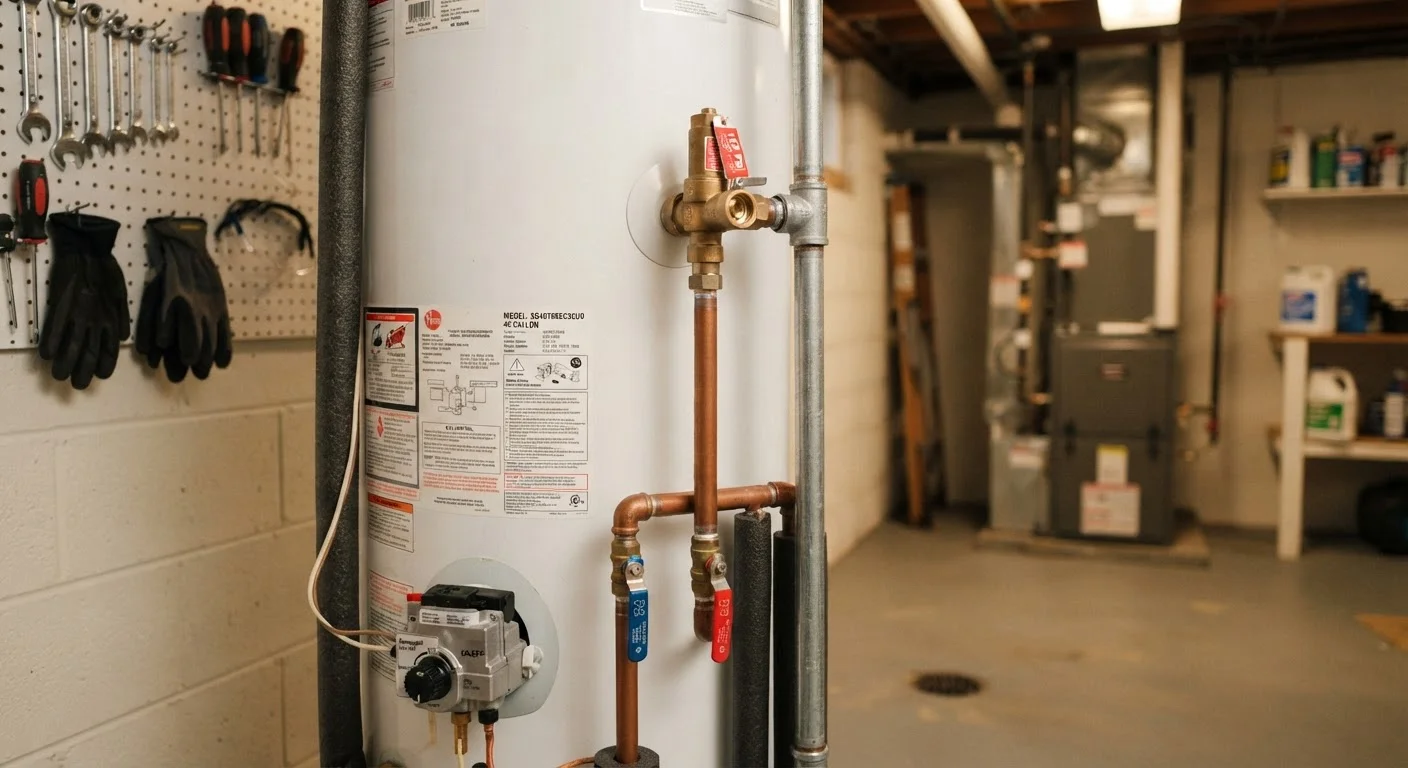
The temperature and pressure relief (TPR) valve prevents dangerous pressure buildup inside the tank. A valve that is seized, corroded, or never tested may fail to open when needed. If your valve leaks continuously after testing or shows visible corrosion, have a licensed plumber replace it before operating the heater further. Do not attempt to cap or bypass the valve.
Building a Simple Maintenance Routine
Consistency matters more than perfection. A water heater only needs a handful of checks each year, and grouping them into a single annual visit makes the task manageable. Consider folding it into your fall or spring home walkthrough - the same period when you service your HVAC system. If you want to understand how forced-air and water heating systems share similar maintenance logic, the guide to HVAC filters and furnace tune-ups is a helpful companion read.
8-12 yrs
Typical tank water heater lifespan
The U.S. Department of Energy notes that regular maintenance is a key factor in whether a unit reaches the top of that range.
~18%
Share of home energy use from water heating
The U.S. Department of Energy estimates water heating accounts for roughly 18% of a home's total energy consumption, making efficiency maintenance financially meaningful.
Write down the date of every check and what you found. A simple notebook entry or phone photo of the dial setting creates a record that supports warranty claims and helps a plumber diagnose any future issues quickly. For more on why documentation pays off, see your home's annual maintenance calendar.
This article is for general informational purposes only. For work involving gas lines, electrical connections, or permit-required plumbing, consult a licensed professional and verify local code requirements before proceeding.
The content on this site is provided for informational purposes only and should not be considered a substitute for professional advice. While we strive to provide accurate and up-to-date information, we make no guarantees regarding its completeness or accuracy. Always consult a qualified professional for advice specific to your circumstances before making any decisions.