

Start here
How a Forced-Air System Actually Works
Next
HVAC Filters: What They Do and When to Change Them
Then
Annual Furnace Tune-Ups: What's Included and Why They Matter
Build confidence
DIY Tasks vs. When to Call a Professional
Put it together
Keeping the Whole System Running Efficiently
How a Forced-Air System Actually Works
Most American homes rely on a forced-air system to heat and cool every room. The concept is straightforward: a single air handler - typically a furnace or air handler unit paired with a central air conditioner - conditions the air, and a blower fan pushes it through a network of ducts to registers (the vents in your floors, walls, or ceilings). Return-air grilles pull stale air back to the unit to be reconditioned and recirculated.
Forced-air system
A heating and cooling setup that uses a blower fan to push conditioned air through ducts and into rooms via vents, rather than using radiant heat or other methods.
Air handler
The indoor unit of an HVAC system - often the furnace or a separate cabinet - that houses the blower, filter, and in some systems the cooling coil.
MERV rating
A standardized scale (1-16 for residential use) that rates how well an air filter captures particles. Higher numbers trap smaller particles but can restrict airflow more.
Heat exchanger
A metal component inside a gas furnace that separates combustion gases from the air you breathe while transferring heat to that air. Cracks are a serious safety concern.
Return-air grille
The large vent (usually wall- or ceiling-mounted) that pulls room air back into the system to be filtered and reconditioned. This is typically where the filter is located.
Condensate drain
A pipe or tube that carries away water produced when the air conditioner removes humidity from indoor air. Algae buildup can cause it to clog and back up.
In heating mode, the furnace burns fuel (usually natural gas or propane) or uses electric resistance coils to heat the air before the blower distributes it. In cooling mode, the air handler works with an outdoor compressor and refrigerant to remove heat from the indoor air. Both functions share the same duct network, which is why maintaining that shared infrastructure - the ducts, blower, and especially the filter - benefits your comfort year-round.
This shared design is also why problems compound quickly. A restricted filter reduces airflow to every room and forces the blower motor to work harder, shortening its life. Understanding this interdependence is the foundation of smart HVAC maintenance. For a broader look at how your home's major systems interconnect, see Home Maintenance From the Ground Up.
HVAC Filters: What They Do and When to Change Them
The air filter sits in the return-air path - either at the air handler itself or behind a return-air grille on a wall or ceiling - and captures dust, pollen, pet dander, and other airborne particles before they reach the blower and heat exchanger. A clean filter protects equipment; a clogged one becomes an airflow dam.
Choosing the Right Filter
Filters are rated by their MERV (Minimum Efficiency Reporting Value). A MERV 1-4 filter captures large debris but little else. MERV 8-11 is the sweet spot for most homes - effective against common allergens without over-restricting airflow. MERV 13 filters approach the performance of hospital-grade units and are appropriate for homes with serious allergy concerns, provided the HVAC equipment can handle the added resistance. Always check your equipment's documentation before stepping up to a high-MERV filter.
Replacement Schedule
- 1-inch filters: Check monthly; replace every 1-3 months.
- 4- to 5-inch media filters: Inspect every 6 months; replace annually or as needed.
- Homes with pets or allergy sufferers: Replace more frequently - often every 4-6 weeks for standard filters.
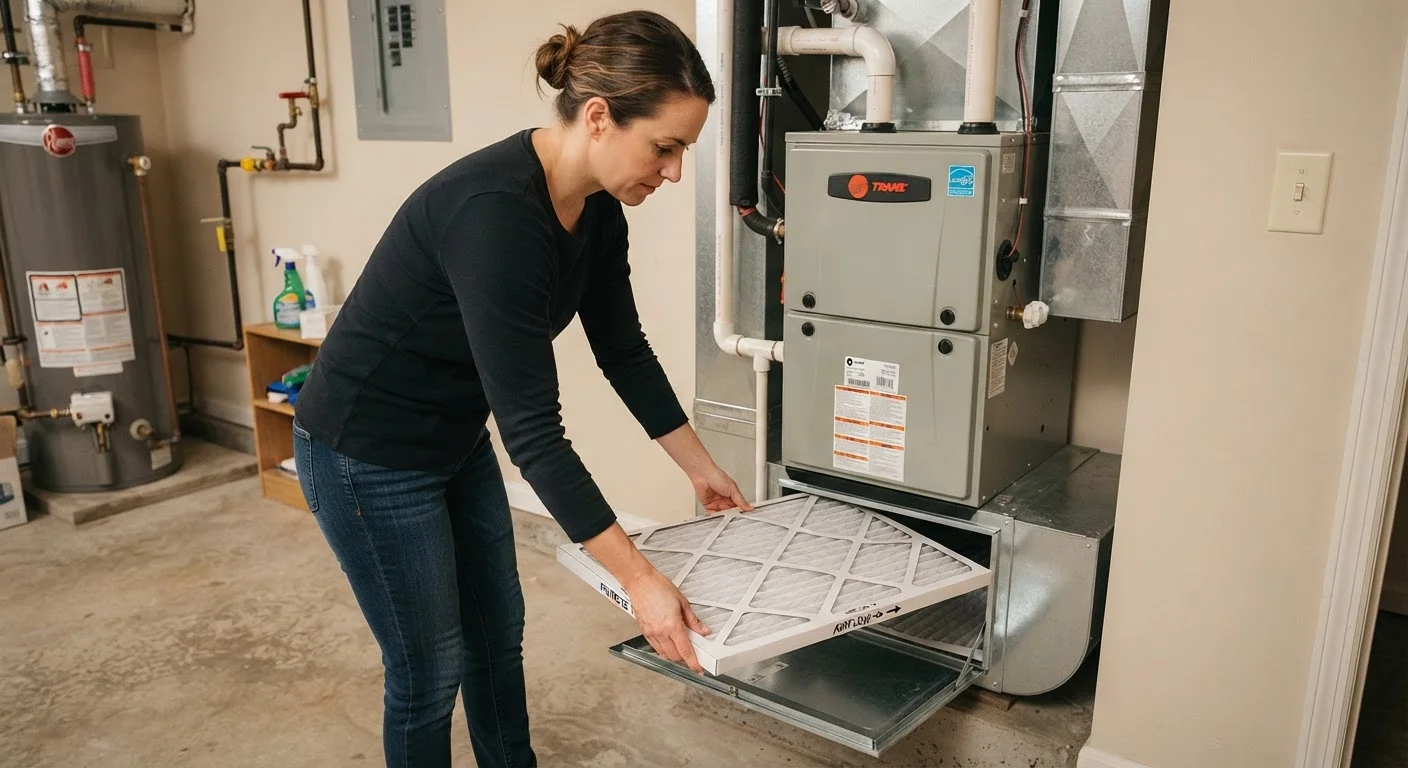
To replace a filter, turn the system off at the thermostat, note the airflow-direction arrow printed on the filter frame, slide out the old filter, and insert the new one with the arrow pointing toward the blower. It takes under five minutes and costs only the price of the filter.
Annual Furnace Tune-Ups: What's Included and Why They Matter
Once a year - ideally before heating season - a licensed HVAC technician should inspect and service your furnace or air handler. This appointment covers tasks that go well beyond what a homeowner can safely do alone.
Schedule Your Tune-Up Before the Rush
HVAC technicians are busiest during the first cold snap of fall and the first heat wave of summer. Booking your furnace inspection in September - or even late August - means shorter wait times and ensures your system is ready before you actually need it. Many HVAC companies offer maintenance plans that include priority scheduling as a benefit.
What a Standard Tune-Up Typically Includes
- Inspecting the heat exchanger for cracks (a cracked exchanger can allow carbon monoxide into living spaces)
- Checking and adjusting gas pressure and burner combustion
- Testing safety controls and limit switches
- Lubricating blower motor bearings where applicable
- Cleaning the burners and flame sensor
- Inspecting the flue pipe and venting for blockages or corrosion
- Verifying thermostat calibration and system controls
For central air conditioning, a spring tune-up typically adds refrigerant level checks, coil cleaning, and condensate drain inspection to the list. Scheduling heating and cooling inspections separately - fall for heating, spring for cooling - keeps each system serviced at its seasonal peak.
These inspections also tie into the broader rhythm of home upkeep. The annual home maintenance calendar is a useful reference for building HVAC service into your yearly routine alongside other seasonal tasks.
DIY Tasks vs. When to Call a Professional
Forced-air maintenance divides naturally into two tiers: what homeowners can handle confidently, and what requires a licensed technician.
Safe for Homeowners
- Replacing the air filter
- Keeping supply and return vents clear of furniture and rugs
- Vacuuming dust from registers and the area around the air handler
- Replacing thermostat batteries and checking programmable schedules
- Pouring a diluted bleach solution down the condensate drain line to prevent algae clogs (check your unit's manual first)
Leave to a Licensed HVAC Technician
- Any work involving gas lines, burners, or the heat exchanger
- Refrigerant handling (legally required to be performed by EPA Section 608-certified technicians)
- Electrical wiring inside the air handler or furnace cabinet
- Duct sealing that requires access inside wall or ceiling cavities
- Diagnosing error codes on modern variable-speed or communicating systems
If you ever smell gas near the furnace, leave the house immediately, avoid operating any switches, and call your gas utility's emergency line from outside. Do not attempt to locate or fix a gas leak yourself.
Keeping the Whole System Running Efficiently
Maintenance doesn't stop at the air handler. The efficiency of a forced-air system depends on the entire envelope - ducts, insulation, and the building shell all play a role. Leaky ducts in an unconditioned attic or crawl space can waste a significant portion of the energy your furnace produces. Sealing obvious gaps at duct joints with mastic sealant or metal-backed tape (not standard duct tape, which degrades quickly) is a legitimate DIY task. Larger duct leakage issues may warrant a professional duct-blower test.
Insulation works hand in hand with your HVAC system. A well-insulated home holds conditioned air longer, reducing how often and how hard your system runs. If your utility bills seem high relative to your neighbors', insulation gaps may be contributing - our article on insulation myths homeowners believe separates fact from fiction and can help you identify where your home might be losing energy.
Finally, consider your thermostat habits. Setting the thermostat back 7-10°F for 8 hours a day - while sleeping or away from home - can meaningfully reduce energy consumption without sacrificing comfort, according to the U.S. Department of Energy. A programmable or smart thermostat makes this automatic.
Taken together, regular filter changes, annual professional service, and attention to the broader building envelope give your forced-air system the best chance of delivering reliable, efficient comfort for decades. Just as water heater maintenance is easy to overlook until something fails, HVAC care rewards the homeowners who stay consistent before problems arise.
Frequently Asked Questions
Most standard 1-inch filters should be replaced every 1-3 months, depending on factors like pets, allergies, and dust levels in your home. Thicker media filters (4-5 inches) often last 6-12 months. Check your filter monthly until you learn how quickly it loads up in your specific home.
MERV stands for Minimum Efficiency Reporting Value and measures how effectively a filter captures airborne particles. Higher MERV ratings (8-13) catch finer particles like pollen and pet dander but can restrict airflow if your system isn't designed for them. Check your equipment manual before upgrading to a very high-MERV filter.
Yes - annual maintenance helps a technician catch cracked heat exchangers, gas pressure issues, and electrical faults before they become safety hazards or expensive failures. Many manufacturer warranties also require documented annual service. It's one of the most cost-effective steps for system longevity.
Homeowners can safely change filters, keep vents clear, vacuum around the unit, and replace batteries in thermostats. Tasks involving gas lines, electrical components, refrigerant, or the heat exchanger should always be handled by a licensed HVAC technician.
Uneven temperatures often point to duct leaks, blocked or closed vents, poor insulation, or an undersized system. A professional can perform a duct inspection or load calculation to diagnose the root cause. Sealing duct leaks and improving insulation frequently resolves the problem.
The heat exchanger is a metal component inside your furnace that transfers heat from combustion gases to the air circulating through your home, keeping those gases separate. A crack in the heat exchanger can allow carbon monoxide to enter your living space, which is why annual inspection by a qualified technician is critical.
The content on this site is provided for informational purposes only and should not be considered a substitute for professional advice. While we strive to provide accurate and up-to-date information, we make no guarantees regarding its completeness or accuracy. Always consult a qualified professional for advice specific to your circumstances before making any decisions.