

Why Insulation Myths Persist - and Why They're Costly
Insulation sits hidden behind walls and above ceilings, making it one of the least-understood systems in a home. Because most homeowners never see it working, misinformation spreads easily - passed along by well-meaning neighbors, outdated contractor habits, or simple misunderstandings of building science. The result is a pattern of under-insulating, over-spending on the wrong solutions, or ignoring genuine performance gaps that drive up energy bills year after year.
The Home Maintenance decisions you make around insulation have a compounding effect. A poorly understood attic can account for a significant share of a home's heating and cooling loss. Getting the facts right isn't just academic - it directly affects your comfort and your utility bills.
Below, we work through the most common insulation myths and replace them with accurate, practical guidance.
Myth
Once insulation is installed, it keeps working indefinitely without any attention.
Fact
Insulation can settle, get wet, become compressed, or harbor pests - all of which significantly reduce its effectiveness over time.
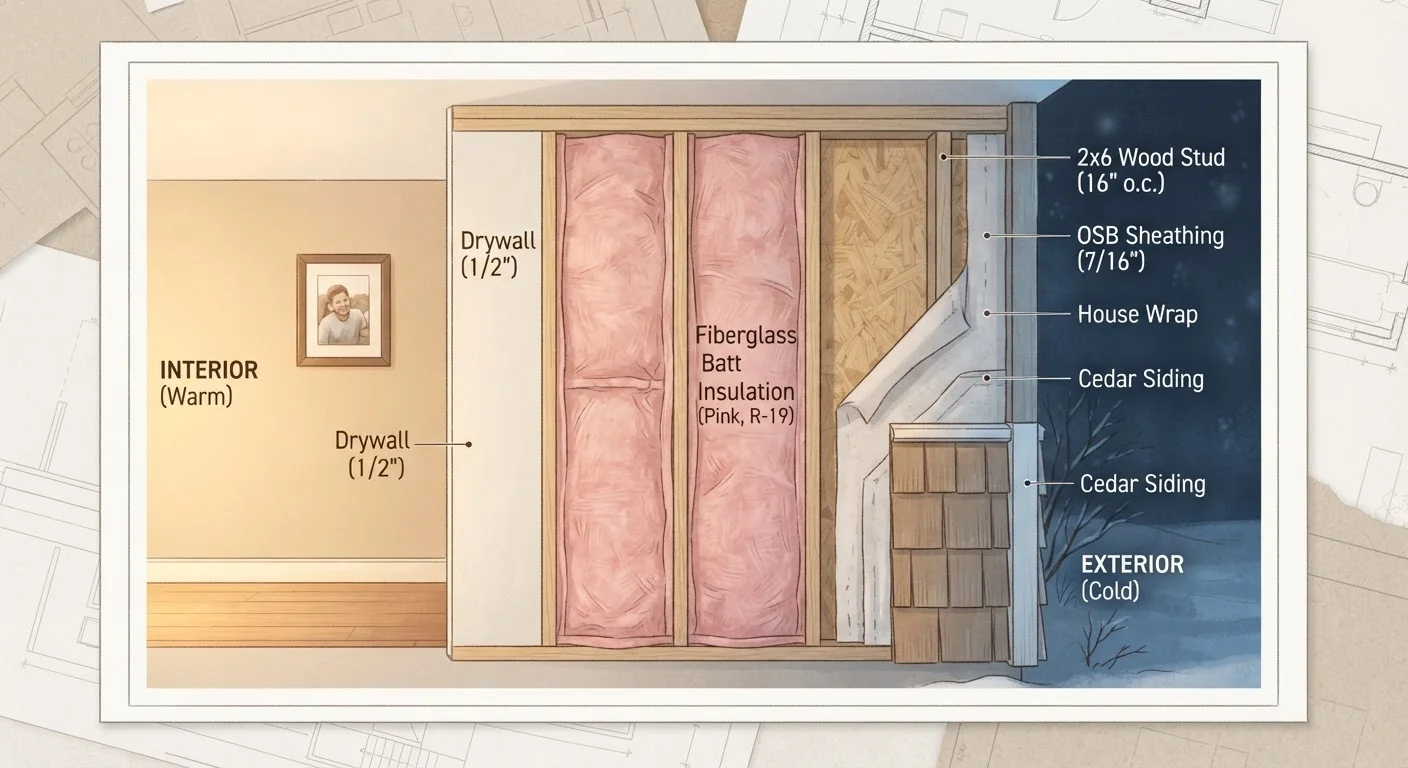
Many homeowners assume insulation is a one-time installation that never needs revisiting. In reality, fiberglass batts can sag and lose contact with surfaces, blown-in cellulose can settle several inches over decades, and any moisture intrusion can permanently damage insulating performance. An attic inspection every five to ten years - or after any roof leak or pest infestation - helps catch degraded insulation before it quietly raises your energy bills.
Myth
A higher R-value product always means better insulation performance in your home.
Fact
R-value measures thermal resistance under ideal lab conditions; real-world performance depends heavily on correct installation, coverage, and air sealing.
R-value (a measure of resistance to heat flow - higher means more resistance) is a useful comparison tool, but gaps, compression, and bypasses around insulation can eliminate much of its benefit. A batt compressed to fill a thinner cavity loses R-value proportionally. Similarly, insulation does not stop air movement; a high-R-value attic with unsealed penetrations can still allow significant conditioned air to escape. Installation quality and air sealing matter at least as much as the R-value rating on the package.
Myth
Insulation is only important in cold climates - it doesn't help much in warm regions.
Fact
Insulation slows heat transfer in both directions, keeping homes cooler in summer just as effectively as it keeps them warmer in winter.
Heat naturally moves from warmer areas to cooler ones. In summer, that means heat from a hot attic or sun-baked walls pushes into your air-conditioned living space. Adequate insulation resists that transfer, reducing the workload on your cooling system. Homeowners in hot climates - including the Sun Belt - often see meaningful reductions in air conditioning costs after properly insulating attics and walls. Climate zone recommendations from the Department of Energy reflect both heating and cooling needs.
Myth
Vapor barriers should be installed everywhere to prevent all moisture problems.
Fact
Vapor barriers are appropriate only in specific locations and climates; installing them in the wrong place can trap moisture and cause mold or rot.
A vapor barrier (a material that resists the diffusion of water vapor through walls or floors) is a useful tool in specific contexts - such as over exposed earth in a crawl space or on the warm-in-winter side of wall assemblies in very cold climates. However, placing vapor barriers indiscriminately, especially in mixed or warm climates, can trap moisture inside wall cavities and lead to structural damage or mold growth. Building science guidance on vapor control is climate-specific; consult your local building code or a qualified building performance professional before adding barriers.
Myth
Spray foam insulation is always the superior choice over other insulation types.
Fact
Spray foam offers specific advantages in certain applications, but it is not universally the best choice for every situation or budget.
Closed-cell spray foam delivers high R-value per inch and also acts as an air barrier, making it valuable in tight spaces like rim joists and cathedral ceilings. However, it is significantly more expensive than blown-in or batt insulation, and open-cell spray foam has a lower R-value than closed-cell. In accessible attic floors with adequate depth, blown-in insulation is often the most cost-effective solution. The right insulation type depends on the location, climate, budget, and whether you need air-barrier properties as well as thermal resistance.
Myth
Adding insulation will make your house so airtight it becomes unsafe.
Fact
Insulation itself does not seal air - and modern building codes require mechanical ventilation in tightly sealed homes to maintain indoor air quality.
This myth conflates insulation with air sealing, which are two different interventions. Insulation slows heat transfer; air sealing closes gaps and cracks that allow air movement. A well-insulated but leaky home still loses conditioned air constantly. When a home is tightened significantly through both measures, current building codes and best practices call for controlled mechanical ventilation - such as an energy recovery ventilator (ERV) - to provide fresh air without sacrificing efficiency. Tighter, well-ventilated homes are healthier, not less safe.
What Good Insulation Practice Actually Looks Like
Correcting these myths points toward a clear set of priorities. First, air sealing and insulation work together - sealing gaps around outlets, plumbing penetrations, and attic hatches before adding insulation dramatically improves performance. The U.S. Department of Energy recommends addressing air leaks before upgrading insulation levels for exactly this reason.
When to Call a Professional Instead
Insulation work in areas with existing mold, asbestos (common in homes built before 1980), knob-and-tube wiring, or significant moisture damage should always be evaluated by a qualified professional before any DIY improvement. Disturbing asbestos-containing insulation materials without proper containment is a serious health and legal hazard. When in doubt, have the area inspected before proceeding.
Second, attic insulation is typically the highest-return upgrade available to homeowners. Most older American homes fall short of current recommended R-values for their climate zone. Adding blown-in cellulose or fiberglass to an accessible attic floor is one of the more straightforward insulation improvements a determined DIYer can tackle - though always verify there are no existing moisture issues or knob-and-tube wiring before proceeding, and consult a professional if either is present.
Third, pair insulation improvements with related upgrades. Sealing drafts around doors and windows addresses air infiltration that insulation alone cannot fix. Similarly, a well-maintained HVAC system distributes conditioned air more effectively through an insulated envelope - see our guide on HVAC filters and furnace tune-ups for context. And before winter sets in, reviewing your full winterizing checklist ensures insulation improvements are part of a coordinated plan.
90%
U.S. homes estimated to be under-insulated
According to the North American Insulation Manufacturers Association, roughly nine in ten American homes lack adequate insulation, leaving significant energy savings untapped.
Up to 30%
Potential heating and cooling savings from air sealing and insulation
The U.S. Department of Energy estimates that homeowners can save up to 30% on heating and cooling costs by addressing air leaks and upgrading insulation together.
Insulation myths cost homeowners real money. Replacing those myths with sound building-science principles puts you in control of a genuinely impactful home upgrade.
The content on this site is provided for informational purposes only and should not be considered a substitute for professional advice. While we strive to provide accurate and up-to-date information, we make no guarantees regarding its completeness or accuracy. Always consult a qualified professional for advice specific to your circumstances before making any decisions.