

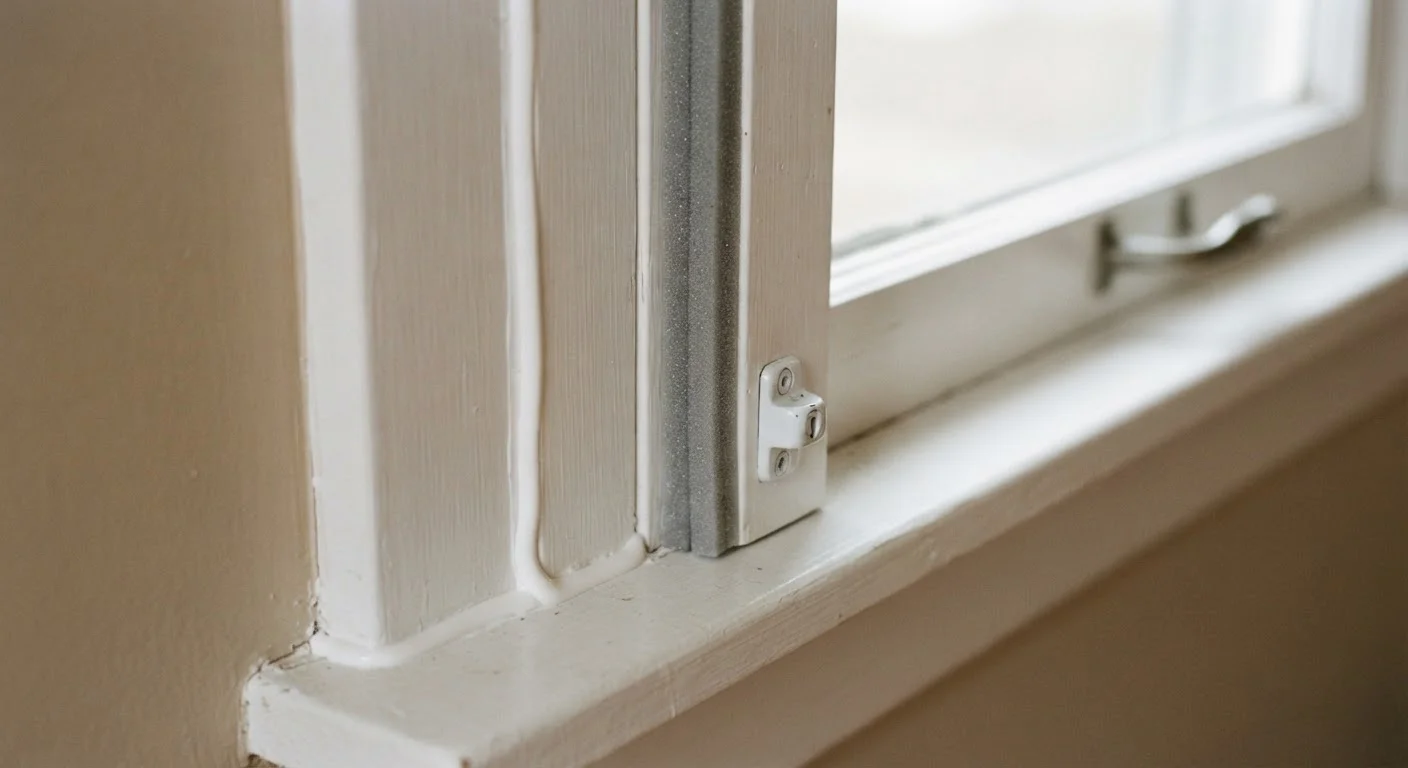
Option A
Caulk
The permanent gap-filler for stationary joints and cracks.
Best for: Best for sealing fixed, non-moving gaps around window frames, door casings, and exterior trim where rigid, weatherproof adhesion is needed.
Option B
Weatherstripping
The flexible, compressible seal for moving parts.
Best for: Best for the edges of operable doors and windows where surfaces open, close, and compress repeatedly over time.
Why the Distinction Matters
Drafty doors and windows are among the most common sources of energy loss in American homes, yet the fix is frequently misapplied. Homeowners sometimes reach for caulk to seal a door bottom that needs a door sweep, or apply weatherstripping tape to a static wall crack that demands a bonded, rigid seal. Both materials stop air and moisture - but in fundamentally different ways, and in different locations.
The core principle is simple: caulk belongs on surfaces that don't move; weatherstripping belongs on surfaces that do. Applying caulk to a moving joint means it will crack and peel within months because it cannot flex with the motion. Applying compressible weatherstripping to a fixed crack means the gap will never be fully sealed, because the strip isn't designed to bond and fill irregular voids.
Understanding this distinction lets you diagnose draft problems accurately - and fix them with confidence the first time. For a broader look at what gaps and other signs around your home might indicate, see what common household quirks are telling you.
| Criterion | Caulk | Weatherstripping |
|---|---|---|
| Best application | Stationary gaps and joints | Moving door and window edges |
| Flexibility | Rigid once cured | Compresses and rebounds repeatedly |
| Typical locations | Frame-to-wall seams, exterior trim | Door perimeters, operable sash edges |
| Durability | 5-20 years depending on type | 2-5 years with regular use |
| DIY difficulty | Low - basic caulk gun technique | Very low - cut, peel, and press |
| Fails when misused as | A seal for moving joints (cracks) | A filler for rigid, static gaps |
When and How to Use Caulk
Caulk is a sealant that bonds to two adjacent surfaces and cures to form a continuous, airtight and watertight bead. It is the right choice wherever two stationary building materials meet and leave a gap - think the joint between a window frame and interior drywall, the seam where door trim meets the wall, or the exterior gap between siding and a window casing.
Choosing the Right Type
- Silicone caulk - highly durable and waterproof; ideal for exterior seams and areas exposed to moisture. Not paintable in most formulations.
- Latex or acrylic caulk - easier to apply and tool, paintable, and easier to clean up. Best for interior trim joints.
- Paintable silicone blends - offer durability with the paintability of latex; a practical middle-ground for exterior trim you plan to paint.
Application Tips
- Remove all old, cracked caulk with a putty knife or caulk remover tool before applying fresh material.
- Clean and dry the surface thoroughly - caulk won't adhere well to dust, grease, or moisture.
- Apply a steady, continuous bead; tool it smooth with a dampened finger or a caulk tool before it skins over.
- Allow full cure time (typically 24-48 hours for silicone) before exposing the joint to moisture or painting.
For related guidance on using caulk in wet areas indoors, our guide on grout, caulk, and tile explains how these materials work together in bathrooms.
When and How to Use Weatherstripping
Weatherstripping compresses to form a seal when a door or window closes, then relaxes when it opens - that physical flexibility is what makes it effective on moving parts. It is the correct solution for the perimeter of an exterior door, the edges of an operable window sash, or an attic access hatch that you open and close regularly.
~30%
Of home heating and cooling lost through air leaks
The U.S. Department of Energy estimates that drafts around windows, doors, and other openings can account for roughly 25-30% of residential heating and cooling energy use.
$200-$600
Estimated annual energy savings from air sealing
According to the U.S. Department of Energy, thorough air sealing combined with insulation improvements can produce meaningful savings on annual utility bills for many homeowners, though results vary by climate and home size.
Common Weatherstripping Types
- Foam tape - inexpensive, easy to cut and stick, suitable for low-traffic windows and door stops. Compresses flat but wears relatively quickly.
- V-strip (tension seal) - a folded strip of metal or plastic that springs open to fill gaps; durable and well-suited to window channels and the hinge side of doors.
- Door sweeps - attached to the bottom of a door to seal the gap at the threshold; available in several configurations including automatic drop-down versions.
- Bulb or tubular gasket - a hollow tube that compresses against a stop; commonly found on door perimeters in newer homes and highly effective.
Replacement Tips
- Peel or unscrew the worn strip completely before installing new material - layering over old weatherstripping prevents a proper seal.
- Measure the door or window perimeter carefully and cut pieces to length before peeling any adhesive backing.
- Test the fit by closing the door slowly and feeling for resistance - the new strip should compress noticeably without making the door hard to latch.
Making Caulk and Weatherstripping Work Together
Most drafty doors and windows actually need both materials - applied in their correct zones. A typical exterior door assembly illustrates this well: the door frame (the fixed wood casing around the opening) may have small gaps where it meets the siding or interior drywall - those gaps call for caulk. The door itself needs weatherstripping around the perimeter stop and a sweep at the bottom - because those surfaces move every time the door is operated.
Working through a doorway or window systematically - inspecting fixed joints separately from operable edges - helps you identify exactly what each gap needs. Seasonal inspections are worthwhile, since temperature swings cause materials to contract and expand, reopening seams that looked fine six months ago. A similar habit of seasonal attention applies to your vehicle; seasonal car care guidance covers how to apply that same proactive mindset to maintenance routines.
For context on how sealing fits into your home's broader thermal performance, understanding insulation realities can help you see how air sealing and insulation work as complementary systems - not substitutes for each other.
With a tube of the right caulk and a fresh length of weatherstripping, most homeowners can fully address a drafty door or window in an afternoon - no special tools or trade skills required.
The content on this site is provided for informational purposes only and should not be considered a substitute for professional advice. While we strive to provide accurate and up-to-date information, we make no guarantees regarding its completeness or accuracy. Always consult a qualified professional for advice specific to your circumstances before making any decisions.