

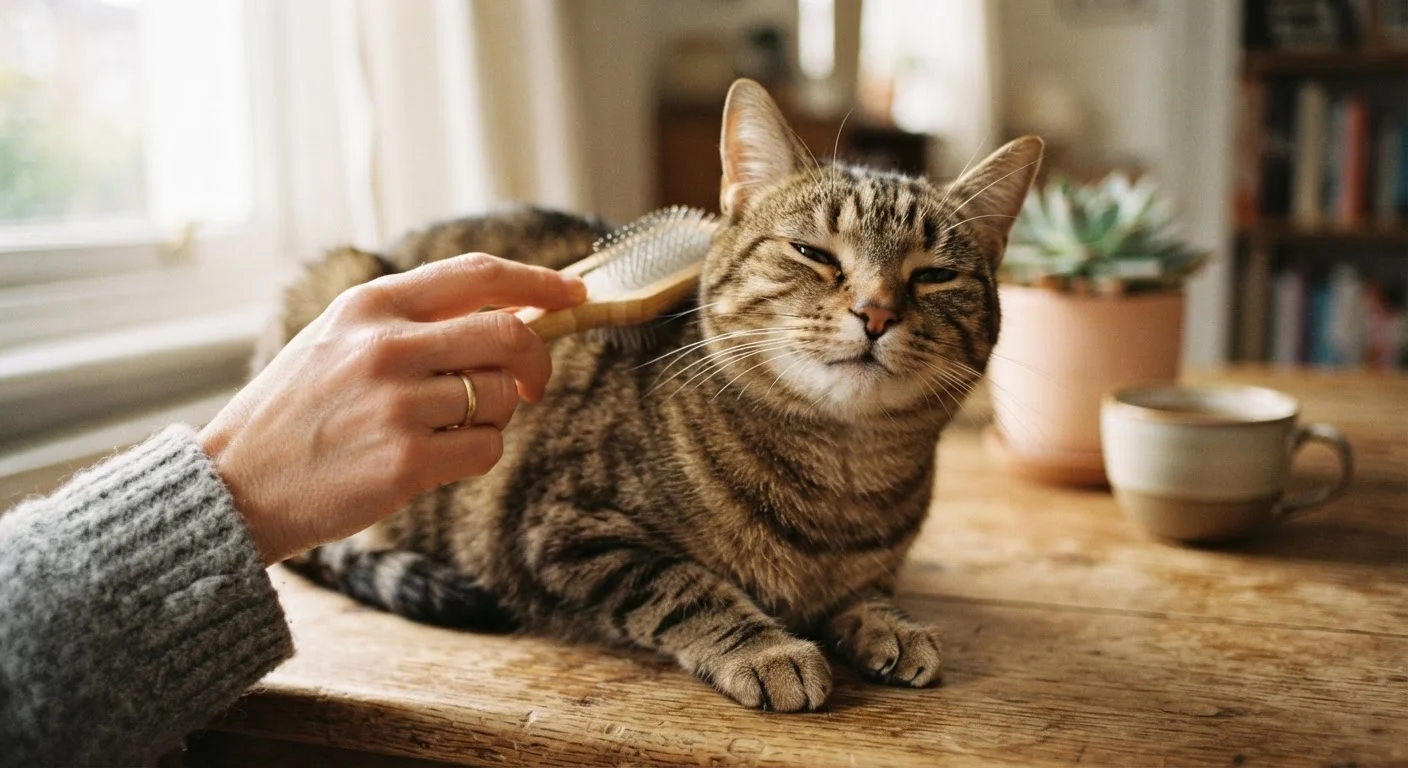
Why Home Grooming Matters
Cats are famously self-cleaning, but that does not mean they never need help. Regular brushing reduces hairballs, prevents painful matting, and gives you a chance to spot skin changes, lumps, or parasites early. Nail trims protect your furniture and prevent nails from curling into the paw pad - a genuinely painful condition. Ear checks can catch problems before they become infections.
The challenge for most owners is not the tasks themselves but the cat's resistance. That resistance is usually a training and timing issue rather than an immovable personality trait. Understanding a little about what your cat is communicating makes it much easier to work with her instead of against her.
Start Young When You Can
Kittens introduced to handling, brushing, and paw touching early in life tend to be far more cooperative adults. If you are setting up your home for a new cat, begin brief, gentle handling sessions from the first week. For adult cats with no grooming history, patience and very gradual exposure are the keys - progress will be slower but is still achievable.
Before you begin, gather the right equipment. Using the wrong tools - dull clippers, a dog brush - makes the experience harder for both of you.
Slicker brush or de-shedding comb
Removes loose fur and prevents mats, especially in medium- and long-haired cats.
Rubber grooming mitt
A gentler alternative for short-haired cats or cats sensitive to bristle brushes.
Cat nail clippers (scissor or guillotine style)
Designed to cut cleanly through a cat's nail without crushing or splintering.
Styptic powder
Stops minor bleeding quickly if a nail is accidentally trimmed too short.
Cotton balls or gauze pads
Used to gently wipe the outer ear canal during routine ear inspection.
High-value treats
Rewards calm behavior and creates a positive association with grooming over time.
Step-by-Step Grooming Routine
The following steps cover the core tasks most cats need regularly: coat brushing, nail trimming, and ear inspection. Work through them in order when your cat is calm, or tackle one task per session if that suits your cat better. Always have your prerequisite supplies within arm's reach before you start so you are not reaching across the cat mid-session.
What you will need
Choose the right moment
Timing matters more than most owners realize. Groom your cat when she is naturally calm - after a meal, during a regular rest period, or following a play session. Avoid grooming a cat who is alert, actively playing, or showing signs of agitation such as a lashing tail or flattened ears. Starting with a relaxed cat dramatically increases your chances of a smooth session. Keep early sessions to just two or three minutes to build positive associations gradually.
Brush the coat from head to tail
Place your cat in your lap or on a stable, comfortable surface. Begin brushing at the neck and work toward the tail, following the direction of fur growth. Use gentle, short strokes rather than long, forceful passes. Pay attention to areas prone to matting: behind the ears, under the armpits, and around the collar area. For long-haired cats, hold the fur near the skin when working through tangles to reduce pulling. Short-haired cats generally need brushing once or twice a week; long-haired cats typically benefit from daily attention.
Trim the nails safely
Gently press each toe pad to extend the nail. You will see a clear or white tip and, inside the nail, a pinkish area called the quick - this contains blood vessels and nerves. Clip only the clear tip, staying at least 2 mm away from the quick. Work on one paw at a time and reward your cat between paws. You do not need to trim all nails in a single session; splitting it across two or three short sessions is completely fine. Aim to trim every two to three weeks for most indoor cats.
Check and clean the ears
Hold your cat gently and fold one ear flap back to examine the outer ear canal. A healthy ear is pale pink, clean, and odor-free. Use a dry cotton ball or gauze pad to wipe away any visible surface debris from the outer ear only. Do not insert anything into the ear canal. You are looking for signs that warrant a vet visit: dark brown or black discharge, a strong or unusual odor, redness, swelling, or your cat shaking her head and scratching at her ears frequently. These can indicate ear mites, infection, or another condition that needs professional diagnosis.
End on a positive note
Finish every session - even a short one - with a treat and calm praise. Put the tools away and let your cat move away freely rather than restraining her until you decide the session is over. Over repeated sessions, most cats learn that grooming predicts something pleasant, and their tolerance gradually increases. Consistency matters far more than duration: a two-minute brush three times a week builds a cooperative cat more reliably than a monthly struggle.
Know When to Call a Professional
Some cats - due to temperament, past handling history, or pain - cannot be safely groomed at home without risk of injury to the cat or the owner. If your cat growls, bites, or becomes highly distressed, stop the session immediately. A certified cat groomer or your veterinarian can assist, and in some cases a vet visit is warranted to rule out underlying pain as the cause of resistance. Routine vet care pairs closely with home grooming; see our complete veterinary visit guide for what to discuss at checkups.
Avoid Human Grooming Products
Shampoos, conditioners, ear cleaners, and other products formulated for humans - or even for dogs - can be harmful to cats. Cats are sensitive to many ingredients, including certain essential oils and detergents. If you need to bathe your cat or use a topical product, use only formulas specifically labeled as safe for cats, and consult your veterinarian if you are unsure.
For context on how scratching behavior relates to nail health and natural claw use, our article on why cats scratch is a useful companion read.
The content on this site is provided for informational purposes only and should not be considered a substitute for professional advice. While we strive to provide accurate and up-to-date information, we make no guarantees regarding its completeness or accuracy. Always consult a qualified professional for advice specific to your circumstances before making any decisions.