

The Real Reasons Cats Scratch
When your cat drags their claws down the arm of the couch, it is easy to read it as stubbornness. It isn't. Scratching serves four distinct, legitimate purposes that are hardwired into feline biology.
- Claw maintenance. Cats' claws grow in layers. Scratching strips the outer sheath and reveals the sharper layer underneath - a process called husk removal.
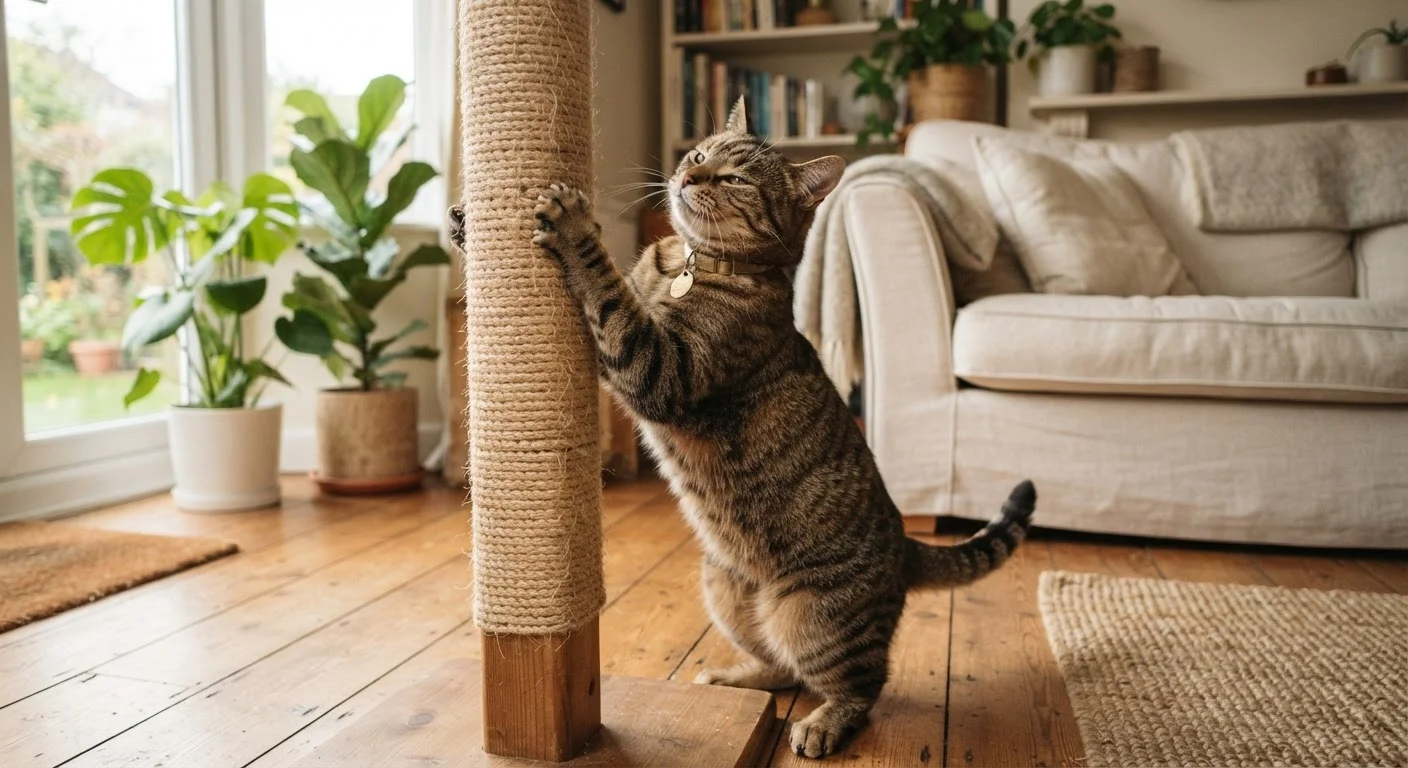
- Full-body stretch. Watch a cat scratch a tall post: they extend their spine, shoulders, and forelegs simultaneously. It functions like a yoga pose that keeps muscles supple.
- Territory marking. The interdigital scent glands in a cat's paws deposit pheromones onto whatever surface they scratch, broadcasting a chemical message to other animals. The visual scratch marks reinforce this signal.
- Emotional regulation. Many cats scratch after waking, before play, or during moments of excitement. It appears to help them discharge arousal and transition between mental states.
Understanding these drivers changes the framing entirely. Your cat is not misbehaving - they are doing what cats do. As with litter box problems, scratching is rarely about defiance.
Scratching Behavior Can Signal Stress
A sudden increase in scratching intensity or frequency - especially if paired with hiding, appetite changes, or altered litter box habits - may point to an underlying stressor or health issue rather than a behavioral problem. If the pattern changes noticeably, a veterinary conversation is worthwhile. This is general information and not a substitute for professional veterinary advice.
How to Redirect Scratching Effectively
The most reliable approach is to make the appropriate surface more attractive than the inappropriate one - not to make the inappropriate surface terrifying. Punishment (spraying water, loud noises, shouting) rarely changes the behavior and can erode your cat's trust in you.
Choose the Right Scratcher
Cats have strong material and orientation preferences. Common options include sisal rope, corrugated cardboard, and carpet. Some cats prefer to scratch vertically; others prefer a flat or angled surface. If your cat targets the carpet, try a horizontal cardboard scratcher. If they go for the couch back, a tall vertical post may be the better match.
Height matters: a post must be tall enough for your cat to fully extend - typically at least 28-32 inches for an average adult cat. Instability is a dealbreaker; a post that wobbles will be abandoned immediately.
Location Is Everything
Place scratching posts where your cat already spends time, not in a spare-room corner. Near their sleeping spot, beside the sofa they currently target, or adjacent to an entry point are all productive placements. Territory marking is socially motivated - cats want to scratch in visible, trafficked areas.
Use Positive Reinforcement
When your cat uses the designated scratcher, reward them promptly with a treat, praise, or play. This association forms quickly. You can also sprinkle a small amount of catnip on a new post to make it initially appealing. If indoor boredom is amplifying destructive scratching, enrichment strategies for indoor cats can help address the root cause.
~90%
Cat owners reporting some furniture scratching
Industry behavioral surveys consistently find furniture scratching among the most commonly reported feline behaviors by household cat owners in the US.
28-32 in
Recommended minimum scratcher height for most adult cats
Veterinary behaviorists generally recommend posts tall enough to allow full spinal extension, which most cats cannot achieve on short or tabletop-sized scratchers.
Every 2-4 weeks
Ideal nail trimming frequency for indoor cats
Regular trimming is recommended by veterinary professionals to minimize furniture damage and reduce the risk of nails curling into paw pads.
Protecting Furniture in the Meantime
While your cat is learning to prefer their new scratcher, a few temporary measures can limit damage to furniture without harming or frightening them.
- Double-sided tape or plastic film. Applied to the exact surface being targeted, these create an unappealing texture without causing distress. Remove them once the preferred scratcher habit is established.
- Deterrent sprays. Citrus-based sprays on fabric surfaces discourage scratching for many cats. Test any product on a hidden patch of fabric first.
- Nail trimming. Regular nail trims reduce the physical damage even when scratching continues. Most cats can be gradually conditioned to accept this with patience - our at-home grooming guide walks through the process calmly and step by step.
- Soft nail caps. Vinyl caps that glue over the nail tips are available and can reduce furniture damage. They require reapplication every four to six weeks and are not suitable for all cats - discuss with your veterinarian first.
One option that should be taken off the table: declawing. The procedure removes the distal bone of each toe and is associated with chronic pain, altered movement, and increased aggression or litter box avoidance. The American Association of Feline Practitioners (AAFP) opposes it as an elective procedure. If you've noticed any sudden behavioral shifts alongside scratching changes, it is worth reviewing the warning signs that may indicate an underlying illness.
Frequently Asked Questions
Cats prefer surfaces that feel satisfying to dig into and are located in socially significant spots - near resting areas or by doors. If a post is wobbly, too short, or placed in an ignored corner, your cat will find something better. Try a taller, sturdier post placed near the furniture they currently target.
Sometimes. While scratching is always normal, a sudden increase in the behavior can signal elevated stress or anxiety. If scratching spikes alongside other changes in appetite, hiding, or litter box use, a veterinary checkup is a reasonable next step.
No - and attempting to do so would be counterproductive. The goal is to redirect scratching to appropriate surfaces, not to eliminate an innate behavior. Consistent positive reinforcement when your cat uses a designated scratcher is far more effective than any form of correction.
Many citrus-based or commercially available deterrent sprays are considered safe for use on upholstery, though you should always test on a small hidden area first. They work best when used alongside an attractive alternative scratcher nearby, not as a standalone solution.
Declawing (onychectomy) removes the last bone of each toe - it is not simply a nail trim. Most major veterinary organizations, including the American Association of Feline Practitioners, discourage the procedure because it can cause lasting pain, altered gait, and behavioral problems. Nail trimming and scratching posts are the recommended alternatives.
Most cats benefit from a trim every two to four weeks. Shorter nails reduce damage to furniture and skin during accidental scratches. For guidance on making nail trims stress-free, see our <a href="/pets-animals/cat-care/grooming-your-cat-at-home-without-the-struggle">at-home grooming guide</a>.
The content on this site is provided for informational purposes only and should not be considered a substitute for professional advice. While we strive to provide accurate and up-to-date information, we make no guarantees regarding its completeness or accuracy. Always consult a qualified professional for advice specific to your circumstances before making any decisions.