

Why Mental Stimulation Matters for Indoor Cats
Indoor cats live longer, safer lives than their outdoor counterparts - but the trade-off is a dramatically smaller world. Without the hunting, territory patrolling, and sensory variety that outdoor life provides, many cats develop what veterinary behaviorists call environmental deficiency: chronic under-stimulation that shows up as restlessness, destructive scratching, over-grooming, or aggression toward housemates.
Mental enrichment isn't a luxury. It's a core part of your cat's health. A stimulated cat is calmer, more confident, and less likely to develop stress-related health issues. The good news is that meeting these needs doesn't require expensive equipment or hours of your time - it requires consistency and a bit of creativity.
If you're setting up a new space, our room-by-room cat setup checklist walks you through building an enrichment-friendly environment from day one.
Best Practices for Keeping Your Indoor Cat Engaged
The following approaches are grounded in feline behavioral science and recommended by veterinary professionals. Aim to incorporate several of these into your cat's daily routine rather than relying on any single method.
Rotate toys on a weekly schedule instead of leaving them all out at once.
Cats habituate quickly to familiar objects - the same toy that was exciting on Monday becomes invisible by Wednesday. Rotating a small collection keeps novelty high without requiring constant purchases.
Incorporate at least one interactive play session into your daily routine.
Solitary toys encourage batting and pawing, but interactive play - where you control the movement - mimics the unpredictability of real prey and provides a much richer hunt sequence. This also strengthens your bond with your cat.
Add vertical space through cat trees, shelves, or wall-mounted perches.
Cats are natural climbers who use height for security and territory monitoring. Vertical space effectively expands your cat's perceived territory without adding square footage to your home.
Use puzzle feeders or food-dispensing toys for at least one meal per day.
In the wild, cats spend a significant portion of their waking hours foraging and hunting. Delivering all food in a bowl removes this cognitive challenge entirely. Puzzle feeders slow eating, encourage problem-solving, and reduce food-related boredom.
Introduce scent enrichment through safe herbs, foraged materials, or new textures.
A cat's sense of smell is far more powerful than a human's, and scent novelty is a low-effort way to engage them mentally. Many cats respond strongly to catnip, silver vine, or even paper bags from outside.
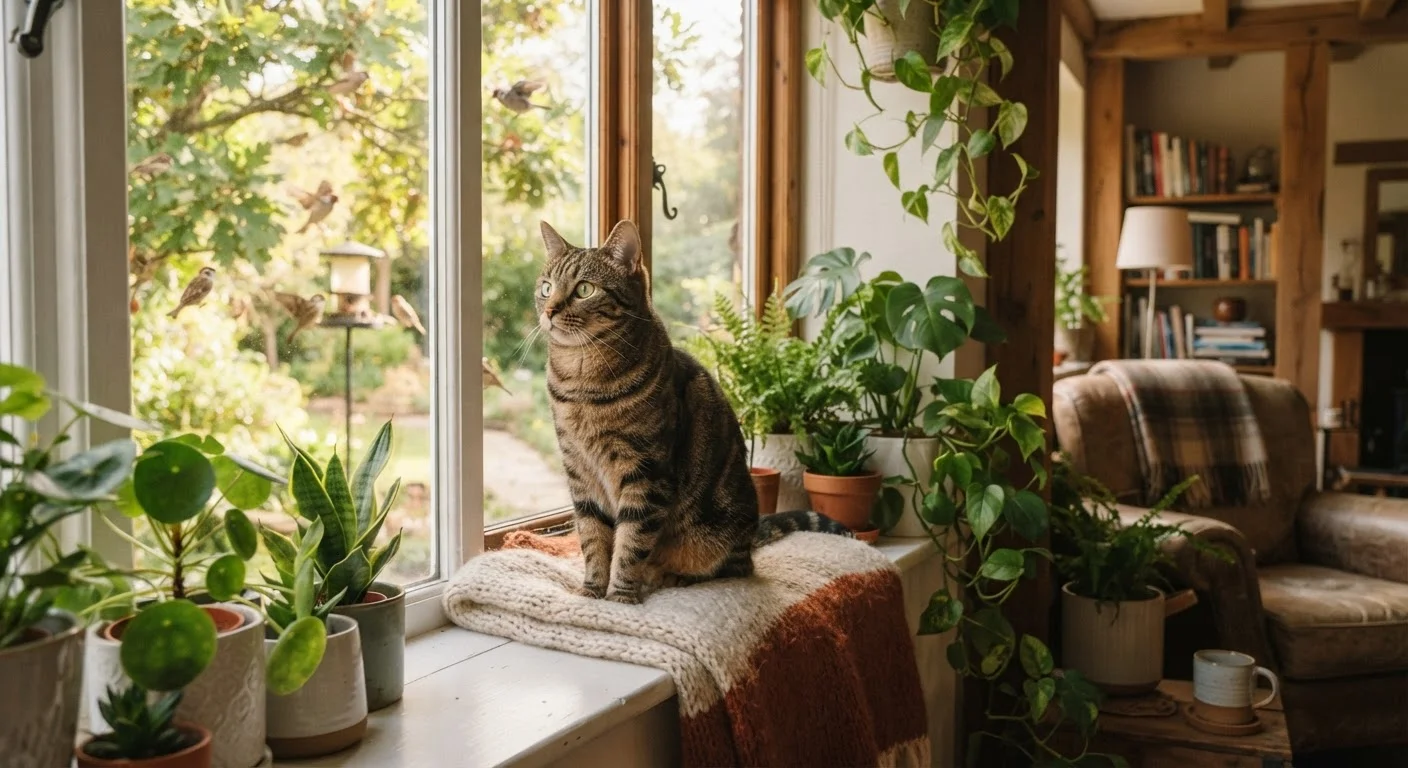
Provide a dedicated window perch with reliable outdoor access for passive viewing.
Window-watching is a form of environmental enrichment sometimes called "cat TV." Consistent visual access to outdoor movement - birds, insects, weather - gives cats a stimulus-rich experience that requires zero effort from owners.
For a deeper dive into creative enrichment approaches, see our guide on feline enrichment ideas that go beyond a toy mouse.
Quick Wins You Can Implement Today
You don't need to overhaul your home to make a meaningful difference. Start with these immediately actionable steps and build from there.
Scratching is one of the most misunderstood feline behaviors - it's not defiance, it's instinct. Understanding it can help you redirect it effectively. Our article on why cats scratch and what you can do about it explains the behavior and practical solutions.
Recognizing and Responding to Boredom Signals
Even with enrichment in place, it's worth knowing the signs that your cat needs more engagement. Common indicators include:
- Excessive vocalization - particularly repetitive meowing with no clear cause
- Over-grooming - bald patches or skin irritation from compulsive licking
- Redirected aggression - sudden swatting or biting during calm moments
- Furniture destruction - scratching beyond normal marking behavior
- Weight gain or lethargy - reduced activity paired with overeating
If these behaviors appear or persist, it's worth consulting your veterinarian. Some signs of boredom overlap with medical conditions, and a professional evaluation helps rule out underlying causes. Regular handling - including grooming - also keeps you attuned to changes in your cat's coat, skin, and body condition. Our at-home grooming guide covers how to make those check-ins stress-free for both of you.
When to Involve Your Veterinarian
Behavioral changes in cats - especially sudden ones - can have medical causes. Over-grooming may indicate a skin condition or pain; increased vocalization can signal hyperthyroidism or cognitive decline in older cats. If enrichment adjustments don't improve the behavior within a few weeks, schedule a veterinary visit to rule out underlying health issues.
The content on this site is provided for informational purposes only and should not be considered a substitute for professional advice. While we strive to provide accurate and up-to-date information, we make no guarantees regarding its completeness or accuracy. Always consult a qualified professional for advice specific to your circumstances before making any decisions.