

Summary
24 items · 1-2 hours
Why a Room-by-Room Approach Matters
When a cat enters a new environment, their instinct is to survey, hide, and slowly expand their territory. Flooding them with an entire home on day one can be genuinely overwhelming. A room-by-room setup lets you control safety risks in a manageable order while giving your cat a predictable, stress-reducing introduction to their new surroundings.
This checklist is designed to work whether you're bringing home a kitten, a shelter rescue, or a rehomed adult. Work through each room before your cat arrives, then check off remaining items during the first few days. For a broader picture of what to expect once your cat is home, see what to expect in the early weeks.
Base Room Setup
Kitchen Hazard-Proofing
Bathroom Safety
Living Areas and Bedrooms
Whole-Home Essentials
Tools and Supplies to Have Ready
Before walking through each room, gather the supplies you'll need. Having them on hand before your cat arrives prevents scrambling on a stressful day.
Litter box (one per cat, plus one extra)
Provides cats with accessible, hygienic elimination options in each zone of the home.
Unscented clumping litter
Recommended by most veterinary behaviorists as the default litter type for newly arrived cats.
Stainless steel or ceramic food and water bowls
Easy to clean and less likely to harbor bacteria compared to plastic alternatives.
Cat carrier (left open as a hiding spot)
Doubles as a safe retreat in the base room and makes future vet transport less stressful.
Scratching post or horizontal pad
Redirects natural scratching behavior away from furniture and supports claw health.
Cord covers or cable management sleeves
Protects electrical cords from chewing, reducing both fire and electrocution risk.
Cabinet safety latches
Keeps cats out of cabinets containing toxic cleaning products, trash, or ingestible small items.
Cat tree or wall-mounted shelving
Provides vertical territory, which reduces stress and satisfies natural climbing instincts.
Once the basics are in place, consider how you'll keep your cat mentally engaged long-term. Enrichment strategies for indoor cats go well beyond toys and can significantly reduce problem behaviors.
The Base Room: Starting Small on Purpose
Choose one quiet room - a spare bedroom or bathroom - to serve as your cat's starting zone for the first several days. This is where all core essentials live initially. Set up the litter box on one end and food and water stations on the opposite end. Add at least one hiding spot, such as an open carrier or a box with a cut-out opening, so your cat can retreat when feeling unsure.
Keep the Base Room Consistent for Several Days
Resist the urge to let your cat roam freely before they've settled. Expanding access too quickly is one of the most common mistakes new cat owners make and can lead to sustained hiding, litter box avoidance, and difficulty bonding. Most cats benefit from at least three to five days in a contained space before gradual expansion begins - some need longer, and that's normal.
Litter box placement here matters more than you might think. If your cat begins avoiding the box, the cause is often environmental rather than behavioral. Our guide on litter box problems and their real causes explains what to assess first.
Expanding to the Rest of the Home
Once your cat is eating, using the litter box consistently, and exploring the base room without hiding, you can begin opening additional doors - one room at a time. Walk each space with fresh eyes, crouching low to spot hazards at a cat's level: dangling cords, gaps behind appliances, open toilet lids, and cabinet doors that don't latch.
The kitchen deserves particular attention. Stovetop burners, small gaps behind the refrigerator, and open cabinets containing cleaning products are among the most common hazard sources. Cats are curious and persistent - assume they will access any space you don't actively secure.
Lilies Are Extremely Toxic to Cats
All parts of true lilies - including Easter lilies, tiger lilies, and daylilies - are highly toxic to cats and can cause acute kidney failure even in small amounts. If you're unsure whether a houseplant is cat-safe, cross-reference it with your veterinarian or the ASPCA's Animal Poison Control resources before bringing a cat into the home.
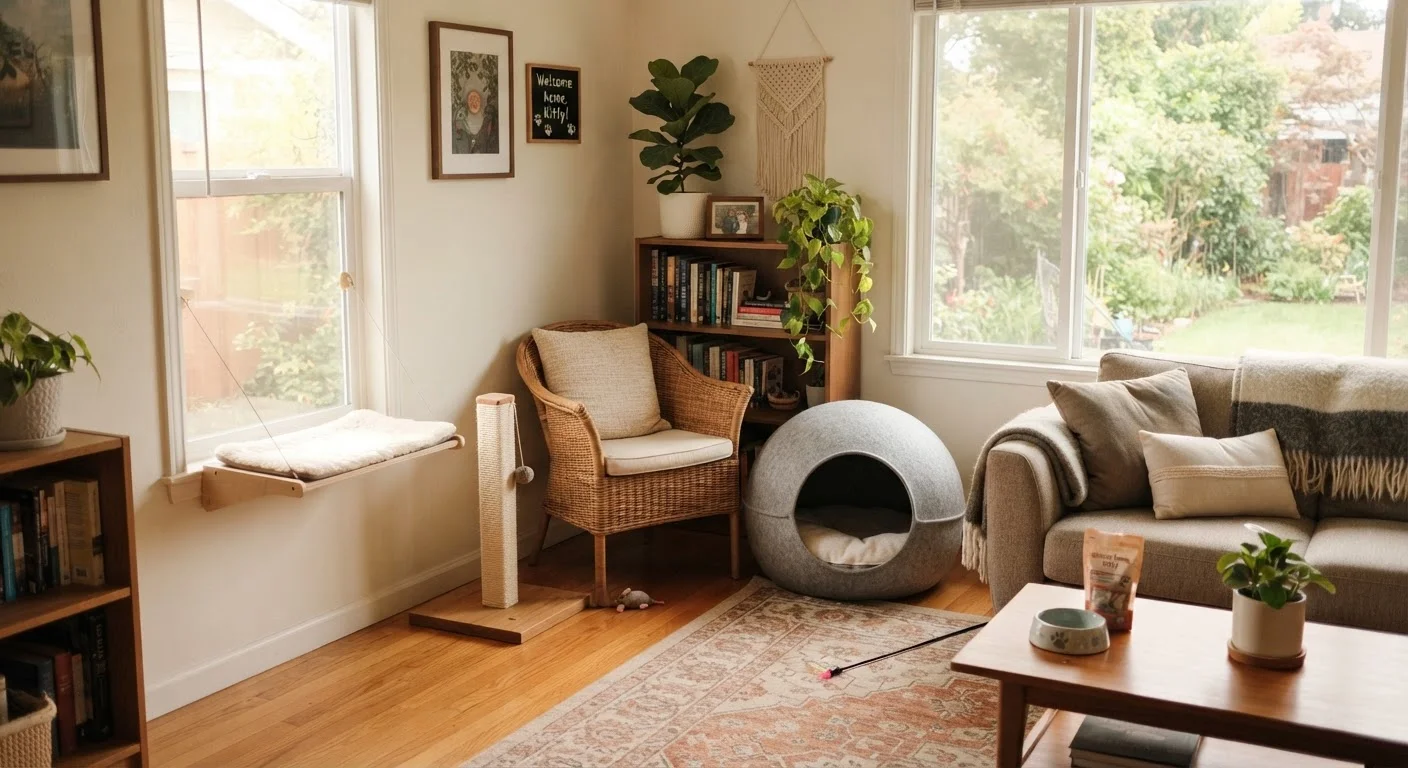
As you expand your cat's territory, add vertical options - a cat tree, wall-mounted shelves, or a window perch - to each main room. Cats feel more secure when they can observe from height. For creative ideas that go further than a standard cat tree, explore feline enrichment ideas beyond the basics.
Once your cat is settled, grooming becomes a regular part of care. Grooming your cat at home without the struggle offers a calm, practical approach that works even for reluctant cats. And don't put off veterinary care - schedule that first checkup within the first week. Our complete veterinary visit guide covers what to expect and what questions to bring.
This article provides general guidance for cat owners and is not a substitute for advice from a licensed veterinarian. If you have concerns about your cat's health or behavior, consult a qualified professional.
The content on this site is provided for informational purposes only and should not be considered a substitute for professional advice. While we strive to provide accurate and up-to-date information, we make no guarantees regarding its completeness or accuracy. Always consult a qualified professional for advice specific to your circumstances before making any decisions.