

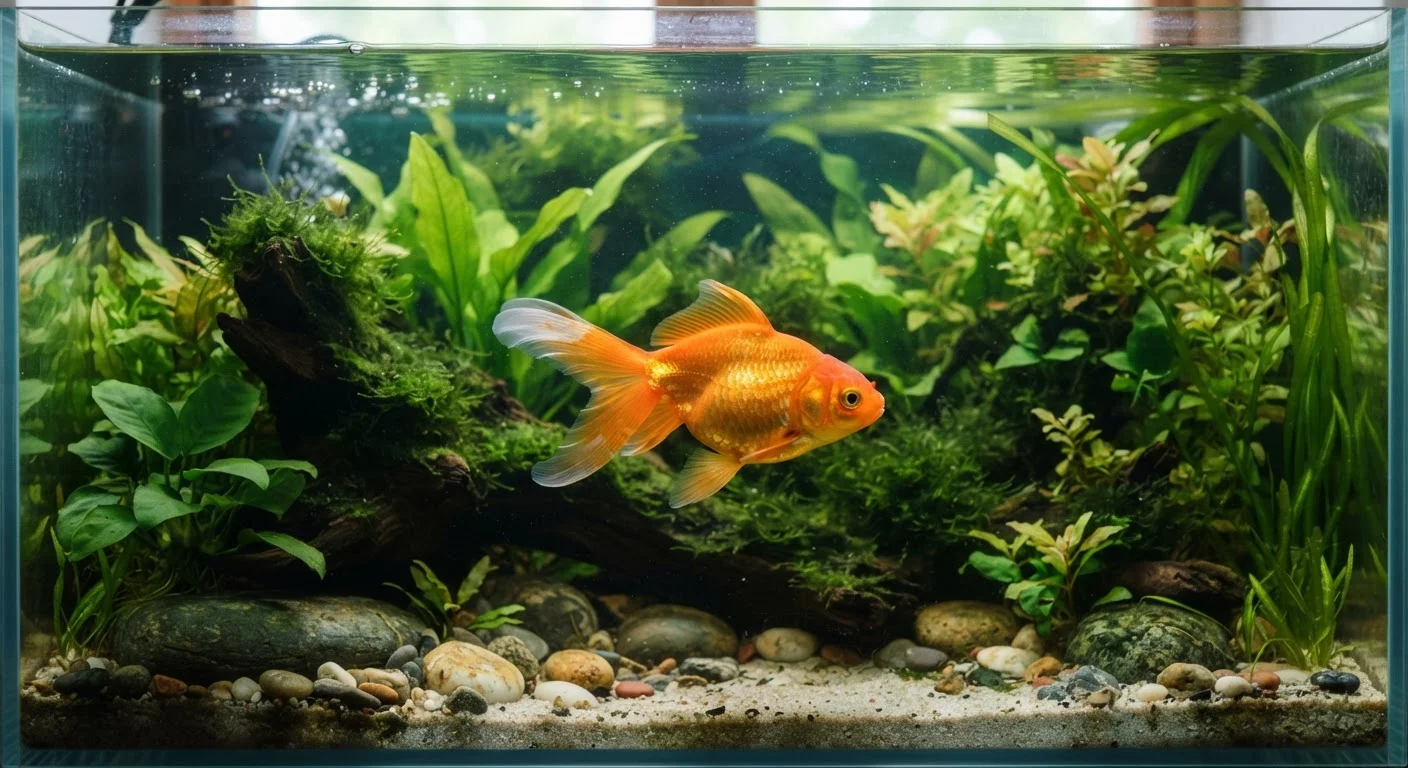
Why Goldfish Myths Persist - And Why They Matter
Goldfish are among the most commonly kept pets in American households, yet they're also among the most misunderstood. Many owners unknowingly follow care advice that's been passed down for generations without ever being tested against reality. The result is that millions of goldfish live shortened, stressed lives in conditions their owners genuinely believe are fine.
These myths aren't harmless. They shape purchasing decisions, tank setups, and daily routines in ways that directly affect animal welfare. Understanding where the evidence actually lands helps owners provide care that matches what goldfish genuinely need - not what pop culture assumes they need. Just as common cat myths lead owners to misread feline behavior, goldfish myths lead to real husbandry mistakes.
Myth
Goldfish only have a 3-second memory, so they don't experience boredom or recognize their owners.
Fact
Goldfish have been shown in controlled studies to remember learned behaviors and environmental cues for months, not seconds.
The 3-second memory claim is one of the most stubborn animal myths in circulation. Researchers have conditioned goldfish to press levers for food rewards and demonstrated that they retain this learning over extended periods. Goldfish can also learn to navigate mazes and associate specific people or feeding times with positive outcomes. This has real implications for care: an unstimulating environment may genuinely cause stress in a fish that is more cognitively aware than most owners assume.
Myth
Goldfish are perfectly happy living in a small bowl - it's their natural habitat.
Fact
Bowls lack adequate filtration, oxygenation, and space. They are harmful environments that cause chronic stress and dramatically shorten a goldfish's lifespan.
No fish species naturally lives in a stagnant, unfiltered glass bowl. In the wild, goldfish (descended from carp) inhabit slow-moving rivers, lakes, and ponds - large, oxygenated bodies of water. A small bowl concentrates waste products rapidly, raises ammonia to toxic levels, and provides no meaningful swimming space. Fish kept in bowls commonly show fin damage, lethargy, and immune suppression. A properly filtered aquarium is the minimum standard for humane goldfish keeping.
Myth
Goldfish stay small - they're a low-commitment, compact pet.
Fact
Goldfish can grow 8-12 inches or longer depending on variety, and they can live 10-15 years or more under proper conditions.
The idea that goldfish stay small is rooted in a misunderstanding of growth-stunting. When kept in inadequate conditions, goldfish do remain small - but this is a sign of chronic stress and poor health, not natural compact size. Common and comet goldfish regularly reach 10-12 inches in well-maintained ponds. Even fancy varieties typically grow 6-8 inches. Owners who purchase a goldfish expecting a low-maintenance, small-tank pet are often unprepared for the animal's true requirements.
Myth
You should feed goldfish as much as they'll eat - they stop when they're full.
Fact
Goldfish do not reliably self-regulate food intake and will continue eating past the point of satiety, leading to digestive problems and dangerous ammonia spikes.
Goldfish are opportunistic feeders that evolved to eat continuously when food is available, since meals in the wild are unpredictable. In a tank, this drive becomes a liability. Overfeeding leads to uneaten food decomposing on the substrate, rapidly degrading water quality. It can also cause swim bladder issues, bloating, and digestive distress in the fish itself. Feeding small, measured amounts once or twice daily is far healthier than free-feeding.
Myth
Tap water is fine for goldfish as long as it looks clear.
Fact
Tap water typically contains chlorine or chloramine, which are toxic to fish and must be neutralized with a water conditioner before any water change.
Municipal tap water is treated to be safe for human consumption - but those same disinfectants damage the gills and slime coat of fish. Clear water also reveals nothing about dissolved ammonia, nitrite, or nitrate levels, all of which can be lethal at elevated concentrations. A basic aquarium water testing kit and a dechlorinating conditioner are essential tools for any goldfish owner, not optional accessories.
What Good Goldfish Care Actually Looks Like
Once the myths are cleared away, the picture of proper goldfish care is straightforward - though it does require more effort than most beginners expect. A single fancy goldfish needs a minimum of 20 gallons, with an additional 10 gallons per additional fish. Common or comet varieties, which grow larger and swim more actively, need even more space or a pond environment.
10-15 years
Typical goldfish lifespan in proper conditions
Some goldfish in well-maintained ponds have been documented living over 20 years, far exceeding the few years most bowl-kept fish survive.
20+ gallons
Minimum tank size for one fancy goldfish
Aquarium care guidelines from fishkeeping organizations consistently recommend at least 20 gallons for a single fancy goldfish, with more space for active varieties.
Filtration is non-negotiable. Goldfish are heavy waste producers, meaning ammonia accumulates quickly in under-filtered tanks. Understanding the biological processes at work is essential - the nitrogen cycle is the foundation of any healthy aquarium, and skipping it is one of the most common reasons fish die despite water that appears clear. If you've experienced repeated unexplained fish loss, invisible water quality problems are often the culprit.
Feed goldfish small amounts once or twice daily - only what they can consume in about two minutes. Pellets or gel-based foods formulated for goldfish are preferable to flakes, which tend to introduce more air into the digestive tract. Regular partial water changes of 20-30% weekly help keep parameters stable and fish healthy.
New Tank Syndrome Can Kill Quickly
Setting up a brand-new aquarium and adding goldfish the same day is one of the most common - and fatal - mistakes new owners make. Without an established nitrogen cycle, ammonia builds to toxic levels within days. Always cycle a new tank for several weeks before introducing fish, and test water parameters regularly. When in doubt, consult a knowledgeable aquarium specialist.
The content on this site is provided for informational purposes only and should not be considered a substitute for professional advice. While we strive to provide accurate and up-to-date information, we make no guarantees regarding its completeness or accuracy. Always consult a qualified professional for advice specific to your circumstances before making any decisions.