

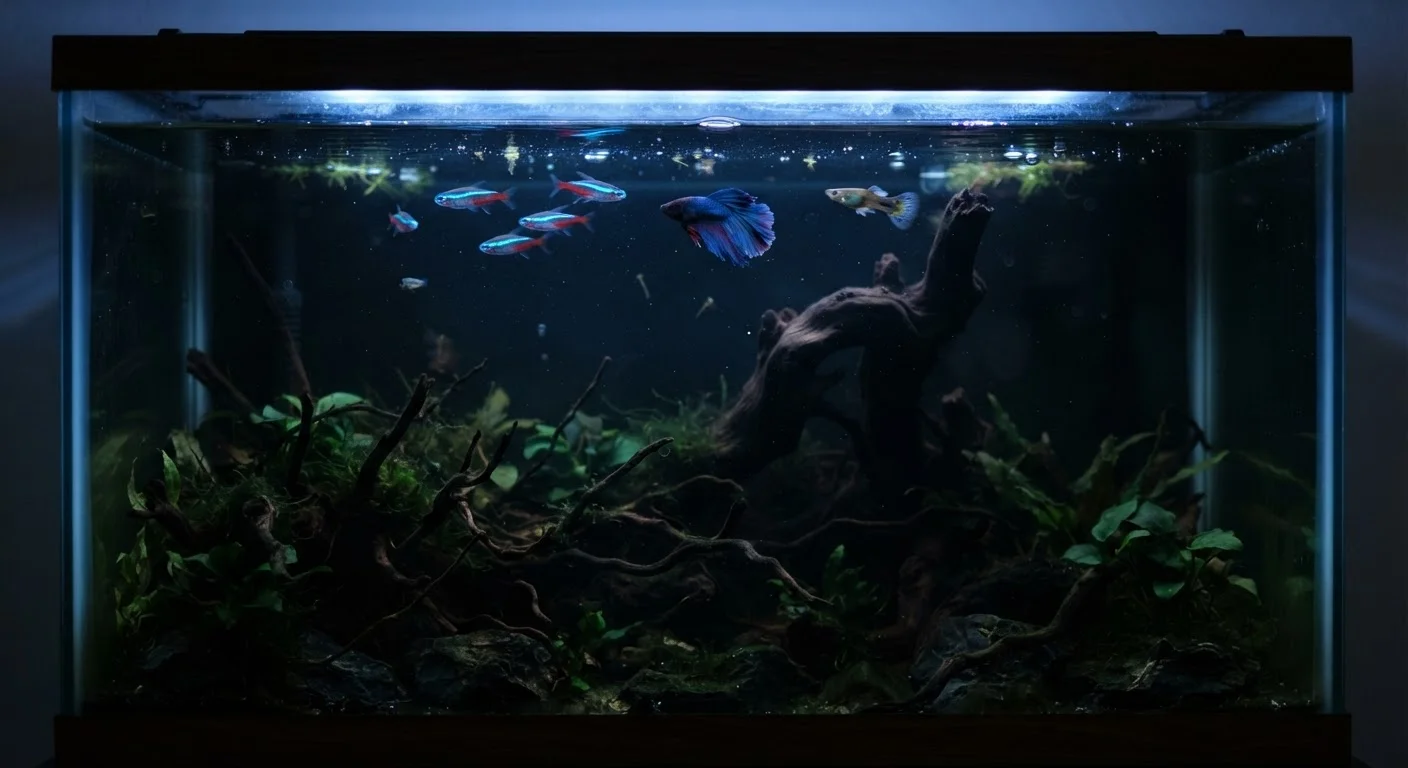
The Gap Between Clear and Safe
Most new fish owners assume that if the water looks clean, the tank must be healthy. It's an understandable assumption - but it's one of the most dangerous misconceptions in the aquarium hobby. The toxic compounds that kill fish are completely colorless and odorless at dangerous concentrations. You cannot see ammonia. You cannot smell nitrite. Clear water tells you nothing about the chemistry happening inside your tank.
Understanding why your fish keep dying starts with accepting that your eyes aren't the right tool for the job. A basic liquid test kit - measuring ammonia, nitrite, nitrate, and pH - is the only reliable way to understand what your fish are actually living in. If you're setting up a new tank or troubleshooting recurring deaths, our guide to what actually matters in a first freshwater aquarium covers the foundational steps that make the difference between a tank that thrives and one that doesn't.
Skipping the nitrogen cycle before adding fish.
Why it happens: New owners are eager to add fish immediately after filling the tank, not realizing that the beneficial bacteria needed to detoxify waste take weeks to establish.
Relying on visual water clarity instead of a test kit.
Why it happens: Clear water looks safe, and test kits feel like an optional extra purchase. Most fish stores sell inexpensive strip tests, which are notoriously inaccurate and give owners false confidence.
Overfeeding, which drives ammonia spikes through decomposing food.
Why it happens: Owners associate feeding with care and often interpret fish begging at the surface as hunger, when it's usually a conditioned behavior.
Adding unconditioned tap water directly to the tank.
Why it happens: Tap water looks and smells clean, so many owners don't realize it contains chlorine or chloramine - chemicals added specifically to kill microorganisms, including the bacteria your filter depends on.
Changing too much water at once during cleaning.
Why it happens: Owners who discover a water quality problem often try to fix it immediately with a massive water change, which can cause a sudden pH or temperature shift that stresses or kills fish.
Cleaning filter media under tap water, destroying the bacterial colony.
Why it happens: It seems logical to rinse a dirty filter thoroughly, but chlorinated tap water kills the beneficial bacteria living in the media - the same bacteria that prevent ammonia buildup.
The Mistakes That Are Silently Killing Your Fish
Each of the errors below is common, correctable, and often invisible to the untrained eye. Addressing even one of them can dramatically improve your fish's survival rate.
0 ppm
Safe ammonia level in any established tank
Aquatic veterinary guidelines consistently identify any detectable ammonia as a stressor that damages fish gill tissue and immune function over time.
4-6 weeks
Typical time to fully cycle a new tank
Established aquarium biology resources note that a complete nitrogen cycle requires beneficial bacterial colonies to build up through consistent ammonia exposure before fish are added.
~50%
New fish deaths attributed to water chemistry issues
Aquarium hobbyist surveys and veterinary fish care literature frequently cite poor water quality - not disease - as the leading cause of death in newly established tanks.
The nitrogen cycle is at the heart of most of these problems. Beneficial bacteria in your filter convert deadly ammonia (produced by fish waste and uneaten food) into nitrite, and then into the far less toxic nitrate. When this cycle hasn't been established - or gets disrupted - ammonia and nitrite spike fast. For a full breakdown of how this process works and how to establish it safely, see our guide to the nitrogen cycle explained for fish owners.
Ammonia Is an Emergency at Any Level
Even a reading of 0.25 ppm ammonia is enough to cause gill damage and immune suppression in most freshwater fish. If your test kit shows any detectable ammonia, treat it as an urgent problem - not a minor fluctuation to monitor. Perform an immediate partial water change, identify the source (overfeeding, overcrowding, dead fish, or an uncycled tank), and retest within 24 hours.
Overstocking is another pressure point that compounds all other problems. More fish means more waste, faster ammonia buildup, and less oxygen dissolved in the water. A common rough guideline is one inch of adult fish per gallon of water, though this varies significantly by species, filtration capacity, and tank layout. Research your specific fish before adding them.
Finally, consider your tap water. Municipal water supplies contain chlorine or chloramine to kill bacteria - which means they also harm the beneficial bacteria in your filter and stress your fish directly. Always treat tap water with a dechlorinator before adding it to the tank, and be aware that chloramine requires a different type of dechlorinator than plain chlorine. Check your water utility's annual report if you're unsure which your municipality uses.
Building a Tank That Keeps Fish Alive
The good news is that most of these problems are preventable with a few consistent habits. Test your water at least once a week, especially in a newer tank. Keep a log so you can spot trends before they become emergencies. Perform partial water changes - typically 20-30% weekly - to dilute nitrate buildup without shocking your fish with a sudden chemistry shift.
Feed sparingly: most fish only need what they can consume in two to three minutes, once or twice a day. Remove uneaten food promptly. When cleaning the tank, rinse filter media in old tank water rather than tap water to preserve your beneficial bacteria colony.
It's also worth auditing your stocking choices. Some fish are marketed as hardy beginners but have specific water chemistry needs that standard tap water doesn't meet. Goldfish, for example, carry a host of common misconceptions about their care requirements - our article on common goldfish myths most owners believe is a useful reality check for anyone keeping them.
Keeping fish alive long-term isn't about expensive equipment or rare expertise. It's about understanding the invisible chemistry your fish depend on every moment - and checking it regularly, even when the water looks perfect.
The content on this site is provided for informational purposes only and should not be considered a substitute for professional advice. While we strive to provide accurate and up-to-date information, we make no guarantees regarding its completeness or accuracy. Always consult a qualified professional for advice specific to your circumstances before making any decisions.