

Start here
Choosing the Right Tank Size
Next
Essential Equipment You Actually Need
Critical step
The Nitrogen Cycle: Your Most Important First Step
Build knowledge
Water Chemistry Basics
When you're ready
Stocking Your Tank Responsibly
Choosing the Right Tank Size
The instinct to start small - a 5- or 10-gallon tank - is understandable, but it's one of the most common beginner mistakes. Small tanks fluctuate rapidly in temperature and water quality. A single uneaten food pellet can destabilize a 5-gallon tank in ways that would barely register in a 20-gallon setup.
A 20-gallon tank is the minimum most experienced aquarists recommend for beginners. It gives you enough water volume to buffer mistakes, supports a reasonable variety of fish, and is widely available in standard sizes. The tradeoff - a bit more water to manage - is worth it for the stability it provides.
Consider where you'll place the tank before you buy. A full aquarium is extremely heavy: water weighs roughly 8.3 pounds per gallon, so a 20-gallon setup can exceed 200 pounds with substrate, décor, and equipment. Verify that the surface or stand can handle the load, and keep the tank away from direct sunlight, heating vents, and drafty windows.
Nitrogen cycle
The biological process by which beneficial bacteria convert toxic fish waste (ammonia) into less harmful compounds. It must be established before fish are introduced to a new tank.
Ammonia
A toxic compound produced by fish waste, decaying food, and decomposing plant matter. Even low concentrations are harmful to fish and should read zero in a healthy tank.
Nitrite
An intermediate compound produced during the nitrogen cycle that is also toxic to fish. Like ammonia, it should read zero in an established, functioning aquarium.
Nitrate
The relatively harmless final product of the nitrogen cycle. It accumulates over time and is managed through regular partial water changes.
pH
A scale measuring how acidic or alkaline water is. Most freshwater community fish thrive when pH stays stable between 6.5 and 7.5.
Fishless cycle
A method of establishing beneficial bacteria in a new tank using an ammonia source - without placing any live fish in the water during the process.
Dechlorinator
A water treatment product that neutralizes chlorine and chloramine in tap water, making it safe to add to an aquarium.
Essential Equipment You Actually Need
A lot of aquarium products exist. Most of them are optional. The equipment that genuinely determines success is a shorter list:
- Filter: Biological filtration is the backbone of water quality. Choose a filter rated for at least your tank size - slightly oversized is fine. Hang-on-back and canister filters are reliable choices for beginners.
- Heater: An adjustable submersible heater with a built-in thermostat keeps tropical fish in their target temperature range. Match wattage to your tank size (roughly 3-5 watts per gallon).
- Thermometer: Heaters can fail silently. A separate thermometer lets you verify actual water temperature daily.
- Water test kit: Liquid test kits that measure ammonia, nitrite, nitrate, and pH are far more accurate than paper strip tests. This is not optional - it's your only window into what the water chemistry is actually doing.
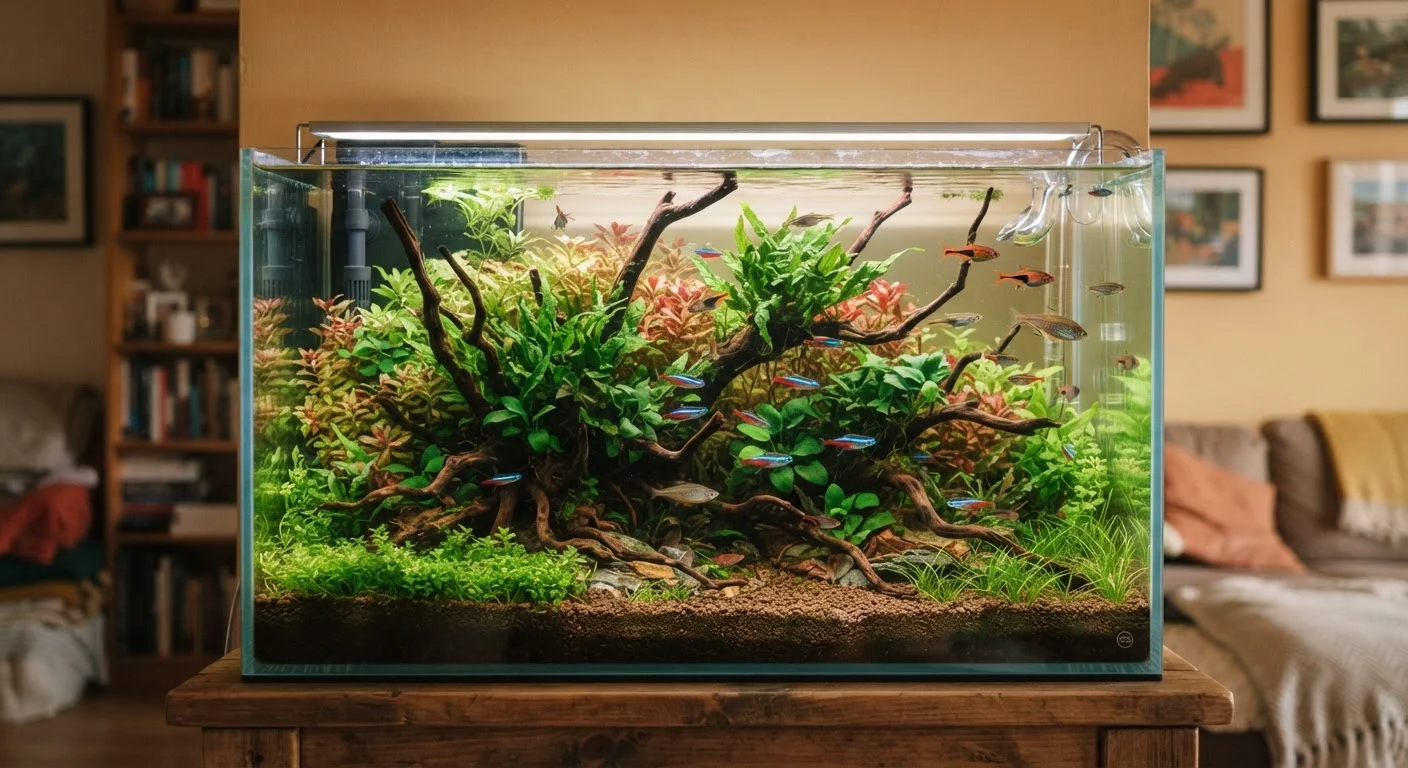
- Substrate and décor: Fish need places to shelter and express natural behavior. Plain gravel works; natural hardscape like smooth stones or driftwood adds biological and behavioral value.
A lid is also worth emphasizing - many fish are surprisingly good jumpers, and evaporation from an open top disrupts water parameters faster than beginners expect.
The Nitrogen Cycle: Your Most Important First Step
Before a single fish enters your tank, beneficial bacteria must colonize your filter media. These bacteria convert toxic ammonia (from fish waste and uneaten food) into nitrite, and then into the comparatively harmless nitrate. This process is called the nitrogen cycle, and skipping it is the leading cause of unexplained fish deaths in new tanks.
The safest approach for beginners is a fishless cycle: add an ammonia source (pure ammonia drops or a small piece of raw fish) to the tank and let bacteria establish over four to eight weeks. Test the water every few days. The cycle is complete when ammonia and nitrite readings hit zero within 24 hours of adding ammonia.
For a deeper look at the biology behind this process, see our guide to the nitrogen cycle for fish owners. And if you've already added fish but something still feels wrong, why your fish keep dying despite clear water covers the hidden chemical causes behind recurring losses.
Speed Up Cycling With Established Media
Adding a small amount of filter media, substrate, or décor from an already-established, healthy aquarium introduces live bacteria and can reduce cycling time significantly. If you know someone with a healthy tank, ask if they can spare a handful of gravel or a piece of used filter sponge. This shortcut is sometimes called 'seeding' the tank.
Water Chemistry Basics
Water that looks crystal clear can still be chemically dangerous. Understanding a few key parameters prevents most preventable fish loss:
- Ammonia and Nitrite: Both should read zero in an established, healthy tank. Any detectable level is a red flag requiring immediate action - partial water changes reduce concentration while you identify the cause.
- Nitrate: A natural end product of the nitrogen cycle. Levels below 20 ppm are generally safe for most community fish. Regular water changes keep nitrate from accumulating.
- pH: A measure of how acidic or alkaline your water is, on a scale of 0-14. Most common freshwater fish thrive between 6.5 and 7.5. Stability matters more than hitting an exact number - rapid pH swings stress fish far more than a slightly off reading.
- Temperature: Consistency is key. Fluctuations of even a few degrees within a short period can suppress immune function and trigger disease.
Tap water often contains chlorine or chloramine, which are lethal to fish. Always treat tap water with a dechlorinator (sodium thiosulfate-based products are widely available) before adding it to the tank.
Never Add Untreated Tap Water Directly
Chlorine and chloramine in municipal tap water can kill the beneficial bacteria in your filter and harm fish directly. Always add a dechlorinator to new water before introducing it to the tank - even during routine water changes. Follow the product dosing guidance for your specific water volume.
Stocking Your Tank Responsibly
Once your tank is cycled and your parameters are stable, you can begin adding fish - but gradually. Introducing too many fish at once overwhelms your filter's bacterial capacity, spikes ammonia, and stresses the whole tank. A practical rule of thumb: add no more than a few fish at a time, wait two weeks, test the water, and then add more if parameters remain stable.
Research the adult size and social needs of every species before purchasing. Many fish sold as juveniles grow considerably larger than their tank size at the store suggests. Schooling fish like tetras and danios need groups of six or more to behave naturally and remain stress-free - lone individuals often become lethargic or aggressive.
Avoid mixing fish with incompatible temperaments or water parameter needs. A community tank works best when all species share similar temperature, pH, and behavioral profiles.
Setting up an aquarium takes more patience than most beginners expect - but the patience invested in those first eight weeks almost always determines whether the hobby becomes a lasting source of enjoyment or a frustrating series of losses.
This article provides general educational information for beginner fishkeepers and is not a substitute for species-specific veterinary or aquatic specialist guidance.
Frequently Asked Questions
A fishless cycle typically takes four to eight weeks, depending on water temperature and the ammonia source used. You'll know the cycle is complete when a full dose of ammonia drops to zero within 24 hours. Patience here prevents most early fish losses.
A 20-gallon tank is a widely recommended starting point. Larger water volumes dilute waste and temperature swings more effectively, making the environment more stable and errors more forgivable than in nano or desktop tanks.
Most popular freshwater fish - including tetras, danios, and livebearers - are tropical species that require stable water temperatures between 72°F and 80°F. A reliable adjustable heater is essential unless you're keeping coldwater species like goldfish.
During the cycling period, change 25-30% of the water weekly to manage ammonia and nitrite spikes if fish are present. Once the tank is established, a weekly 20-25% partial water change is a reasonable maintenance baseline for most setups.
No. Adding fish to an uncycled tank exposes them to toxic ammonia and nitrite spikes - a condition called 'new tank syndrome.' Complete the nitrogen cycle first, then introduce fish gradually in small groups.
Hardy, adaptable species like zebra danios, cherry barbs, platies, and white cloud mountain minnows tolerate a range of water parameters and are generally forgiving of beginner mistakes. Research the needs of any species before purchasing.
The content on this site is provided for informational purposes only and should not be considered a substitute for professional advice. While we strive to provide accurate and up-to-date information, we make no guarantees regarding its completeness or accuracy. Always consult a qualified professional for advice specific to your circumstances before making any decisions.