

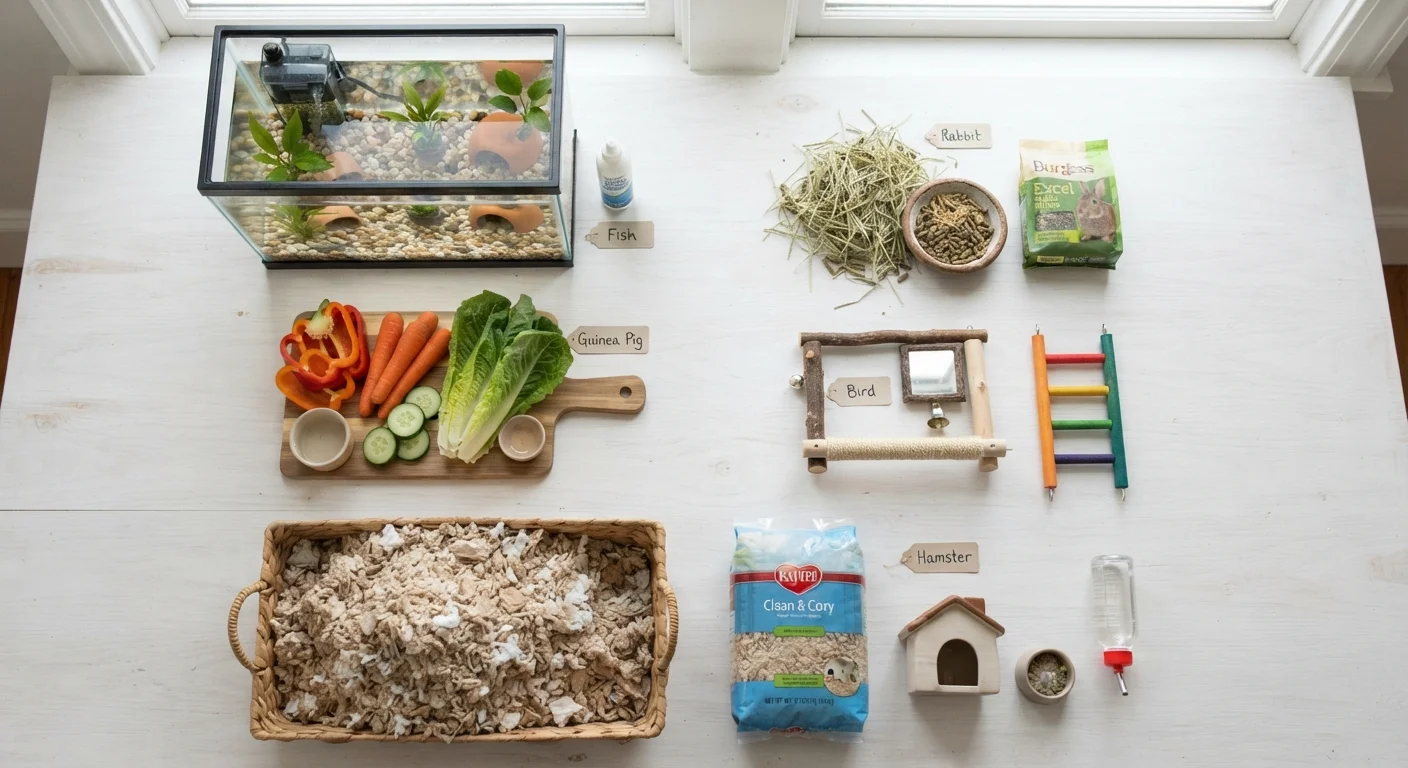
Fish: Water Quality Is Everything
Freshwater fish are among the most popular small pets in the U.S., yet many owners underestimate the chemistry involved. The nitrogen cycle - the process by which beneficial bacteria break down toxic ammonia into less harmful compounds - must be established before adding fish to a new tank. This process typically takes two to six weeks.
Most tropical freshwater species thrive at 74-80°F and a pH of 6.8-7.5, though specific requirements vary by species. Overfeeding is a leading cause of poor water quality; feed only what fish consume within two to three minutes, once or twice daily. A 25-30% partial water change each week, along with a functioning filter, helps maintain stable conditions. Signs of water-quality stress include fish gasping at the surface, unusual color changes, or clamped fins. If you notice these, test the water before assuming disease is the cause.
| Recommended tank size (beginner fish) | 10 gallons minimum (General aquarium keeping guidance) |
| Nitrogen cycle establishment time | 2-6 weeks (Standard aquarium cycling practice) |
| Rabbit hay in daily diet | ~80% of intake (House Rabbit Society guidelines) |
| Guinea pig vitamin C requirement | 10-30 mg/day (Veterinary nutritional guidance) |
| Hamster minimum wheel diameter | 8-10 inches (Small animal welfare recommendations) |
| Average hamster lifespan | 2-3 years (General veterinary reference) |
| Budgerigar average lifespan | 7-15 years (Avian veterinary reference) |
| Guinea pig average lifespan | 4-8 years (General veterinary reference) |
Birds, Rabbits, Hamsters & Guinea Pigs: Species-by-Species Basics
Pet birds (such as budgerigars and cockatiels) need more than seeds. A balanced diet includes high-quality pellets, fresh leafy greens, and limited fruit. Many seed-only diets lead to nutritional deficiencies over time. Birds also require daily out-of-cage time for physical and mental well-being, and their respiratory systems are highly sensitive - never use nonstick cookware or aerosol sprays near them.
Rabbits are often misjudged as low-maintenance. In reality, unlimited timothy hay should form roughly 80% of their diet to support healthy gut motility and wear down continuously growing teeth. Fresh leafy greens, a small daily portion of pellets, and constant access to fresh water complete the diet. Rabbits are social animals; before deciding whether to keep one alone or in a pair, review the welfare considerations in our guide to single-rabbit ownership.
Hamsters are nocturnal and solitary - housing two Syrian hamsters together typically results in serious injury. They need a wheel (at least 8-10 inches in diameter), deep bedding for burrowing, and enrichment items to prevent boredom-related behaviors like bar-chewing. Average lifespan is 2-3 years.
Guinea pigs cannot synthesize vitamin C on their own, making dietary supplementation through fresh bell pepper, leafy greens, or vitamin C-fortified pellets essential. Unlike hamsters, guinea pigs are highly social and generally do better in same-sex pairs. They vocalize frequently and use distinct sounds to communicate - owners often report learning to distinguish hunger calls from contentment sounds within weeks.
Nitrogen cycle
The biological process in aquariums by which beneficial bacteria convert toxic ammonia (from fish waste) into nitrite, then into the less harmful nitrate. Establishing this cycle before adding fish is essential for a healthy tank.
Gut motility
The movement of food through the digestive tract. In rabbits, high-fiber hay keeps the gut moving continuously - without it, dangerous slowdowns (GI stasis) can occur.
Exotic veterinarian
A veterinarian with specialized training in species other than dogs and cats, including birds, rabbits, rodents, reptiles, and fish. Seeking one for small pets ensures species-appropriate care.
Pellets (bird diet)
Commercially formulated bird food pressed into uniform pellets designed to provide balanced nutrition. Veterinary nutritionists generally recommend pellets as a dietary base over seed-only diets for companion birds.
GI stasis
A life-threatening condition in rabbits and guinea pigs where the digestive tract slows or stops. It can develop rapidly and requires immediate veterinary attention.
Health Basics and When to See a Vet
Small pets often mask illness until it becomes serious - a survival instinct inherited from prey species. Learning your pet's normal behavior patterns makes early detection far more reliable than waiting for obvious symptoms. Sudden changes in eating, activity level, droppings, or posture warrant prompt attention.
All small pets benefit from an initial exam with an exotic or small-animal veterinarian to establish a health baseline. Routine checkups annually (or every six months for older animals) are widely recommended. This differs from the more familiar cat or feline veterinary visit schedule, but the principle is the same: preventive care consistently outperforms reactive care.
Common warning signs across species include labored breathing, discharge from eyes or nose, hunched posture, blood in urine or droppings, and significant weight loss. Never attempt to treat a sick small pet with over-the-counter medications intended for other species without explicit veterinary guidance.
This article is for general informational purposes only and is not a substitute for professional veterinary advice. Always consult a licensed veterinarian for health concerns specific to your pet.
The content on this site is provided for informational purposes only and should not be considered a substitute for professional advice. While we strive to provide accurate and up-to-date information, we make no guarantees regarding its completeness or accuracy. Always consult a qualified professional for advice specific to your circumstances before making any decisions.