

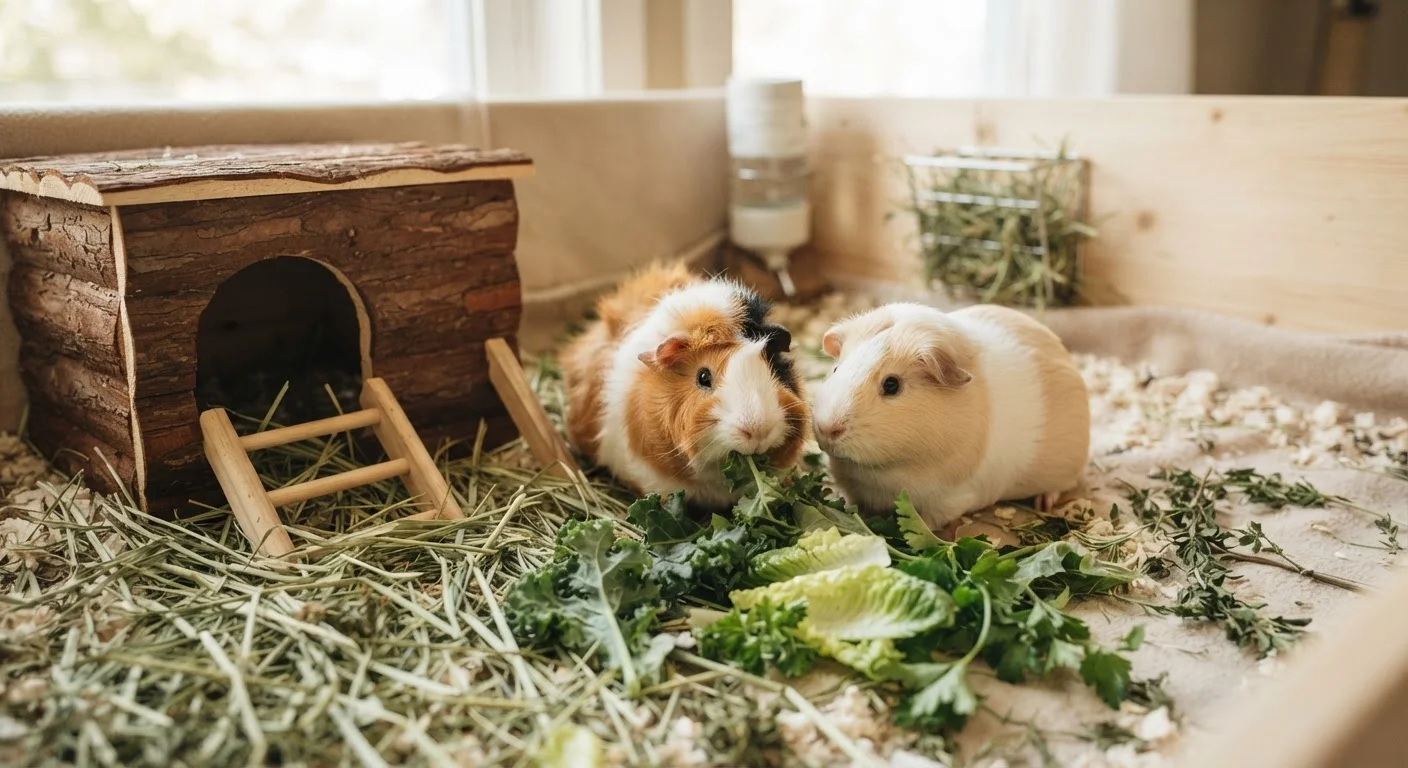
The Non-Negotiables of Guinea Pig Diet
Guinea pigs have one nutritional quirk that sets them apart from many small pets: like humans, they cannot synthesize their own vitamin C. Without a reliable dietary source, they develop scurvy - a serious, preventable condition causing joint pain, lethargy, and poor wound healing.
Fresh vegetables high in vitamin C - particularly bell peppers, leafy romaine, and parsley - should be offered daily. Citrus can also provide vitamin C, but the high acid content makes it a poor everyday choice. Pellets labeled "guinea pig formula" do contain added vitamin C, but the nutrient degrades quickly once the bag is opened, so fresh produce remains essential.
Hay is the dietary cornerstone. Timothy hay or orchard grass should be available at all times and make up roughly 70-80% of the diet. Hay keeps the digestive system moving and wears down continuously growing molars - without it, dental problems develop quickly. Pellets should be offered in modest, measured amounts rather than free-fed.
Foods to avoid include iceberg lettuce (low nutrition, can cause loose stools), potatoes, onions, garlic, and anything high in sugar. Treats marketed for small animals are often high in sugar and seeds - use them sparingly, if at all.
Social Needs and Habitat Requirements
Guinea pigs are highly social animals that do not thrive in isolation. Keeping a lone guinea pig is widely considered a welfare concern; most veterinary and exotic pet organizations recommend housing them in same-sex pairs or compatible small groups. A bonded pair will vocalize, groom one another, and generally display calmer behavior than a solitary pig.
Enclosure size is frequently underestimated. A single guinea pig needs a minimum of 7.5 square feet of floor space - more is better, and a pair needs at least 10.5 square feet. Standard pet-store cages are almost always too small. C&C grid cages (cube and coroplast) are popular DIY options that provide adequate room at a lower cost than commercial alternatives.
Scurvy
A disease caused by vitamin C deficiency. In guinea pigs, it produces joint swelling, weakness, poor coat condition, and bleeding gums. It is fully preventable with an adequate fresh-vegetable diet.
Malocclusion
Misalignment of the teeth that prevents normal wearing and chewing. It is a common dental problem in guinea pigs and usually requires veterinary diagnosis and treatment.
Timothy hay
A grass hay widely recommended as the primary dietary fiber source for guinea pigs. It supports healthy digestion and natural molar wear, and should be available to guinea pigs at all times.
C&C cage
Short for cube-and-coroplast cage - a DIY enclosure built from wire grid panels and a corrugated plastic base. These are popular because they offer far more floor space than most commercial guinea pig cages.
Bedding should be absorbent and dust-free. Paper-based bedding and fleece liners are commonly used; cedar and pine shavings should be avoided due to aromatic oils that can irritate the respiratory tract. Spot-clean daily and do a full bedding change at least once a week to prevent ammonia buildup.
Temperature matters more than many owners realize. Guinea pigs are sensitive to heat and do poorly above approximately 80°F (27°C). They also dislike drafts and damp environments. Keep their space in a stable, climate-controlled room away from direct sunlight. If you're also managing a multi-pet household, see our guide on introducing a new small pet to a home with cats or dogs for safety strategies.
Health Monitoring and Preventive Care
Guinea pigs are prey animals and instinctively conceal signs of illness - by the time symptoms are obvious, a condition may already be advanced. Regular, hands-on observation is the most reliable early-warning system an owner has.
Check body weight weekly using a kitchen scale. A loss of more than a few grams over consecutive weeks, without an obvious dietary explanation, warrants veterinary attention. Other red flags include changes in droppings (size, consistency, or quantity), reduced appetite, labored breathing, nasal discharge, and hunched posture. For a comprehensive list of signals to watch for, see our reference on signs that a small pet needs veterinary attention.
Nails grow continuously and need trimming every four to six weeks. Overgrown nails can curl into the foot pad and cause pain or infection. Teeth should also be checked periodically - misaligned molars (malocclusion) are among the most common health problems in guinea pigs and typically require veterinary care. Find a veterinarian experienced with exotic or small mammals before a health crisis arises; not all general-practice vets are equally comfortable treating guinea pigs.
For a broader look at small pet care across species, our small pet ownership reference guide covers diet, habitat, and health basics side by side.
This article is for general educational purposes only and is not a substitute for professional veterinary advice. If you have concerns about your guinea pig's health, consult a qualified veterinarian experienced with small animals.
The content on this site is provided for informational purposes only and should not be considered a substitute for professional advice. While we strive to provide accurate and up-to-date information, we make no guarantees regarding its completeness or accuracy. Always consult a qualified professional for advice specific to your circumstances before making any decisions.