

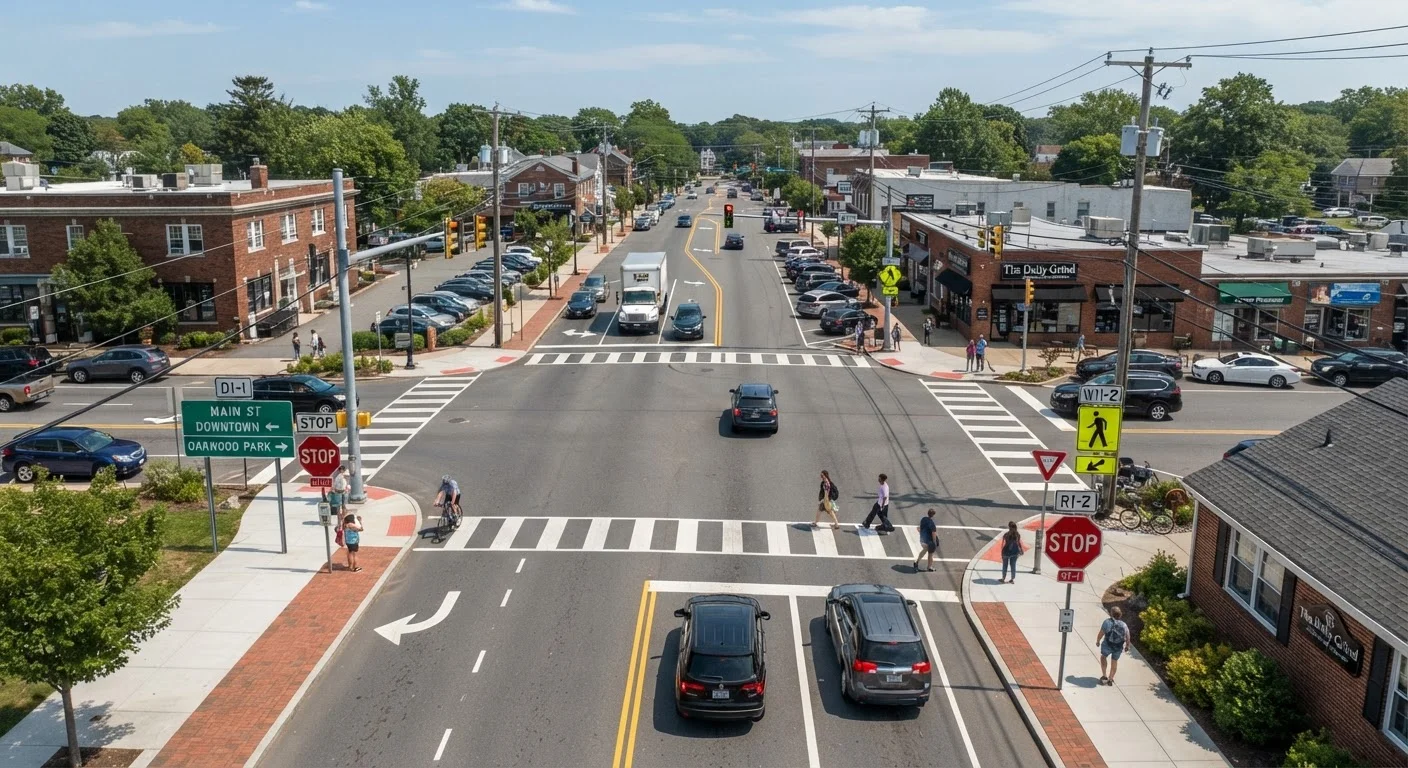
Why Road Signs Use a Color and Shape System
The United States road sign system is governed by the MUTCD, a federal standard that assigns specific colors, shapes, and symbols to specific types of messages. The goal is instant recognition - a driver moving at highway speed should be able to identify the category of a sign before reading a single word.
This standardization is deliberate. Shapes communicate urgency even when visibility is poor. Colors encode the type of information. Symbols cross language barriers. Together, they form a redundant, layered communication system designed for split-second comprehension.
| Governing Standard | Manual on Uniform Traffic Control Devices (MUTCD) (Federal Highway Administration) |
| Number of Sign Colors | 8 primary colors in the U.S. system (MUTCD, current edition) |
| Exclusive Octagon Use | Stop sign only (MUTCD standard) |
| Fluorescent Yellow-Green | Used for school, pedestrian, and bicycle zones (MUTCD) |
| Orange Signs | Reserved exclusively for work zones and temporary traffic control (MUTCD) |
| Retroreflectivity Requirement | All traffic signs must meet minimum retroreflectivity standards for nighttime visibility (FHWA retroreflectivity guidelines) |
What Each Sign Color Means
Color is the first thing your eye registers on a road sign. Here is what each major color communicates under MUTCD guidelines:
- Red: Prohibition or a required stop. Stop signs, yield signs, and do-not-enter signs all use red to signal a mandatory action or restriction.
- Yellow: General warning. Yellow signs alert drivers to conditions ahead that require reduced speed or increased caution - curves, school zones, pedestrian crossings, and lane merges.
- Orange: Temporary traffic control. Construction and work zone signs are orange, signaling that conditions differ from the normal roadway layout.
- Green: Permitted movements and directional guidance. Highway mile markers, exit signs, and distance plaques use green to guide rather than restrict.
- Blue: Motorist services. Blue signs indicate nearby amenities such as fuel, food, lodging, and hospitals.
- Brown: Recreational and cultural interest. National parks, historic sites, and scenic byways are marked in brown.
- White: Regulatory information. Speed limit signs, lane-use restrictions, and turn prohibitions are presented on white backgrounds because they convey enforceable rules.
- Fluorescent yellow-green: High-visibility warning for pedestrians, cyclists, and school zones - a more visible variant of yellow used where vulnerable road users are present.
Colors Can Vary Slightly by Jurisdiction
While federal MUTCD standards apply across the country, some states and municipalities use supplemental signs or slight color variations for local regulations such as parking restrictions and curb markings. Always defer to posted local signage and check your state's driver handbook for jurisdiction-specific guidance.
What Sign Shapes Communicate
Shape adds a second, independent channel of meaning - critical when color visibility is reduced by weather, sun glare, or damage.
MUTCD
The Manual on Uniform Traffic Control Devices - a federal document published by the FHWA that sets standards for all road signs, signals, and markings in the United States.
Retroreflectivity
A material property that returns light toward its source, making signs visible at night when illuminated by headlights. Federal standards require all traffic signs to meet minimum retroreflectivity levels.
Regulatory Sign
A sign that communicates a legally enforceable rule of the road, such as speed limits, turn restrictions, or lane-use requirements. Typically white with black text.
Warning Sign
A sign that alerts drivers to a potentially hazardous condition or change in road character ahead. Typically diamond-shaped and yellow in the U.S.
Pavement Marking
Lines, symbols, or text painted or thermoplastic-applied to the road surface to guide, warn, or regulate traffic - including lane lines, crosswalks, and stop bars.
Work Zone Sign
A temporary orange sign used within or approaching a construction or maintenance work zone to redirect, slow, or stop traffic around the hazard.
- Octagon (8 sides): Exclusively the Stop sign. No other traffic control sign uses this shape in the U.S.
- Equilateral triangle (point down): Yield. The inverted triangle universally signals that you must give the right-of-way.
- Diamond: Warning. Angled at 45 degrees, diamond signs alert drivers to road conditions, intersections, or hazards ahead.
- Pentagon (5 sides, point up): School advance warning. The house-like shape distinguishes school zones from general pedestrian areas.
- Rectangle (vertical): Regulatory. Speed limits, lane controls, and turn restrictions use upright rectangular signs.
- Rectangle (horizontal): Guide and informational signs, including highway route confirmations and distance markers.
- Circle: Railroad advance warning or a no-passing zone pennant variant.
- Pennant (horizontal triangle): No passing zone, always placed on the left side of the road.
Understanding roundabouts - which combine yield signs, lane markings, and directional arrows - is a practical extension of this knowledge. See how roundabout signage works for a focused breakdown.
Pavement Markings: The Signs Beneath Your Tires
Road markings extend the sign system onto the road surface itself, providing guidance even when overhead signs are absent.
- Solid white lines: Separate traffic moving in the same direction; crossing is discouraged. Edge lines mark the road boundary.
- Dashed white lines: Lane lines within the same direction of travel; crossing is permitted when safe.
- Solid yellow lines: Divide opposing traffic. A double solid yellow means no passing in either direction.
- Dashed yellow line: Passing is allowed from that side when the way is clear.
- Solid yellow next to dashed yellow: The driver beside the solid line may not pass; the driver beside the dashed line may pass when safe.
- White arrows and text: Lane-use instructions - turn-only lanes, HOV designations, and railroad crossing warnings are painted directly on pavement.
- Red curb markings: No stopping or parking; yellow curbs typically indicate loading zones or time-limited stops depending on local ordinance.
Staying sharp on all vehicle communication systems pays off. Just as road signs require quick interpretation, dashboard warning lights demand the same kind of at-a-glance literacy inside your car.
The content on this site is provided for informational purposes only and should not be considered a substitute for professional advice. While we strive to provide accurate and up-to-date information, we make no guarantees regarding its completeness or accuracy. Always consult a qualified professional for advice specific to your circumstances before making any decisions.