

Why Exfoliation Matters - and Where It Goes Wrong
Exfoliation removes dead skin cells from the surface of your skin, which can improve texture, help other products absorb better, and keep pores clearer. For the body, it's a genuinely useful step - but it's also one of the most commonly overdone habits in skin care.
Unlike the face, body skin gets less daily attention, so many people assume it can handle more aggressive or frequent exfoliation. In practice, over-exfoliating the body disrupts the skin barrier - the outermost protective layer - leading to dryness, irritation, and heightened sensitivity. For a broader look at how exfoliation fits into an overall routine, see Building a Body Care Routine That Actually Sticks.
“The skin barrier is not a passive wall - it's a dynamic system that needs support. When we over-exfoliate, we're not just removing dead cells; we're undermining the infrastructure that keeps skin healthy.”
— Dr. Whitney Bowe, Board-certified dermatologist and author of 'The Beauty of Dirty Skin'
Physical vs. Chemical Exfoliation: What's the Difference?
There are two main categories of exfoliation, and understanding them helps you choose the right approach for your skin.
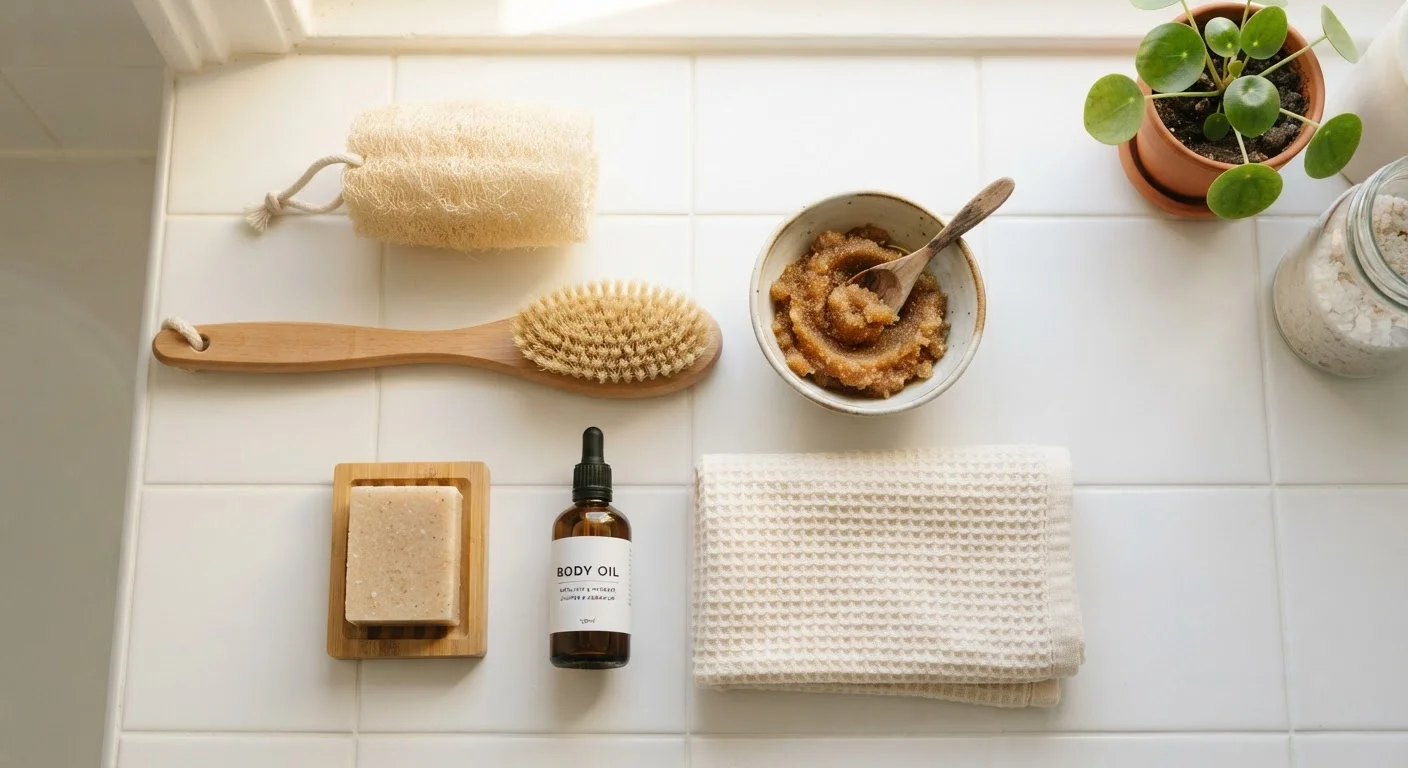
- Physical exfoliants use texture - scrubs, brushes, loofahs, or exfoliating gloves - to manually slough away dead skin cells. They're effective and satisfying to use, but applying too much pressure or using coarse particles too often can create micro-tears or rawness.
- Chemical exfoliants use acids or enzymes to dissolve the bonds holding dead cells to the surface. Common options for the body include alpha hydroxy acids (AHAs) like glycolic or lactic acid, and beta hydroxy acids (BHAs) like salicylic acid. These are often found in body lotions, sprays, or targeted treatments.
Neither type is inherently superior - the right choice depends on your skin type, concerns, and tolerance. If you're also navigating ingredient combinations in your routine, Skincare Ingredients That Don't Play Well Together is a useful reference.
28 days
Average skin cell turnover cycle in adults
Dermatology references consistently note that the skin naturally sheds and renews its surface cells approximately every four weeks, a cycle that slows with age.
~70%
Of dermatology patients with barrier issues citing over-exfoliation
Clinicians frequently report that disrupted skin barriers - presenting as redness, sensitivity, and dryness - are often linked to over-use of exfoliating products in everyday skincare routines.
Best Practices for Safe, Effective Body Exfoliation
Following a consistent, calibrated approach protects your skin while delivering real results. The practices below apply to most adults with generally healthy skin - if you have a skin condition such as eczema, psoriasis, or rosacea, consult a dermatologist before adding exfoliation to your routine.
Limit body exfoliation to one to three times per week, adjusting for your skin's response.
The skin renews itself roughly every 28 days, and exfoliating more than a few times per week removes healthy cells along with dead ones. Frequent exfoliation weakens the barrier, making skin more prone to moisture loss and environmental irritants.
Match exfoliant intensity to the skin area you're treating.
Body skin is thicker in some areas (heels, elbows, knees) and more delicate in others (inner arms, chest, behind the knees). Using the same coarse scrub everywhere ignores these real differences and can irritate sensitive zones.
Always apply a moisturizer within a few minutes of exfoliating.
Exfoliation temporarily increases transepidermal water loss - the rate at which moisture evaporates from skin. Applying a moisturizer immediately after, while skin is still slightly damp, helps seal in hydration and supports barrier recovery.
Recognize and respond to signs of over-exfoliation early.
Persistent redness, a burning or stinging sensation, tightness, unusual dryness, or increased sensitivity to products you normally tolerate well are all signals that you're exfoliating too aggressively or too often. Continuing despite these signs prolongs recovery.
Use gentle, even pressure with physical exfoliants - let the product do the work.
Many people scrub vigorously, assuming more pressure means better results. In reality, excessive friction is the primary cause of physical irritation and micro-abrasion. Light, circular motions are sufficient for cell turnover.
Reduce exfoliation frequency during winter or when skin is noticeably dry.
Cold air and indoor heating reduce the skin's natural moisture levels, making the barrier more vulnerable. Exfoliating at the same frequency year-round without adjustment can worsen seasonal dryness.
Quick Wins You Can Start Today
You don't need to overhaul your entire routine to improve your exfoliation habits. Small, immediate adjustments often make the biggest difference.
For a full picture of body care that goes beyond exfoliation, A Head-to-Toe Guide to At-Home Body Care covers everything from cleansing to moisturizing and seasonal adjustments. And if you're approaching warmer months, Your Pre-Summer Body Care Checklist can help you reassess your full body skin routine.
This article is for general informational purposes only and is not a substitute for professional medical or dermatological advice. If you experience persistent skin irritation or have an underlying skin condition, consult a qualified healthcare provider.
The content on this site is provided for informational purposes only and should not be considered a substitute for professional advice. While we strive to provide accurate and up-to-date information, we make no guarantees regarding its completeness or accuracy. Always consult a qualified professional for advice specific to your circumstances before making any decisions.