

Why Pasta Myths Are So Persistent
Pasta is one of the most forgiving foods a beginner can cook - and yet a surprising number of widely repeated habits are based more on kitchen folklore than culinary fact. Because pasta is simple and inexpensive, people rarely question the techniques passed down from a parent or seen briefly on television. Mistakes often go unnoticed because the dish still turns out edible.
But small misconceptions can quietly undermine your results: sauces that slide off instead of clinging, noodles that clump despite your best efforts, or water that takes forever to boil because of unnecessary steps. Clearing up these myths doesn't just make you a better pasta cook - it builds the kind of confident, evidence-based kitchen thinking that carries over into everything else you make. If you enjoy debunking food misconceptions, you might also appreciate our look at widespread nutrition myths put to the test.
The Most Common Pasta Myths, Corrected
Below are the misconceptions home cooks encounter most often - and the straightforward reasoning behind each correction.
Myth
Adding oil to the pasta water keeps the noodles from sticking.
Fact
Oil floats on water and coats the pasta after draining - which actually prevents sauce from adhering.
Oil and water don't mix. During cooking, any oil you add stays at the surface and plays virtually no role in preventing pasta from clumping. After draining, a light oil coating does develop on the noodles - and that's the real problem. It creates a slick barrier that causes sauce to slide off rather than bond with the pasta. The actual solution to clumping is using enough water (at least four quarts per pound), stirring the pasta in the first two minutes of cooking, and saucing the noodles immediately after draining.
Myth
You should rinse pasta with cold water after draining it.
Fact
Rinsing removes the surface starch that allows sauce to cling, leaving pasta slippery and less flavorful.
That slightly cloudy, starchy surface on freshly drained pasta is an asset, not a flaw. It acts like a glue between the noodle and the sauce, pulling them together into a cohesive dish. Rinsing with cold water strips this starch away and drops the noodle temperature sharply, meaning your sauce won't warm through evenly. The only time rinsing makes sense is for cold pasta salads, where you specifically want the noodles cool and lightly separated before adding a vinaigrette-style dressing.
Myth
Pasta water must be at a rolling boil the entire time pasta cooks.
Fact
A steady, moderate boil is all you need - a vigorous rolling boil adds turbulence but not meaningful cooking speed.
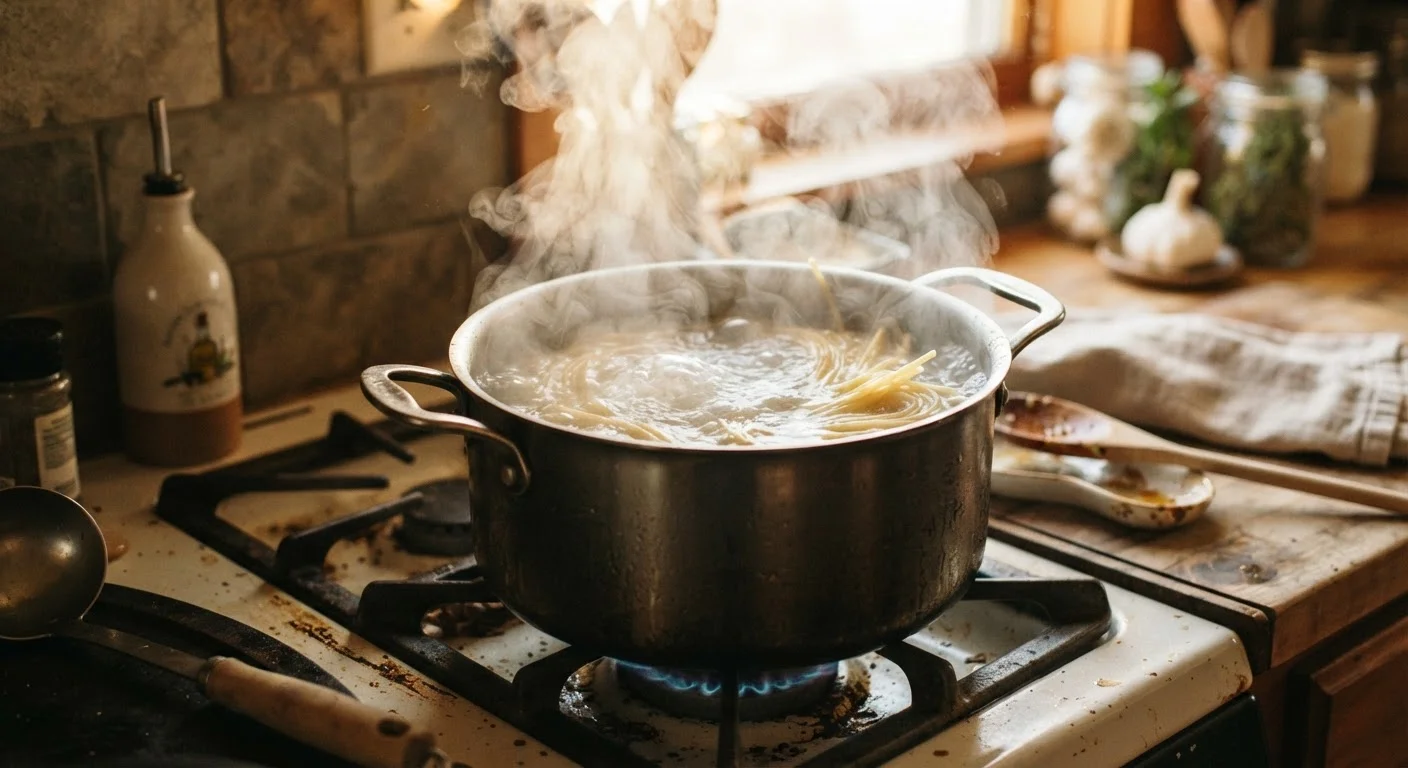
Water boils at the same temperature regardless of how vigorously it's bubbling (212°F / 100°C at sea level). A raging boil doesn't cook pasta faster; it just wastes energy, creates more steam, and increases the chance of the pot boiling over. A steady, consistent boil that keeps the water moving is sufficient to cook pasta evenly. What does matter is using enough water so the pasta has room to move freely, which prevents clumping and ensures even hydration throughout the noodle.
Myth
Salting pasta water is just for flavor - it doesn't really matter much.
Fact
Salt seasons pasta from the inside out; without it, no amount of sauce will fully compensate for a bland noodle.
Pasta absorbs water as it cooks, and if that water is salted, the seasoning becomes part of the noodle itself - not just its surface. Cooks often recommend water that tastes "pleasantly salty," roughly one to two teaspoons of kosher salt per quart of water, though personal preference plays a role. Under-salted pasta produces a dish where the sauce tastes fine on its own but the overall bite feels flat. Salting the water is the single most impactful seasoning step in the entire pasta-cooking process.
Myth
Breaking long pasta like spaghetti before cooking makes it easier to handle.
Fact
Long pasta is designed to be twirled with a fork; breaking it changes the eating texture and is entirely unnecessary.
Long pasta shapes exist because the length is functional - it wraps around a fork and carries sauce along its full surface in a single bite. Breaking spaghetti or linguine in half creates shorter, harder-to-twirl pieces that don't deliver the same eating experience. To cook long pasta without breaking it, fan it into the pot and gently press the exposed ends down as the submerged portion softens, usually within 30 to 45 seconds. No breaking required.
Putting It All Together
Good pasta technique is genuinely simple once the myths are cleared away: use a big pot, salt the water generously, skip the oil, don't rinse, and save a cup of that cloudy cooking water before you drain. That starchy water is your secret weapon for loosening thick sauces and making them stick to every strand.
These aren't chef secrets - they're just the logical outcomes of understanding what's actually happening in the pot. Cooking with that kind of clarity is more satisfying than following habits you can't explain. For a similar exercise in myth-busting applied to your weekly routine, see how meal planning myths make the whole thing feel harder than it is than it needs to be.
~20 lbs
Pasta consumed per American per year
According to the National Pasta Association, Americans consume an estimated 20 pounds of pasta per person annually, making it one of the most frequently prepared foods in U.S. kitchens.
2 min
Critical stirring window after adding pasta
Food scientists note that the first two minutes after adding pasta to boiling water is when surface starch is most active - stirring during this window significantly reduces clumping without any oil needed.
The content on this site is provided for informational purposes only and should not be considered a substitute for professional advice. While we strive to provide accurate and up-to-date information, we make no guarantees regarding its completeness or accuracy. Always consult a qualified professional for advice specific to your circumstances before making any decisions.