

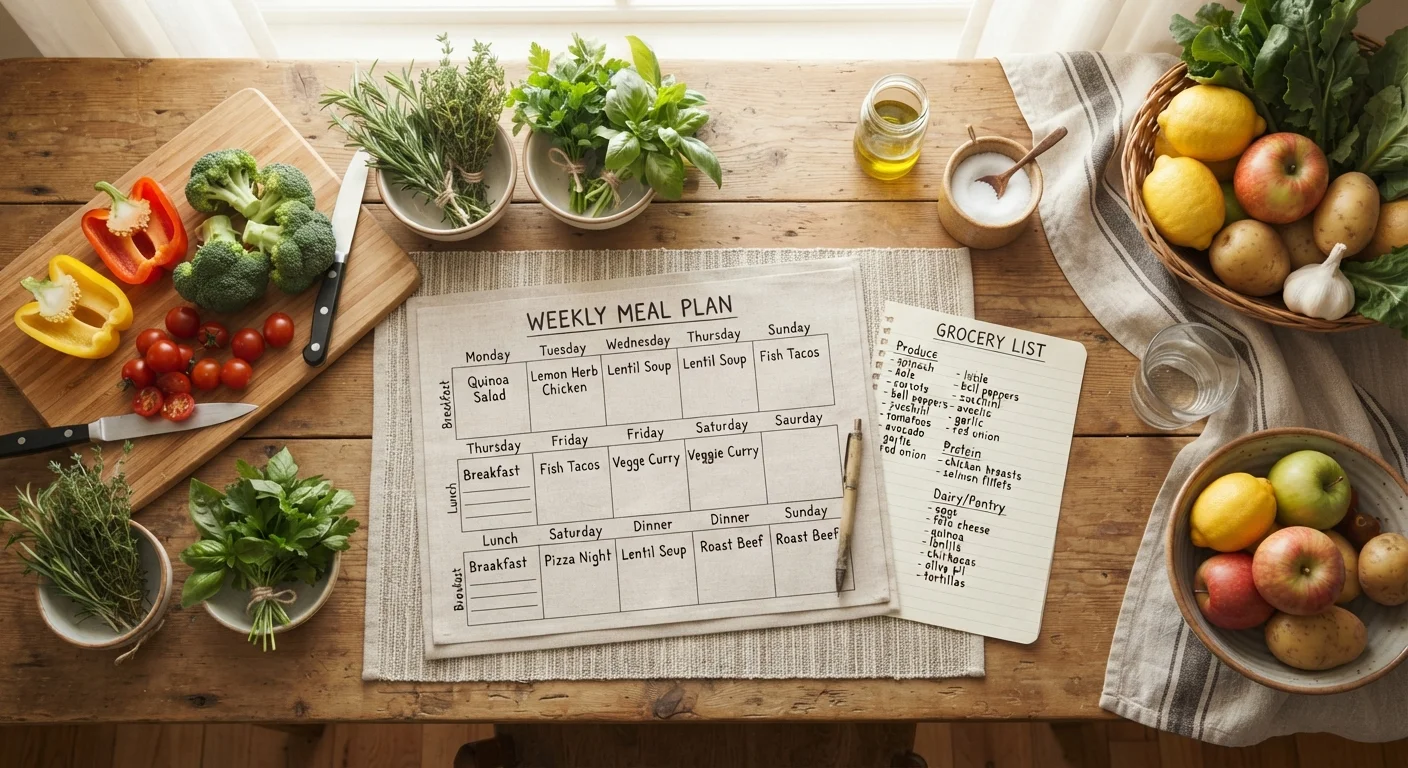
Why Meal Order Matters as Much as Meal Choice
Most people approach weekly meal planning by asking what they want to eat. Fewer ask when they should eat each thing - and that sequencing gap is exactly where fresh food goes to waste. A bunch of cilantro bought for Tuesday's tacos doesn't survive until Friday's grain bowl if nothing uses it in between.
Thoughtful sequencing treats your weekly menu as a connected system rather than a list of independent dinners. When you understand how ingredients move through the week - which ones are most perishable, which ones can double as components in later meals, and which ones hold up in the fridge - you stop losing money to the compost bin. For a full grounding in the planning process itself, this practical primer on meal planning covers the foundational habits that make sequencing easier to apply.
Schedule your most perishable ingredients into the first two days of the week
Leafy greens, fresh fish, ripe tomatoes, and delicate herbs have narrow windows before quality drops. Placing them at the start of the week means you use them at their best and avoid the mid-week discovery that they've gone soft. This single habit alone eliminates a significant share of household produce waste.
Build component meals that share raw ingredients across two or more dishes
Buying a full bunch of kale for one salad is inefficient. Planning two or three recipes that draw from the same ingredient means you reliably finish what you purchased. This approach - sometimes called ingredient threading - reduces both waste and the total number of items on your shopping list. Batch cooking takes this principle further by preparing base ingredients once for use across the whole week.
Match meal complexity to your actual schedule, not your ideal schedule
A labor-intensive recipe placed on a night you reliably get home late is likely to become takeout - which means the ingredients you bought go unused. Honest scheduling prevents the mismatch between ambition and reality that causes food to sit untouched in the fridge. Review your week's commitments before you write a single meal down.
Plan at least one flexible 'use-it-up' meal mid-week
Even well-sequenced plans encounter surprises - a dinner out, leftovers that accumulated, or produce that ripened faster than expected. A built-in flexible slot, such as a frittata, fried rice, or grain salad, gives you a structured opportunity to clear the fridge before weekend shopping. It also prevents the panic-driven throw-everything-out that happens when Sunday arrives and the fridge is still full.
Carry cooked staples forward rather than starting from scratch each day
Cooked grains, roasted vegetables, and poached proteins hold well for several days and form the backbone of multiple meals with minimal extra effort. Planning to carry these elements forward reduces both cooking time and the temptation to abandon the plan when you're tired. It also means ingredients get fully used before they expire.
Core Practices for Smarter Sequencing
The practices below work together. You don't need to adopt all of them at once - even one or two applied consistently will cut waste noticeably over a month.
Putting It All Together Without Overcomplicating Things
Sequencing doesn't require a spreadsheet or elaborate planning sessions. Once you internalize the core logic - perishables first, components shared, schedule acknowledged - it becomes a natural part of how you scan a recipe or write a shopping list.
One useful habit: before adding anything to your grocery list, do a quick fridge and pantry audit. That half-used can of coconut milk or the last few sweet potatoes from last week should anchor a meal early in your new plan. This ties directly into the broader checklist approach described in this before-you-start meal planning checklist.
For households cooking for one, sequencing is even more critical - smaller quantities spoil faster relative to what gets used. Meal planning strategies for solo eaters address portion and waste concerns in ways that general family-size advice doesn't.
And when food scraps are unavoidable despite good planning, composting at home without a full yard of bins gives those scraps a productive second life. Sequencing minimizes what needs composting - but it's a good fallback to have in place either way.
This article offers general meal planning education. Individual dietary needs vary; consult a registered dietitian or qualified nutrition professional for personalized guidance.
The content on this site is provided for informational purposes only and should not be considered a substitute for professional advice. While we strive to provide accurate and up-to-date information, we make no guarantees regarding its completeness or accuracy. Always consult a qualified professional for advice specific to your circumstances before making any decisions.