

Why Composting Matters - Even Without Much Space
Composting transforms kitchen and yard scraps into a nutrient-dense soil amendment - often called "black gold" by gardeners - that improves drainage, feeds beneficial soil organisms, and reduces the need for synthetic fertilizers. Beyond the garden, composting keeps organic matter out of landfills, where it would otherwise decompose without oxygen and produce methane, a potent greenhouse gas.
The common assumption that composting requires a large outdoor pile or a row of specialized bins stops many households from starting. In reality, several methods scale down neatly to fit a kitchen cabinet, a closet corner, or a small balcony. Whether you're growing vegetables in containers or tending a modest raised bed, homemade compost can make a meaningful difference in your results.
Before picking a method, it helps to understand what compost actually needs: a mix of carbon-rich "brown" materials (cardboard, dry leaves, paper) and nitrogen-rich "green" materials (fruit peels, vegetable scraps, coffee grounds), moisture, and air. Get those four elements roughly right and decomposition happens almost on its own.
What you will need
Choosing the Right Composting Method for Your Home
There is no single best composting system - the right choice depends on your living situation, the volume of scraps you generate, and how you plan to use the finished product.
Countertop and Pail Collection
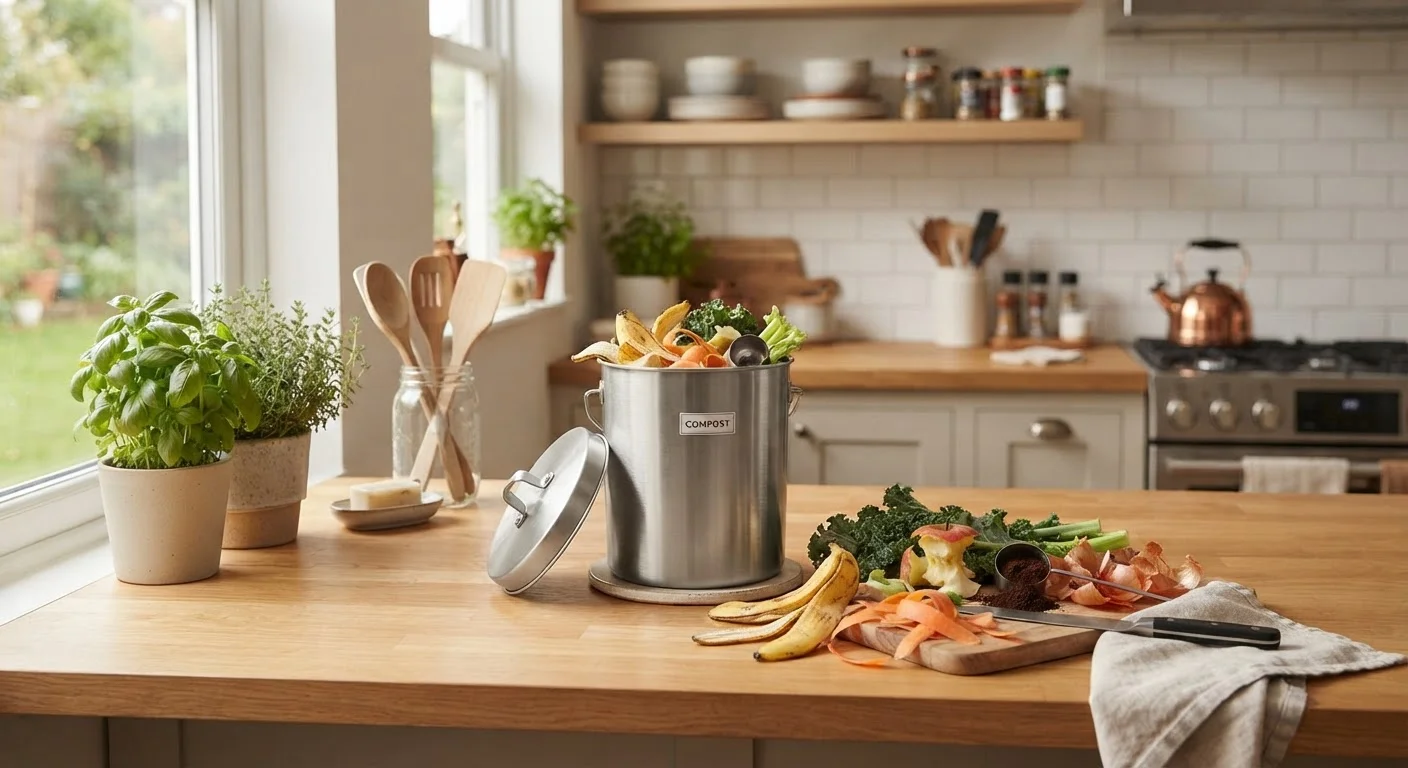
This is the starting point, not a complete system. A small lidded container on your counter (stainless steel or ceramic works well) collects daily kitchen scraps and reduces trips to an outdoor bin. Empty it every two to three days to prevent odors.
Tumbler Composting
A rotating drum mounted on a frame keeps contents contained, speeds up decomposition through easier aeration, and deters pests. Tumblers work well on patios or in compact yards. They typically produce finished compost in four to eight weeks when loaded correctly.
Worm Composting (Vermicomposting)
A stacking worm bin can live under a sink, in a garage, or on a shaded balcony. Red wigglers break down food scraps into vermicast - an exceptionally rich soil amendment. Worm bins handle fruit and vegetable scraps, coffee grounds, and moistened cardboard. They are odor-free when managed properly and produce both solid castings and liquid "worm tea" that can be diluted and applied to plants.
Bokashi Fermentation
Bokashi uses inoculated bran to ferment kitchen waste - including meat and dairy that traditional composting can't handle - inside a sealed bucket. The fermented material still needs to be buried in soil or added to a standard bin to finish breaking down, but it speeds up the final stage significantly. This method is popular in apartments for its compact footprint and near-odorless process.
If you're already thinking about reducing household waste at the source, pairing composting with smarter meal sequencing can noticeably cut how much ends up in your bin to begin with.
Start Smaller Than You Think You Need
New composters often over-invest in large systems before knowing their actual scrap volume. Start with one small method - a countertop collector plus a single tumbler or worm bin - and expand only if you consistently fill it. This keeps the learning curve manageable and prevents you from feeling overwhelmed by maintenance.
What to Compost - and What to Leave Out
Getting the input mix right prevents the two most common complaints: bad smells and a pile that never breaks down.
Generally Safe to Compost
- Fruit and vegetable scraps (including citrus, in moderation)
- Coffee grounds and paper filters
- Tea bags (remove staples; check that bags are not plastic-mesh)
- Eggshells (crush them to speed breakdown)
- Dry leaves, cardboard torn into small pieces, newspaper
- Grass clippings (in thin layers to avoid matting)
Use Caution or Avoid
- Meat, fish, and bones - attract pests in open bins; bokashi handles them, buried or enclosed systems may manage them
- Dairy products - similar pest concern in outdoor piles
- Diseased plant material - may spread pathogens if pile does not reach sufficient heat
- Heavily coated or glossy paper - degrades slowly and may contain inks
- Pet waste - can carry harmful pathogens; requires dedicated hot composting systems
One nuance worth noting: some commonly repeated advice about what to add or avoid turns out to be more complicated than the rules suggest. For a deeper look at evidence-based gardening guidance, see our piece on garden myths that trip up beginners.
Avoid Treated or Chemically Contaminated Materials
Do not add grass clippings or plant material from lawns treated with persistent herbicides - certain herbicides can survive the composting process and damage plants when the finished compost is applied. If you're unsure about the treatment history of yard materials, leave them out and use only kitchen scraps and known-safe paper products until you're confident in your inputs.
Using Your Finished Compost
Compost is ready when it looks dark and crumbly, smells earthy (not like rotting food), and you can no longer identify the original scraps. This typically takes anywhere from four weeks (active tumbler) to several months (a slow cold pile).
Spread one to three inches of finished compost over garden beds and work it lightly into the top few inches of soil before planting. For containers, blend compost with potting mix rather than using it straight - its density can restrict drainage in pots. A light top-dressing around established plants mid-season also helps replenish nutrients as the season progresses.
If you're ready to put that compost to use, our complete vegetable gardening guide walks through soil preparation, planting, and harvesting from start to finish.
Even small, consistent composting efforts add up. A household that diverts vegetable trimmings and coffee grounds daily can produce enough compost in a season to meaningfully enrich a small raised bed or a collection of containers - no yard full of bins required.
The content on this site is provided for informational purposes only and should not be considered a substitute for professional advice. While we strive to provide accurate and up-to-date information, we make no guarantees regarding its completeness or accuracy. Always consult a qualified professional for advice specific to your circumstances before making any decisions.