

Choosing the Right Spot for Your Garden
Location is the first and most consequential decision in home vegetable gardening. Most vegetables need at least six hours of direct sunlight per day - eight hours is better for fruiting crops like tomatoes, peppers, and squash. Walk your yard at different times of day and observe where shade falls before committing to a spot.
Beyond sunlight, consider proximity to a water source. Lugging a hose 100 feet every day quickly becomes a deterrent. Level or gently sloping ground drains well without washing away nutrients. Avoid low spots where water puddles after rain - root rot thrives there.
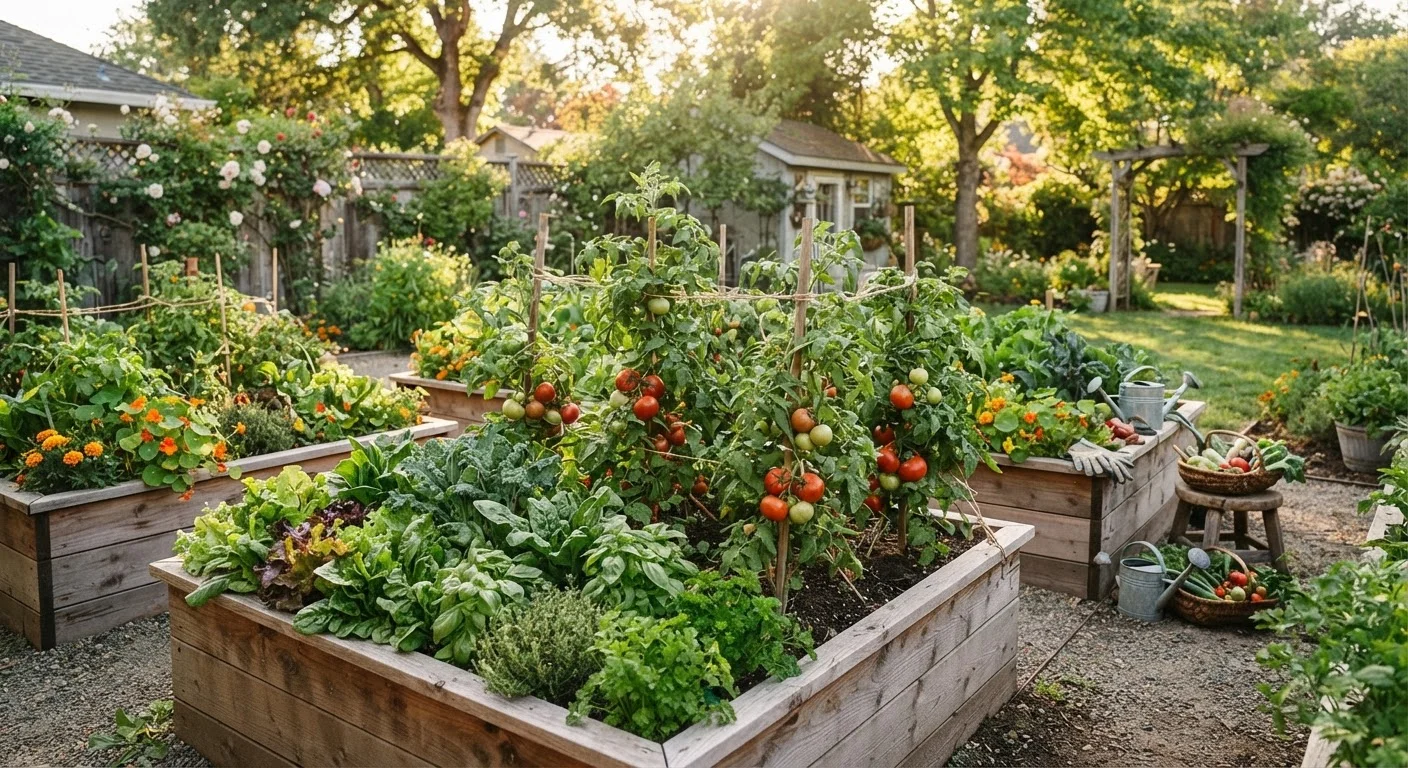
If your yard lacks a suitable in-ground location, raised beds or large containers on a patio or driveway are legitimate and productive alternatives. Many experienced home gardeners prefer raised beds precisely because they give full control over soil quality and drainage.
Start Small - Seriously
A 4×4 or 4×8 foot bed is enough to learn the fundamentals and still produce a meaningful harvest. Expanding in year two, once you understand your site and its rhythms, is far more effective than overcommitting in year one. Smaller beds are also easier to keep weeded, watered, and maintained consistently.
Understanding Your Soil
Vegetables are heavy feeders, and they perform only as well as the soil beneath them. Before you plant anything, get a basic soil test through your local cooperative extension service - many offer them for a nominal fee. A soil test tells you your pH, nutrient levels, and organic matter content, giving you a clear action plan rather than guesswork.
Most vegetables prefer a pH between 6.0 and 7.0. Outside that range, nutrients become less available even if they're physically present in the soil. Lime raises pH; sulfur lowers it.
Incorporate generous amounts of compost before planting. Compost improves drainage in clay soils, increases moisture retention in sandy soils, and feeds soil microbes that make nutrients available to roots. Our guide on composting at home without a yard full of bins covers practical, low-effort composting methods suited to everyday households.
6-7
Ideal soil pH range for most vegetables
A pH of 6.0-7.0 keeps most nutrients soluble and accessible to vegetable root systems, according to general horticultural guidance.
1 inch
Water per week most vegetables need
University extension programs consistently cite one inch of water per week as a baseline for productive vegetable gardens during the growing season.
25 days
Days to first harvest for radishes
Radishes are among the fastest-maturing vegetables, with some varieties ready to pull in as few as 25 days from direct seeding.
Deciding What to Grow
The most rewarding first garden is a small, focused one. Aim for a 4×8 foot bed or its equivalent in your first year. Overplanting is the most common beginner mistake - it leads to overwhelm, wasted produce, and disappointment.
Choose vegetables your household actually eats. Productive, beginner-friendly options include:
- Lettuce and salad greens - fast-growing, cool-season crops that yield quickly
- Bush beans - reliable, minimal maintenance, no staking required
- Zucchini - prolific producers even in imperfect conditions
- Tomatoes - rewarding but need full sun and consistent care
- Radishes - mature in as few as 25 days, great for impatient gardeners
Check your USDA hardiness zone and your region's average last frost date. Planting too early - before soil temperatures are appropriate - stunts growth and can kill seedlings. Your local cooperative extension service publishes planting calendars specific to your area. Before the season begins, see our spring garden prep checklist for a thorough walkthrough of what to do before the first seed goes in the ground.
Also worth reading: common garden myths that keep beginners from succeeding - some widely repeated advice can actually work against you.
Seeds vs. Transplants: Which to Choose
Starting from seed is less expensive and gives access to far more variety, but it requires planning - most seeds need 6-8 weeks of indoor growth before outdoor transplanting. Transplants (young plants purchased from a nursery) reduce that lead time and are more forgiving for first-year gardeners.
As a general rule: direct-sow crops like carrots, beans, beets, and radishes directly into garden soil - they don't transplant well. Start indoors or buy transplants for tomatoes, peppers, eggplant, and similar long-season crops.
For a deeper breakdown of the timing, cost, and effort differences between these two approaches, see Seeds vs. Transplants: Choosing the Right Starting Point.
When buying transplants, choose stocky, compact plants over tall, leggy ones - compact growth indicates the plant was grown in adequate light and will establish more readily after transplanting.
Leggy transplants often have weakened stems and root systems stretched by low light, making them more susceptible to transplant shock and slower to produce.
Harden off transplants - whether homegrown or store-bought - by setting them outdoors in a sheltered spot for a few hours each day over 7-10 days before planting them in the ground.
Moving plants directly from indoor or greenhouse conditions to full outdoor exposure causes stress that can set back growth by weeks. A gradual transition significantly improves survival rates.
Watering, Feeding, and Basic Maintenance
Most vegetable gardens need roughly one inch of water per week, either from rainfall or supplemental irrigation. Inconsistent watering - long dry spells followed by heavy soaking - is a leading cause of problems like blossom-end rot in tomatoes and tip burn in lettuce.
Water at the base of plants, not overhead, to reduce fungal disease risk. Morning watering is ideal; it allows foliage to dry before evening.
For feeding, a balanced, slow-release granular fertilizer worked into the soil at planting is a solid starting point for most gardens. Heavy producers like tomatoes and squash benefit from additional feeding mid-season. Always follow label directions; more fertilizer is not better and can damage plants.
Stay ahead of weeds - they compete for water, nutrients, and light. A 2-3 inch layer of mulch suppresses most weeds and retains soil moisture simultaneously. Inspect plants weekly for signs of pests or disease. Catching problems early dramatically reduces their impact.
Harvesting and What Comes Next
Harvest regularly and on time. Leaving overripe vegetables on the plant signals it to stop producing. Zucchini, beans, and cucumbers in particular should be picked every few days during peak season. Most crops are best harvested in the morning, when moisture content is highest.
Vegetables that reach their peak flavor fresh from the garden pair naturally with home cooking. If your harvest inspires you to sharpen your kitchen skills, the Cooking Basics hub covers fundamental techniques for making the most of what you grow. And if your garden's bounty is leading you toward eating more plants overall, this practical guide to plant-based eating offers a grounded starting point.
At season's end, pull spent plants, add compost to your bed, and take notes on what worked and what didn't. A simple journal - even a few sentences per week - dramatically accelerates learning from one season to the next. Most experienced gardeners agree: the second year is noticeably better than the first, and the third better still.
This article is for general informational and educational purposes. For guidance on local regulations, soil testing, or pest management specific to your region, consult your local cooperative extension service.
The content on this site is provided for informational purposes only and should not be considered a substitute for professional advice. While we strive to provide accurate and up-to-date information, we make no guarantees regarding its completeness or accuracy. Always consult a qualified professional for advice specific to your circumstances before making any decisions.