

Summary
18 items · 1-3 hours spread across a weekend
Why Pre-Planting Prep Actually Matters
Most gardening problems - patchy germination, nutrient deficiencies, transplant failure - can be traced back to skipped groundwork. Spring garden prep isn't busywork; it's the difference between a season you fight through and one you enjoy. This checklist walks you through every task worth doing before a single seed or transplant goes into the ground.
If you're new to growing food at home, this article pairs naturally with the complete vegetable gardening guide, which covers the full arc from plot selection to harvest. Once you're ready to plant, deciding between seeds and transplants is a logical next step after completing this checklist.
Timing & Planning
Soil Assessment & Amendment
Bed Clearing & Cleanup
Tool Inspection & Maintenance
Infrastructure & Support
Tools and Supplies You'll Need
Having the right equipment on hand before you start saves multiple trips and lets you work through the checklist efficiently. None of these items need to be new or expensive - functionality matters more than brand.
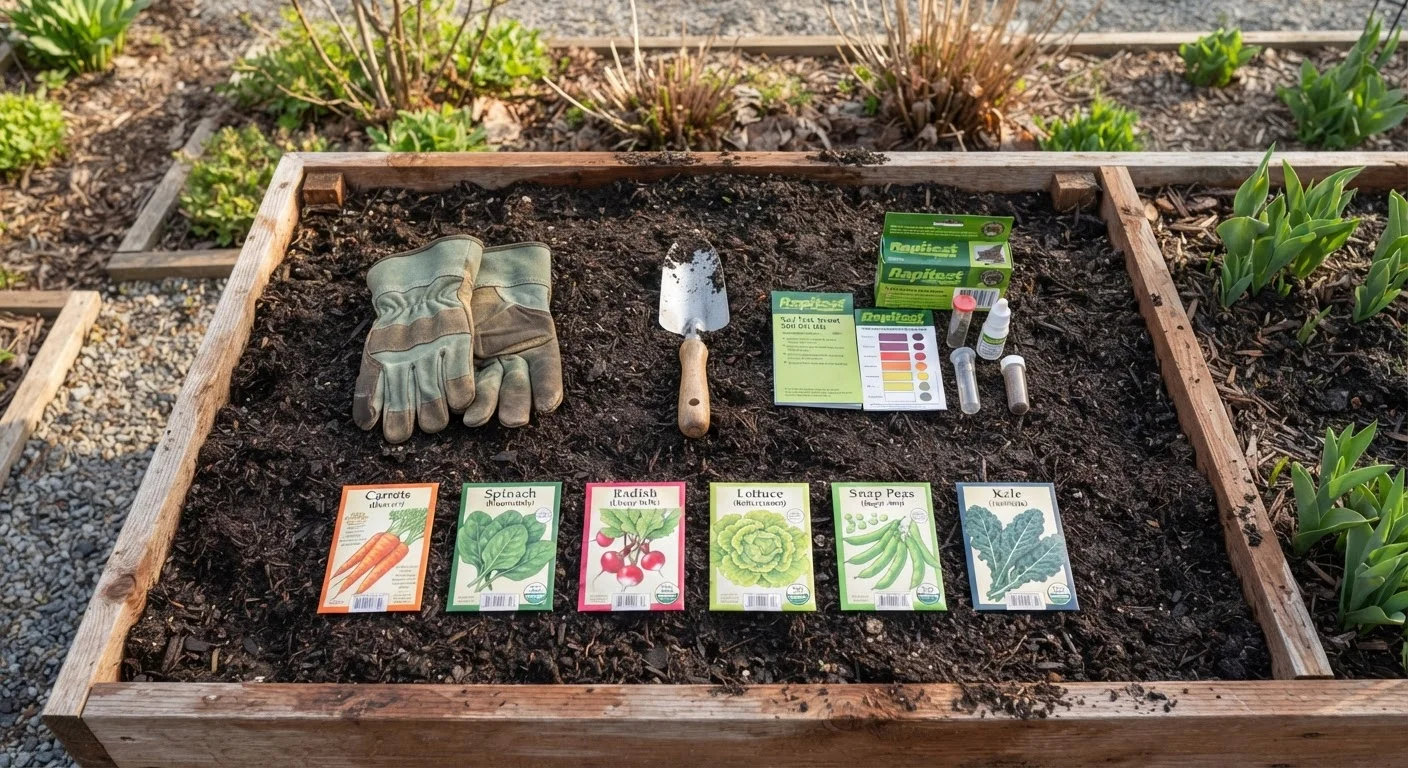
Soil test kit or extension service submission
Measures pH and primary nutrient levels so amendments are targeted rather than guesswork.
Garden fork or spade
Loosens and turns soil to incorporate compost and check drainage before planting.
Compost
Improves soil structure, drainage, and nutrient availability across nearly all soil types.
Whetstone or mill file
Sharpens hoe blades, spades, and pruners for cleaner cuts and easier digging.
Garden hoe
Efficient for surface weeding and breaking up compacted soil crust between beds.
Measuring tape or garden ruler
Helps lay out bed spacing and planting distances accurately before anything goes in the ground.
Linseed oil
Conditions wooden tool handles to prevent drying, cracking, and splintering over the season.
Common Prep Mistakes to Avoid
Even motivated gardeners can undermine their own efforts by rushing through prep. The most frequent misstep is working soil too early - if a handful squeezed in your fist holds its shape and doesn't crumble, the ground is still too wet and tilling will compact it into dense clods that restrict root growth for the rest of the season.
A close second is skipping the soil test. Dumping compost and fertilizer without knowing your baseline pH or nutrient levels is an expensive guess. Cooperative extension offices affiliated with land-grant universities in most states offer low-cost testing with region-specific amendment recommendations - a far more reliable approach than generic bag instructions.
Don't Work Wet Soil
Digging or rototilling soil while it's still saturated from snowmelt or spring rain compacts the pore structure that roots and soil organisms depend on. Compacted soil can take an entire season - sometimes longer - to recover. Always perform the squeeze test first: grab a fistful and release it. If it falls apart, you're good to go; if it holds a muddy shape, wait a few more days.
Finally, don't overlook watering infrastructure. Once plants are in the ground, consistent moisture becomes critical. Planning your watering approach before planting - rather than scrambling mid-season - pays dividends. Our guide on watering timing, depth, and method covers exactly what to think through ahead of time.
Frost Dates Are Averages, Not Guarantees
Your average last frost date is a historical probability, not a firm cutoff. A late cold snap after you've planted warm-season crops can wipe out transplants overnight. Monitor your local forecast in the weeks surrounding your frost date, and keep row cover or old bedsheets on hand to protect vulnerable plants if temperatures unexpectedly dip below 32°F.
The content on this site is provided for informational purposes only and should not be considered a substitute for professional advice. While we strive to provide accurate and up-to-date information, we make no guarantees regarding its completeness or accuracy. Always consult a qualified professional for advice specific to your circumstances before making any decisions.