

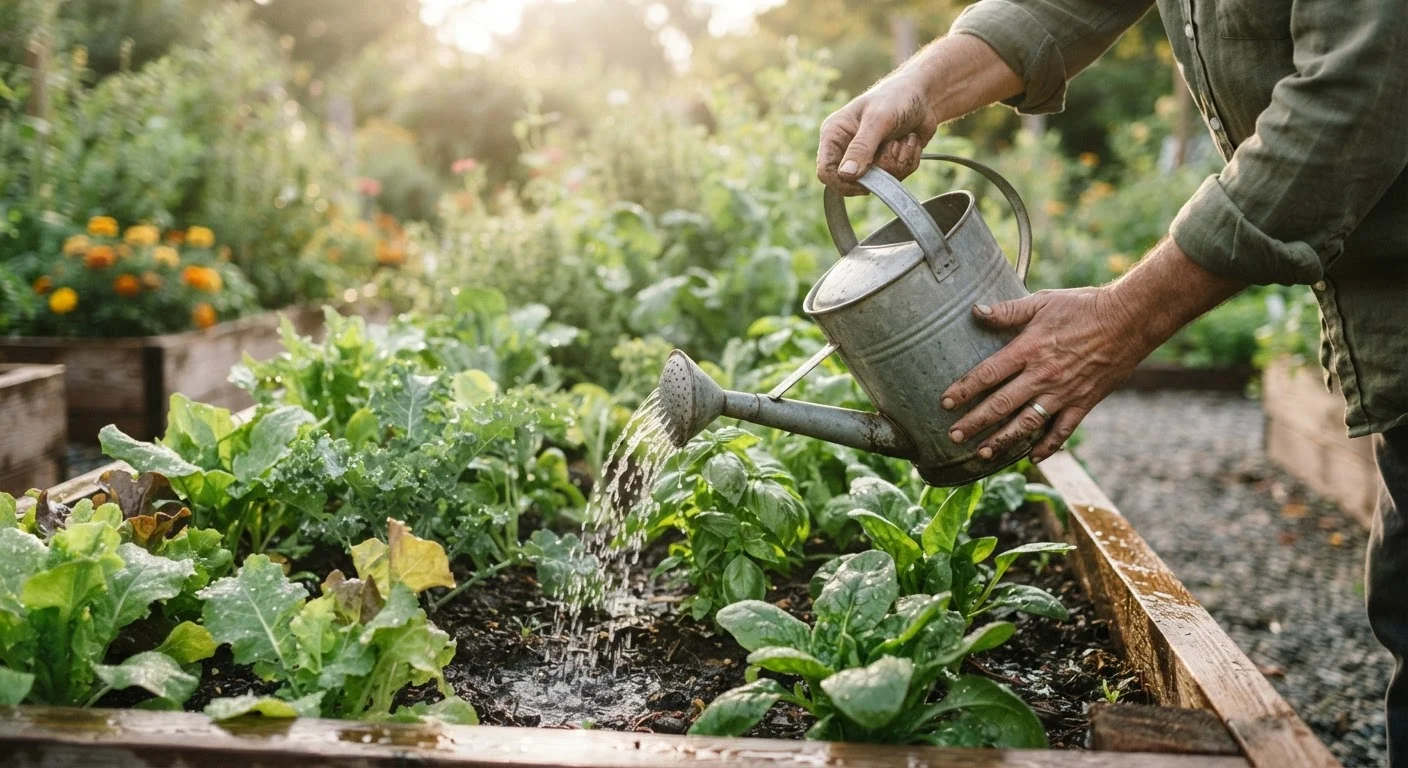
Why How You Water Matters as Much as How Much
Most beginner gardeners focus on quantity - how many gallons, how often - but timing, soil penetration, and delivery method shape plant health just as much as volume. Water applied at the wrong time of day largely evaporates before roots can use it. Water applied too shallowly trains roots to stay near the surface, making plants more vulnerable to heat and dry spells.
As explored in our guide on overwatering, more water is not always better - in fact, too much is a leading cause of plant failure. The goal is to match your watering habits to what your plants and soil actually need.
Water in the early morning, before the heat of the day builds
Morning watering allows moisture to reach the root zone before evaporation spikes. It also gives any water that splashes on foliage time to dry before evening, which reduces the conditions that encourage fungal diseases like powdery mildew.
Water deeply and less frequently rather than shallowly and often
Shallow watering keeps moisture near the soil surface, which is where it evaporates fastest and where it encourages roots to stay. Deep watering - penetrating six to eight inches into the soil - draws roots downward, where moisture is more stable and plants are better anchored.
Direct water at the base of plants, not at the leaves
Wet foliage is more susceptible to fungal infection and sunscald. Watering at the base ensures moisture reaches the root zone where it's needed and avoids unnecessary leaf exposure.
Use drip irrigation or soaker hoses for established garden beds
These delivery systems release water slowly and directly into the root zone, minimizing evaporation and runoff compared to overhead sprinklers. They're especially useful in vegetable gardens and mixed planting beds where consistent moisture matters.
Adjust your watering schedule based on weather and season
Fixed watering schedules don't account for rain, temperature spikes, or seasonal changes in plant water demand. Checking conditions - and skipping a scheduled watering after rain - prevents waterlogging and saves water.
Match watering depth to the plant's root zone depth
Different plants have different root depths. Shallow-rooted crops like lettuce need moisture in the top few inches, while deep-rooted plants like tomatoes or squash benefit from moisture penetrating much further. Watering to match root depth avoids waste and ensures the right zone gets hydrated.
Best Practices for Timing, Depth, and Delivery
These principles apply broadly whether you're growing vegetables, flowers, or shrubs. Adjust based on your climate, soil, and plant type - and consult your soil and site fundamentals if you're still setting up your garden.
Understanding Soil and Its Role in Water Retention
Soil type is one of the most important - and most overlooked - factors in watering decisions. Sandy soils drain quickly and may require more frequent watering. Clay soils retain moisture longer but can become waterlogged, suffocating roots. Loamy soils fall in the middle and are generally easier to manage.
A simple way to check soil moisture is the finger test: push your index finger about two inches into the soil near the plant's root zone. If it feels dry at that depth, it's time to water. If it still feels damp, wait another day. This low-tech method is more reliable than a fixed schedule because it responds to actual conditions rather than the calendar.
Mulching - spreading a layer of organic material like wood chips, straw, or shredded leaves around your plants - helps soil retain moisture between waterings, moderates soil temperature, and reduces how often you need to water. A two-to-three inch layer is generally effective for most garden beds.
If you're working on improving your garden's foundation, our spring prep checklist covers soil testing and bed preparation steps worth doing before the season begins.
Soil Type Shapes Your Watering Needs
There's no universal watering schedule that works for every garden because soil composition varies significantly. A gardener with sandy soil in a warm climate may need to water twice as often as someone with clay-heavy soil in a cooler region. If you're unsure what kind of soil you're working with, a basic soil test - available through many county extension offices - can provide useful guidance and inform amendments that improve water retention.
Putting It All Together
Good watering habits develop with observation. Pay attention to how your plants respond after watering - do leaves perk up? Does the soil stay moist for one day or three? These cues help you fine-tune your approach over time. Plants growing in containers dry out faster than those in the ground, and plants in full sun need more frequent attention than those in partial shade.
Consistent, thoughtful watering supports stronger root systems and more resilient plants overall. Whether you're growing a vegetable garden from scratch or maintaining established perennials, the practices outlined here give you a reliable foundation to build on.
The content on this site is provided for informational purposes only and should not be considered a substitute for professional advice. While we strive to provide accurate and up-to-date information, we make no guarantees regarding its completeness or accuracy. Always consult a qualified professional for advice specific to your circumstances before making any decisions.