

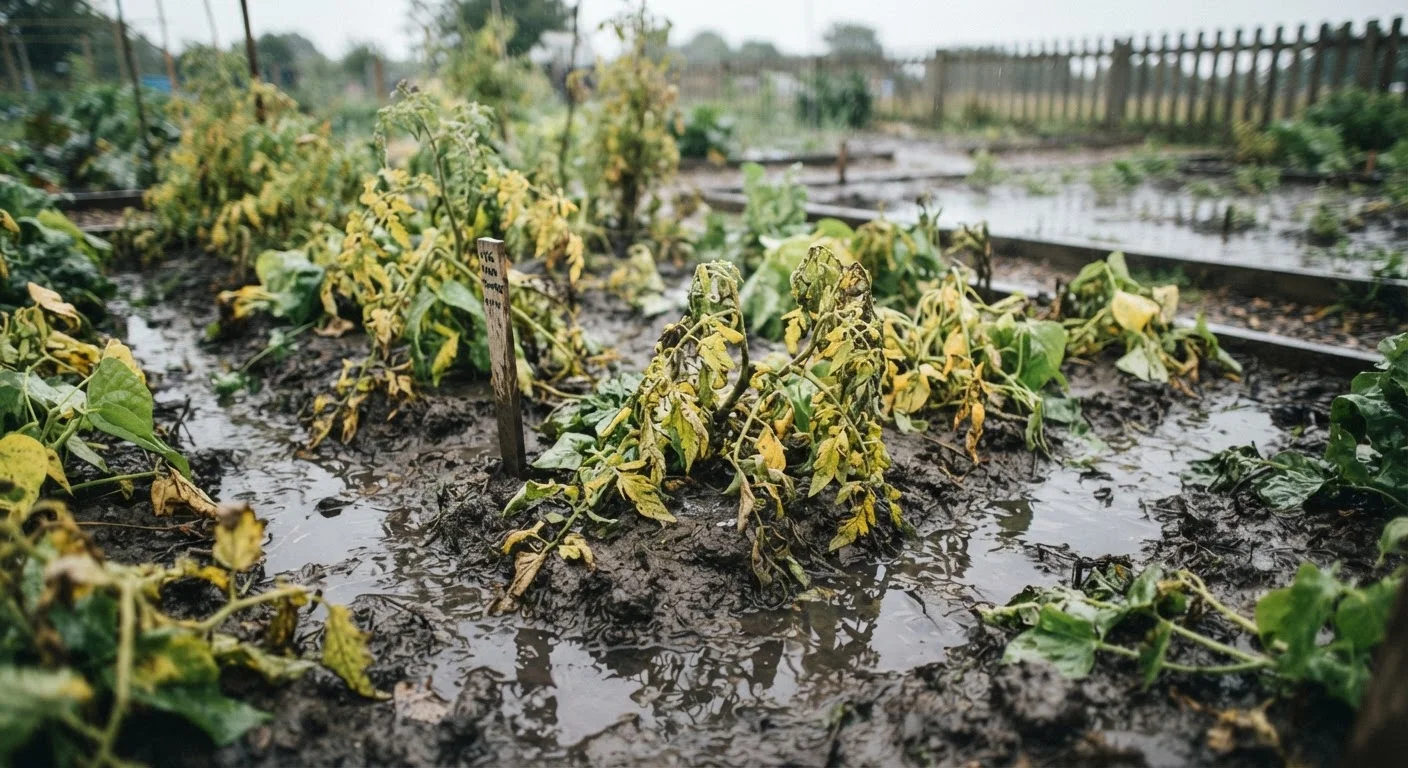
The Counterintuitive Truth About Plant Loss
Most new gardeners assume the biggest threat to their plants is drought - not enough water, not enough attention. In practice, the opposite problem claims far more beginner gardens. Overwatering starves roots of oxygen, creates conditions for fungal disease, and triggers a slow decline that looks deceptively like thirst.
The confusion is understandable. A wilting plant seems to be crying out for water. But wilting is also a classic symptom of root rot, where damaged roots can no longer move moisture upward even when the soil is saturated. Watering more in that situation accelerates the damage. Before you reach for the hose, it pays to understand what's actually happening underground.
If you're just getting started, building a solid foundation matters. See our guide to soil, sun, and space before establishing any watering routine.
Common Overwatering Mistakes and How to Avoid Them
The following mistakes account for the majority of overwatering-related plant losses in home gardens. Recognizing them early is the fastest way to turn your results around.
Watering on a fixed daily schedule regardless of weather or soil conditions.
Why it happens: Beginners often treat watering like a chore to check off each day, assuming consistency equals care. Rainy days, cooler temperatures, and humid conditions all reduce how quickly soil dries out.
Misreading wilting or yellowing leaves as a sign of drought when roots are actually waterlogged.
Why it happens: These symptoms look the same whether a plant is too dry or suffering from root rot, and the instinct is to add more water when a plant looks distressed.
Using containers or garden beds with poor drainage, causing water to accumulate around roots.
Why it happens: Drainage is often overlooked during setup. Containers without holes or heavy clay-like soil can trap water even when watering amounts seem reasonable.
Applying the same watering frequency to all plants regardless of their individual needs.
Why it happens: It's tempting to treat the entire garden as one unit, especially when plants are grouped together. In reality, succulents, vegetables, and perennials have very different moisture requirements.
Watering lightly and frequently instead of deeply and less often.
Why it happens: Short watering sessions feel like regular attention, but they only wet the surface. Roots follow moisture, so shallow watering keeps them near the top where overwatering and drying cycles are most extreme.
90%+
Houseplant deaths attributed to overwatering
Horticultural extension services frequently cite overwatering as the leading cause of preventable plant death among indoor and container gardeners.
2 inches
Recommended soil depth to test before watering
University cooperative extension guidelines consistently recommend the two-inch finger test as a reliable low-tech method to assess soil moisture before watering.
Reading Your Soil and Adjusting Your Routine
The most reliable watering tool you own isn't a timer or a moisture meter - it's your index finger. Push it about two inches into the soil near the plant's root zone. If it comes out dry, water thoroughly. If it comes out damp or coated with soil, wait. This simple check overrides guesswork and accounts for weather, season, and soil variation better than any fixed schedule.
Drainage is equally important. Even correct watering frequency can cause overwatering symptoms if water has nowhere to go. Containers need clear drainage holes. Garden beds benefit from loosened, amended soil that allows water to percolate rather than pool. Raised beds vs. in-ground plots handle drainage differently, and that difference significantly affects how often each needs water.
Timing and delivery method also shape outcomes. Watering deeply and less frequently encourages roots to grow downward, making plants more resilient. Shallow, frequent watering keeps roots near the surface where they're vulnerable to both drought and saturation. For a fuller picture, explore watering timing, depth, and method to refine your approach beyond frequency alone.
Root Rot Is Often Irreversible
Once root rot - typically caused by the fungal-like organism Phytophthora or true fungi like Pythium - takes hold, recovery is difficult and sometimes impossible. Affected roots turn brown, mushy, and lose their ability to absorb water or nutrients. Catching overwatering early, before root damage sets in, is the only reliable way to protect your plants.
Finally, watch out for well-intentioned but inaccurate gardening advice. Some popular tips - like watering on a strict daily schedule regardless of conditions - do more harm than good. Our piece on garden myths that keep beginners from succeeding covers several of these persistent misconceptions with what research actually shows.
The content on this site is provided for informational purposes only and should not be considered a substitute for professional advice. While we strive to provide accurate and up-to-date information, we make no guarantees regarding its completeness or accuracy. Always consult a qualified professional for advice specific to your circumstances before making any decisions.