

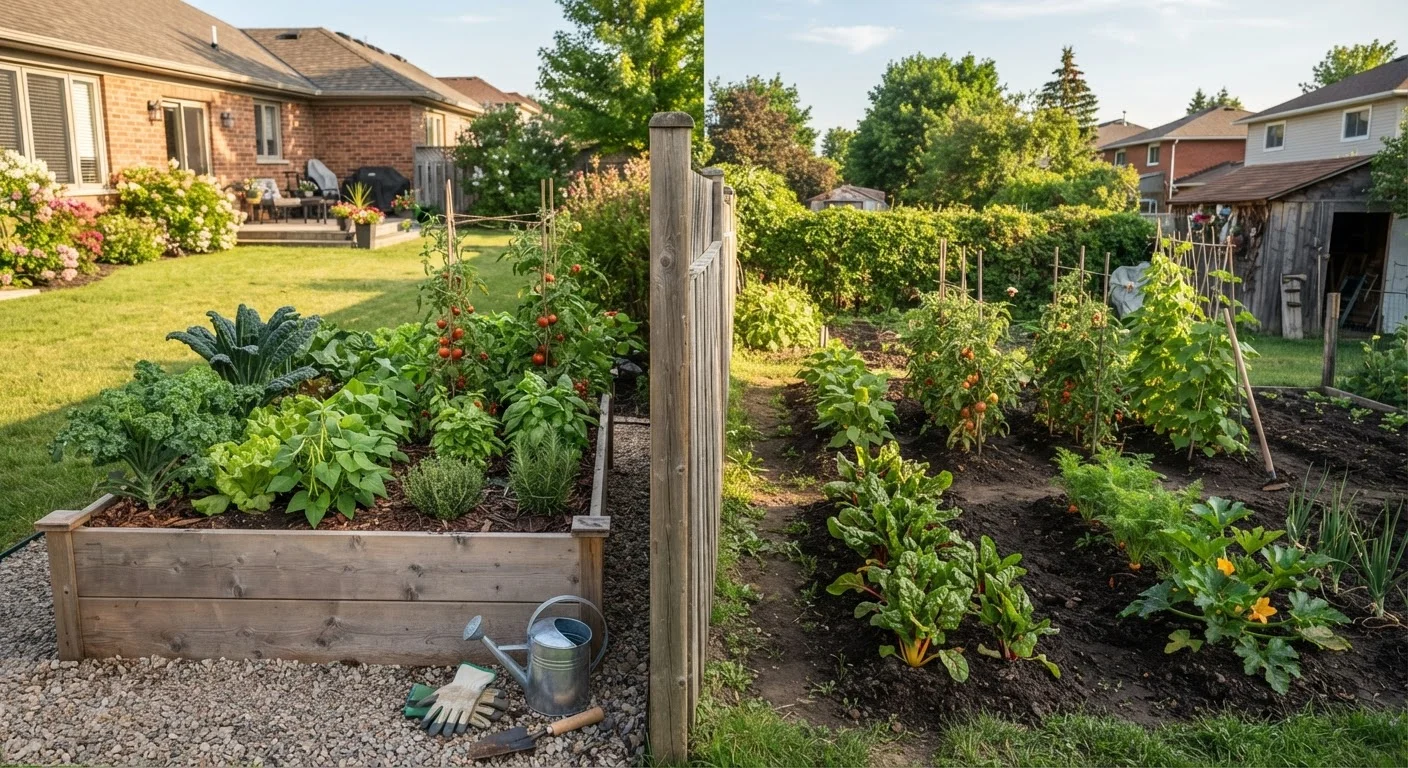
Option A
Raised Beds
The controlled, accessible growing environment.
Best for: Gardeners dealing with poor native soil, limited mobility, drainage problems, or small defined spaces who want faster setup and easier management.
Option B
In-Ground Planting
The traditional, scalable, low-upfront-cost approach.
Best for: Homeowners with decent native soil, larger growing ambitions, or tight budgets who are comfortable with more ground-level preparation work.
What Actually Separates These Two Approaches
At their core, raised beds and in-ground plots are simply two different strategies for giving plant roots a home. A raised bed is a contained growing area - typically framed in wood, stone, or composite material - filled with imported soil mix and elevated at least a few inches above grade. In-ground planting means working directly with your yard's existing soil, amending and cultivating it in place.
The distinction matters because it shapes nearly every downstream decision: how much you spend upfront, how your soil drains, how warm the root zone gets in early spring, how often you'll weed, and how physically demanding ongoing maintenance will be. Understanding these mechanics helps you match the method to your actual conditions rather than defaulting to whichever one looks easier on paper.
For a broader view of how these decisions fit into the full gardening picture, see our complete vegetable gardening guide from plot selection to first harvest.
Soil Control, Drainage, and Growing Conditions
Raised beds give you a decisive advantage when native soil is the problem. Poor drainage, heavy clay, compacted ground, or contamination from old paint and treated wood are common in suburban yards - and raised beds let you sidestep all of these by starting fresh with a blended fill of topsoil, compost, and coarse material. That control also means fewer soil-borne diseases and a more consistent environment year over year.
Because raised beds sit above grade, they warm up earlier in spring. This can extend your growing window by two to three weeks in cooler climates - meaningful when you're trying to get tomatoes or peppers established before summer heat peaks.
| Criterion | Raised Beds | In-Ground Planting |
|---|---|---|
| Upfront cost | Higher (materials + fill soil) | Lower (amendments only) |
| Soil quality control | Full - you choose the mix | Depends on native soil |
| Drainage | Excellent by design | Varies by site and soil type |
| Spring warm-up | Faster - extends season | Slower in cold climates |
| Weed pressure | Generally lower at first | Higher - native seed bank |
| Accessibility | Easier - less bending | Requires ground-level work |
| Scalability | Limited by frame size and cost | Easily expanded |
| Best crop types | Compact, shallow-rooted plants | Deep-rooted, sprawling crops |
| Long-term fertility | Requires regular soil topping | Builds naturally with compost |
In-ground plots, by contrast, rely on what your yard already has. If your native soil is loamy and fertile - common in many parts of the Midwest and Mid-Atlantic - in-ground gardening can be highly productive with relatively modest amendment work. Adding compost annually builds organic matter and encourages earthworm activity, which improves structure over time in ways that contained beds cannot replicate as naturally.
One underappreciated downside of raised beds: the elevated position that helps with drainage can also cause the soil to dry out faster during summer. This can increase how often you need to water - a factor worth considering alongside proper watering habits that affect plant health in both systems.
Cost, Effort, and Long-Term Maintenance
Raised beds carry a higher upfront cost. Materials for the frame, plus sufficient fill soil to give plants an adequate root depth (typically 10-12 inches minimum for most vegetables), add up quickly - especially if you're building multiple beds. That investment doesn't disappear after year one: fill soil compacts and breaks down over time and needs periodic topping off with fresh compost.
10-12"
Minimum soil depth for most vegetable crops
University extension guidelines generally recommend at least 10 to 12 inches of quality growing medium for roots to develop adequately in a raised bed.
2-3 weeks
Earlier growing season with raised beds
Elevated soil warms faster than in-ground soil in spring, commonly allowing planting to begin two to three weeks ahead of schedule in cooler regions.
30-50%
Reduction in weeding time reported by raised-bed gardeners
Gardeners using clean fill soil in raised beds frequently report substantially less weeding compared with maintaining in-ground plots, particularly in the first few seasons.
In-ground planting requires far less initial spending. A soil test, a few bags of compost, and the labor of tilling or double-digging are the main inputs. Over multiple seasons, a well-maintained in-ground bed can become increasingly productive as soil biology develops - something that takes deliberate effort to replicate in a raised frame.
Weed pressure, however, tends to be noticeably higher in-ground. Weed seeds are already present in native soil, and surrounding lawn can encroach on bed edges. Raised beds with clean fill soil typically start with far fewer weeds, though they're not immune - airborne seeds settle into any open soil. Using a path material like wood chips or gravel around raised beds helps contain this.
Before committing to either method, it's worth running through a spring preparation checklist to assess your site, test your soil, and make sure your timing is on track.
Matching the Method to Your Plants and Goals
Crop choice is often the clearest decision-maker. Shallow-rooted, compact vegetables - lettuce, herbs, radishes, spinach, bush beans - thrive in raised beds and benefit from the improved drainage and warmth. Deep-rooted or sprawling crops - winter squash, sweet corn, asparagus, indeterminate tomatoes - are often better suited to in-ground space where root depth and horizontal spread aren't constrained by a frame.
For those working with limited square footage, raised beds make excellent use of small, defined areas. If you're gardening in a tight spot, also consider crops specifically suited to compact growing conditions.
Once you've settled on your setup, the next planning question is whether to start from seed or use transplants - a choice explored in detail in our guide on seeds vs. transplants. Your bed type can influence that decision too: raised beds' warmer soil often suits direct seeding of warm-season crops earlier than in-ground beds would allow.
Many experienced home gardeners eventually land on a hybrid approach - raised beds for salad greens, herbs, and small fruiting crops; in-ground space for the sprawling plants that don't fit neatly in a frame. That combination often delivers the best of both systems without the limitations of either alone.
The content on this site is provided for informational purposes only and should not be considered a substitute for professional advice. While we strive to provide accurate and up-to-date information, we make no guarantees regarding its completeness or accuracy. Always consult a qualified professional for advice specific to your circumstances before making any decisions.