

Start here
What Does Plant-Based Actually Mean?
Next
Key Nutrients to Pay Attention To
Then
Common Pitfalls Beginners Run Into
Apply it
Practical Ways to Shift Your Plate
Make it stick
Building a Sustainable Routine
What Does Plant-Based Actually Mean?
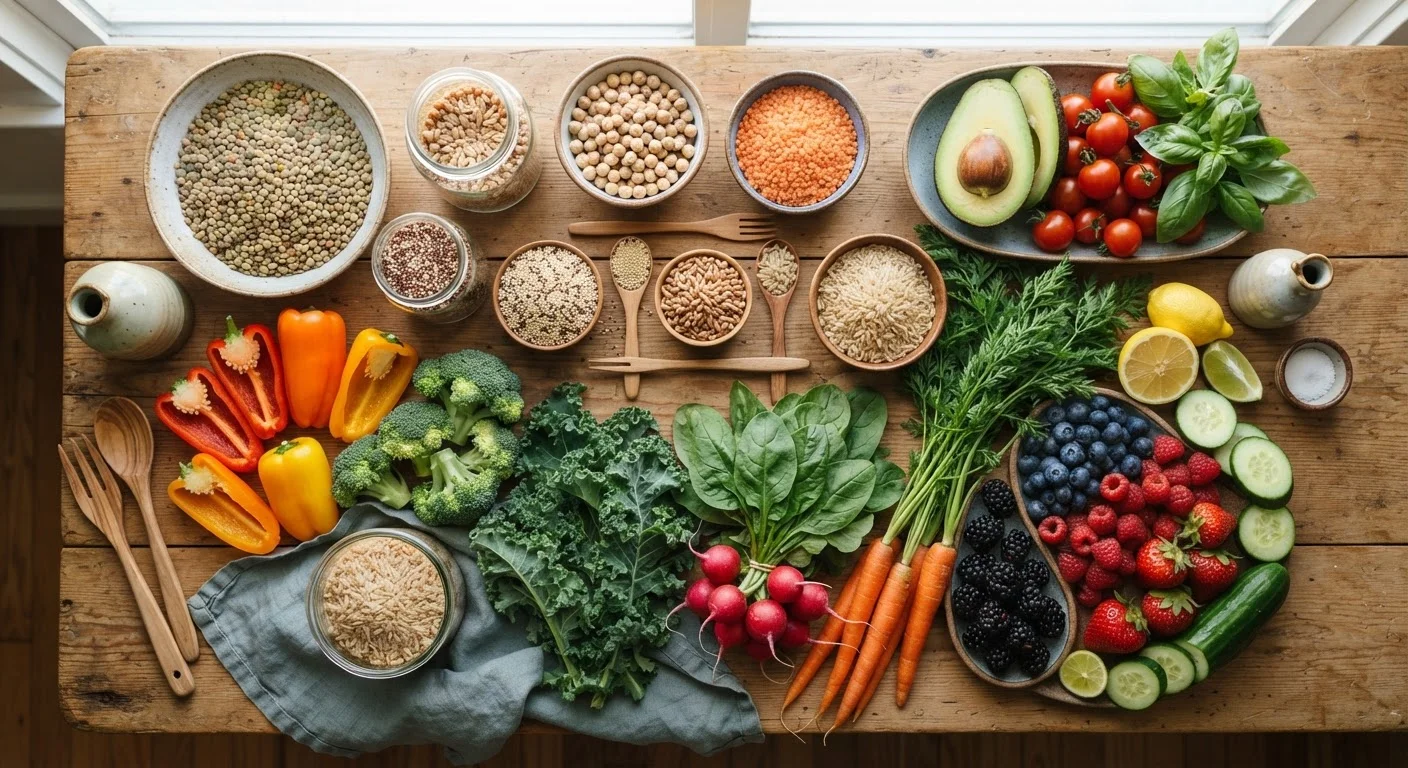
The term plant-based gets used in many ways, which is part of what makes it confusing. At its core, it describes a dietary pattern where vegetables, fruits, legumes, whole grains, nuts, and seeds form the majority of what you eat. It is not a strict rulebook - it's a direction.
Some people interpret plant-based as fully vegan (no animal products at all). Others use it to mean simply eating more plants while still including modest amounts of meat, dairy, or eggs. Both approaches fit under the umbrella. What matters most is that whole plant foods occupy the center of the plate, not the edges.
Before going further, it helps to have a solid grounding in how your body uses food in general. Our nutrition basics guide for beginners is a useful starting point if concepts like macronutrients or micronutrients feel unfamiliar.
Whole plant foods
Foods that are minimally processed and come directly from plants - vegetables, fruits, legumes, whole grains, nuts, and seeds - as opposed to refined or heavily manufactured products.
Legumes
A family of plants whose seeds grow in pods, including beans, lentils, chickpeas, and peas. They are a primary protein and fiber source in plant-based diets.
Non-heme iron
The form of iron found in plant foods and eggs. It is absorbed less efficiently by the body than heme iron from meat, but absorption can be improved by eating it alongside vitamin C.
Fortified foods
Foods that have had nutrients added during processing that aren't naturally present or are present in smaller amounts - for example, plant milks fortified with calcium or B12.
ALA (alpha-linolenic acid)
A plant-based omega-3 fatty acid found in flaxseed, chia, and walnuts. The body can convert it to EPA and DHA, though the conversion rate is limited and varies by individual.
Macronutrients
The three main categories of nutrients the body needs in larger amounts for energy and structure: carbohydrates, proteins, and fats.
Key Nutrients to Pay Attention To
A well-constructed plant-based diet can meet most nutritional needs, but a few nutrients deserve deliberate attention because they are either less abundant or less readily absorbed from plant sources.
- Vitamin B12: Found almost exclusively in animal foods. People limiting or eliminating animal products are generally encouraged to eat B12-fortified foods or discuss supplementation with a healthcare provider.
- Iron: Plants contain non-heme iron, which the body absorbs less efficiently than the heme iron in meat. Pairing iron-rich plant foods (lentils, tofu, fortified cereals) with a source of vitamin C improves absorption noticeably.
- Omega-3 fatty acids: Fatty fish is a concentrated source of EPA and DHA. Walnuts, flaxseed, and chia seeds provide ALA, a plant-based omega-3 the body can partially convert - though conversion rates vary between individuals.
- Calcium: Dairy is a common source, but calcium also appears in fortified plant milks, tofu made with calcium sulfate, kale, and bok choy.
- Vitamin D and iodine: These can be under-supplied in any diet pattern but are worth monitoring when dairy is reduced or eliminated.
For a detailed comparison of how plant and animal proteins stack up, see our piece on protein sources across different diets.
Common Pitfalls Beginners Run Into
Most early stumbles with plant-based eating fall into a handful of predictable patterns.
Don't Assume 'Plant-Based' Means Nutritious
A label reading 'vegan' or 'plant-based' does not automatically mean a product is healthful. Many packaged plant-based foods contain high levels of sodium, added sugars, or saturated fats from coconut or palm oil. Always check the nutrition label and ingredients rather than relying on front-of-package claims.
Over-relying on processed plant foods. The market for packaged vegan burgers, meat alternatives, and dairy-free snacks has expanded rapidly. These products can ease the transition, but many are high in sodium and saturated fat while being low in fiber. They work best as occasional options, not dietary staples.
Underestimating calorie density differences. Whole plant foods are generally less calorie-dense than meat and dairy. Some beginners feel fatigued in the early weeks simply because total food volume needs to increase. Eating adequate amounts of legumes and whole grains helps address this.
Skipping meal structure entirely. Removing familiar anchor foods without replacing them with something equally satisfying can leave meals feeling incomplete. Building a repertoire of go-to plant-based meals prevents the frustration of staring at a fridge with no plan.
Practical Ways to Shift Your Plate
Gradual, structured changes tend to stick better than overnight overhauls. Here are concrete starting points:
- Swap one meal per week. Pick a meal you already enjoy and replace the animal protein with a legume - lentils in a pasta sauce, chickpeas in a stir-fry, black beans in tacos.
- Make vegetables a main, not a side. Roasting a large tray of mixed vegetables and pairing them with a whole grain (farro, brown rice, quinoa) creates a flexible, filling base for multiple meals.
- Experiment with flavor-first cooking. Plant foods absorb seasoning readily. Learning to use aromatics, spices, and acids confidently transforms simple ingredients. Our guide on habits that lead to bland food addresses common flavor mistakes worth knowing about.
- Build a short list of reliable recipes. Aim for five to six plant-based meals you genuinely enjoy. Rotate them rather than hunting for new recipes every week.
Batch-Cook a Weekly Grain Base
Cooking a large pot of a whole grain - brown rice, farro, or barley - at the start of the week gives you a versatile base for bowls, salads, and sides without daily effort. Grains keep well refrigerated for four to five days. This one habit dramatically reduces weeknight cooking friction.
If you grow some of your own produce, that connection to fresh ingredients often increases how much variety you cook with. Our home vegetable gardening guide is a helpful entry point.
Building a Sustainable Routine
Sustainability is the real measure of any dietary shift. A pattern you maintain for years matters far more than a perfect week followed by burnout.
Meal planning is one of the most effective tools available. When plant-based ingredients are prepped and accessible, reaching for them becomes the path of least resistance. Our meal planning primer for busy households walks through how to structure a realistic weekly prep workflow from scratch.
Social situations - restaurants, family gatherings - can feel tricky at first. Identifying a few flexible dishes you can eat or adapt in most settings reduces anxiety significantly. Communicate your preferences simply and without making them a topic of debate.
If you have an underlying health condition, are pregnant, or are making significant dietary changes for a child or older adult, consult a registered dietitian before making substantial shifts. General guidance is a starting point, not a substitute for personalized care.
This article is for general informational and educational purposes only and does not constitute medical or dietary advice. Always consult a qualified healthcare provider or registered dietitian for guidance tailored to your individual health needs.
Frequently Asked Questions
No. Plant-based eating exists on a spectrum. Many people significantly increase their intake of vegetables, legumes, and whole grains while still eating some meat, dairy, or fish. Even partial shifts can add meaningful nutritional variety to your diet.
Legumes, tofu, tempeh, edamame, whole grains, and nuts all contribute protein. Eating a variety of these foods across the day makes it realistic to meet protein needs. For a deeper look at how plant proteins compare, see resources on protein across different dietary patterns.
B12 is produced by microorganisms and is naturally concentrated in animal-derived foods. People following strict plant-based diets are commonly advised to use B12-fortified foods or a supplement, but you should discuss specific supplementation with a healthcare provider.
Not necessarily. Many packaged plant-based products are high in sodium, saturated fat, or refined starches. They can be a useful transition tool, but whole plant foods - vegetables, beans, grains - should form the bulk of a plant-focused diet.
Begin with simple swaps rather than elaborate recipes: add beans to dishes you already make, try grain bowls using pre-cooked grains, or build meals around roasted vegetables. Our guide on <a href="/food-eating/meal-planning/meal-planning-from-scratch-a-practical-primer-for-busy-households">meal planning from scratch</a> offers practical frameworks for low-effort weekly prep.
Some people benefit from supplements - particularly for B12, vitamin D, and iodine - but individual needs vary. A registered dietitian can assess your actual intake and make appropriate recommendations rather than a one-size-fits-all answer.
The content on this site is provided for informational purposes only and should not be considered a substitute for professional advice. While we strive to provide accurate and up-to-date information, we make no guarantees regarding its completeness or accuracy. Always consult a qualified professional for advice specific to your circumstances before making any decisions.