

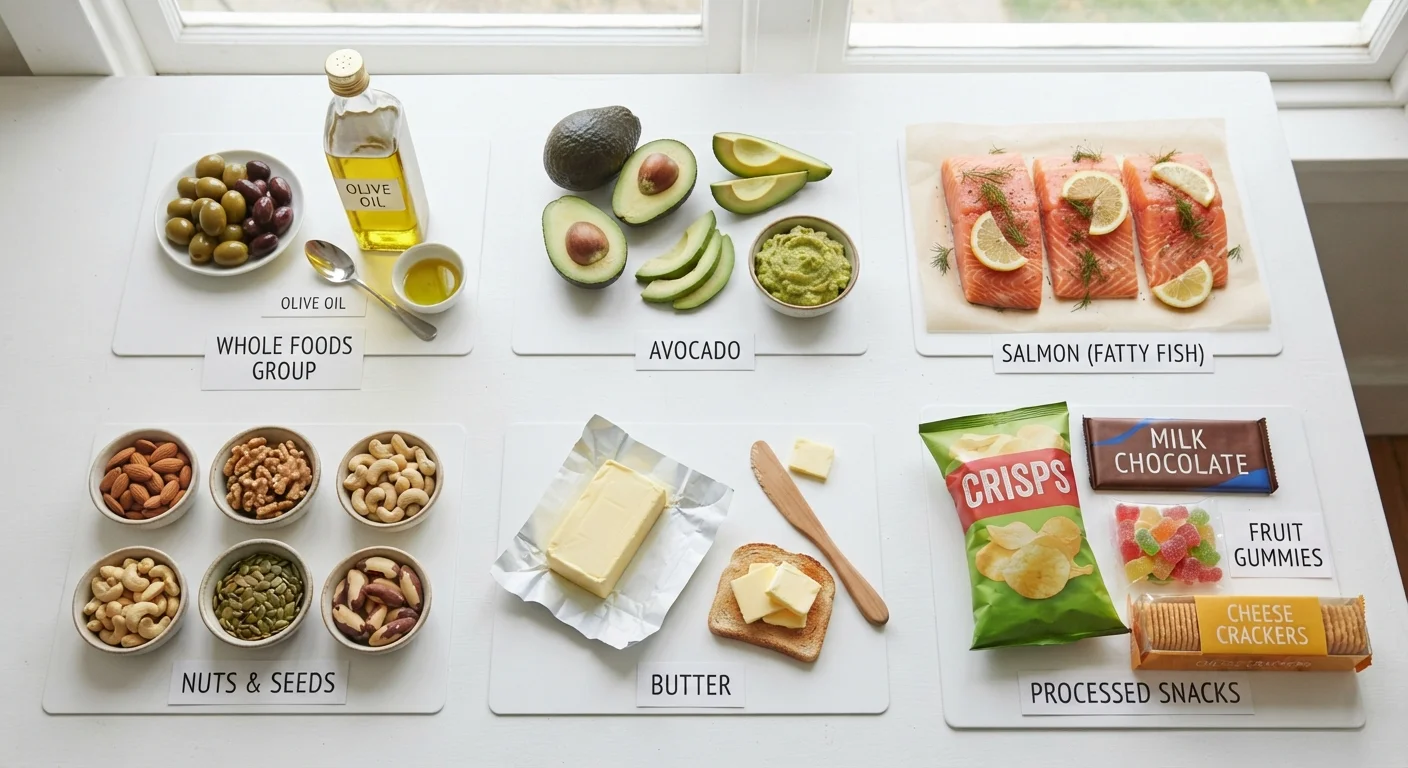
Why Fat Type Matters More Than Fat Amount
For decades, dietary fat was treated as a single villain. Today, nutrition science draws a much sharper picture: the type of fat you eat has a greater impact on heart and metabolic health than the total grams consumed. Understanding the three main categories - saturated, unsaturated, and trans fat - helps you make sense of food labels, dietary guidelines, and the advice your doctor may offer.
This article provides a plain-language breakdown of each fat type, what it does inside the body, and where it commonly shows up in the American diet. It is general health education, not personal medical advice - always consult a qualified healthcare professional about your specific dietary needs.
You may also want to explore how fat fits into broader nutrition patterns, including common nutrition myths put to the test.
| Saturated fat common sources | Butter, red meat, full-fat dairy, coconut oil, palm oil |
| Unsaturated fat common sources | Olive oil, avocados, nuts, seeds, fatty fish |
| Industrial trans fat status (U.S.) | No longer Generally Recognized as Safe (GRAS) by FDA (U.S. Food and Drug Administration) |
| Essential fatty acids | Omega-3 and omega-6 must come from food; the body cannot synthesize them (National Institutes of Health, Office of Dietary Supplements) |
| Calories per gram (all fat types) | 9 calories per gram |
| Trans fat label caveat | Products with <0.5g per serving may legally list 0g trans fat (FDA nutrition labeling regulations) |
Saturated Fat: The Nuanced Middle Ground
Saturated fats are solid at room temperature and found primarily in animal products - fatty cuts of meat, full-fat dairy, butter, and tropical oils like coconut and palm oil. The term "saturated" refers to their chemical structure: each carbon atom in the fatty acid chain is fully bonded to hydrogen atoms, leaving no room for double bonds.
In the body, saturated fats raise levels of LDL cholesterol (commonly called "bad" cholesterol) in most people. Elevated LDL is an established risk factor for cardiovascular disease, which is why major health organizations - including the American Heart Association - generally recommend limiting saturated fat intake. However, research also shows that not all saturated fatty acids behave identically, and that the overall dietary pattern matters alongside individual nutrient targets. Replacing saturated fat with refined carbohydrates, for example, does not necessarily reduce cardiovascular risk.
Saturated fat
A type of dietary fat with no double bonds between carbon atoms, making it solid at room temperature. Found primarily in animal products and tropical oils, it tends to raise LDL cholesterol when consumed in excess.
Unsaturated fat
A dietary fat containing one or more double bonds in its carbon chain, typically liquid at room temperature. Generally associated with improved cholesterol profiles and reduced inflammation compared to saturated fat.
Trans fat
A fat formed through partial hydrogenation of vegetable oils (industrial trans fat) or found in small amounts naturally in some animal foods. Industrial trans fat is particularly harmful to cardiovascular health.
LDL cholesterol
Low-density lipoprotein cholesterol, commonly called 'bad' cholesterol. Elevated LDL levels are associated with increased risk of plaque buildup in arteries and cardiovascular disease.
HDL cholesterol
High-density lipoprotein cholesterol, often called 'good' cholesterol. Higher HDL levels are generally associated with lower cardiovascular risk, as HDL helps carry cholesterol away from arteries.
Omega-3 fatty acids
A class of polyunsaturated essential fats found in fatty fish, walnuts, and flaxseeds. Associated with lower triglycerides and reduced inflammatory markers, they must be obtained through diet.
Partial hydrogenation
An industrial process that adds hydrogen to liquid vegetable oils to make them semi-solid and extend shelf life. This process creates industrially produced trans fats as a byproduct.
Unsaturated Fat: The Broadly Beneficial Category
Unsaturated fats are liquid at room temperature and are generally associated with favorable effects on cholesterol levels and inflammation. They divide into two main groups:
- Monounsaturated fats (MUFAs): Found in olive oil, avocados, and many nuts, MUFAs tend to lower LDL cholesterol without reducing HDL ("good") cholesterol. They are a cornerstone of the Mediterranean dietary pattern, which has substantial research support for cardiovascular health.
- Polyunsaturated fats (PUFAs): Found in fatty fish, walnuts, flaxseeds, and vegetable oils such as sunflower and soybean oil. This category includes omega-3 and omega-6 fatty acids - both are essential fats, meaning the body cannot produce them and must obtain them through food. Omega-3s, particularly those from fatty fish (EPA and DHA), are linked to reduced triglycerides and lower inflammation markers.
Swapping saturated fats for unsaturated alternatives is one of the most consistently supported dietary shifts in nutrition research. For a parallel look at how food components differ within a single category, see soluble vs. insoluble dietary fiber.
Trans Fat: The Category to Minimize
Trans fats occur in two forms. Small amounts arise naturally in some dairy and meat products (ruminant trans fats), but the type most associated with harm is industrially produced trans fat - created through a process called partial hydrogenation, which converts liquid vegetable oils into semi-solid fats used in processed foods, fried items, and certain baked goods.
Industrial trans fat raises LDL cholesterol and lowers HDL cholesterol simultaneously, a combination that significantly elevates cardiovascular risk. Research has consistently linked high intake to increased rates of coronary heart disease. In response, the U.S. Food and Drug Administration determined that partially hydrogenated oils are no longer Generally Recognized as Safe (GRAS), effectively eliminating most added trans fat from the American food supply - though trace amounts can still appear in some products.
On a nutrition label, look for "partially hydrogenated oil" in the ingredient list, even if the trans fat line reads 0g (rounding rules allow this when amounts are below 0.5g per serving).
2x
Cardiovascular risk increase linked to industrial trans fat intake
Research consistently shows that high industrial trans fat consumption roughly doubles the risk of coronary heart disease compared to equal calories from carbohydrates.
~11%
Of U.S. daily calories from saturated fat on average
National dietary surveys suggest Americans consume saturated fat above the 10% of total calories threshold often cited in federal dietary guidelines.
Putting It Together: Practical Patterns
Rather than obsessing over a single nutrient, most registered dietitians and public health guidelines recommend focusing on overall dietary patterns. Some useful reference points:
- Emphasize foods rich in unsaturated fats: fatty fish, nuts, seeds, avocados, and oils like olive and canola.
- Use saturated fat in moderation; be mindful of portions of full-fat dairy, red meat, and tropical oils.
- Minimize foods likely to contain industrial trans fat: heavily processed snacks, stick margarines listing partially hydrogenated oil, and commercially fried foods with unclear sourcing.
Dietary fat doesn't work in isolation - it interacts with carbohydrates, protein, and fiber intake. For context on another macronutrient that works alongside fat in the diet, see protein sources across different diets. And if you're curious how labeling language around sugars compares to fat labeling, added vs. natural sugar offers a useful parallel.
This article is for general informational and educational purposes only and does not constitute medical or dietary advice. Speak with a qualified healthcare professional or registered dietitian before making significant changes to your diet, especially if you have a cardiovascular condition, metabolic disorder, or other health concern.
The content on this site is provided for informational purposes only and should not be considered a substitute for professional advice. While we strive to provide accurate and up-to-date information, we make no guarantees regarding its completeness or accuracy. Always consult a qualified professional for advice specific to your circumstances before making any decisions.