

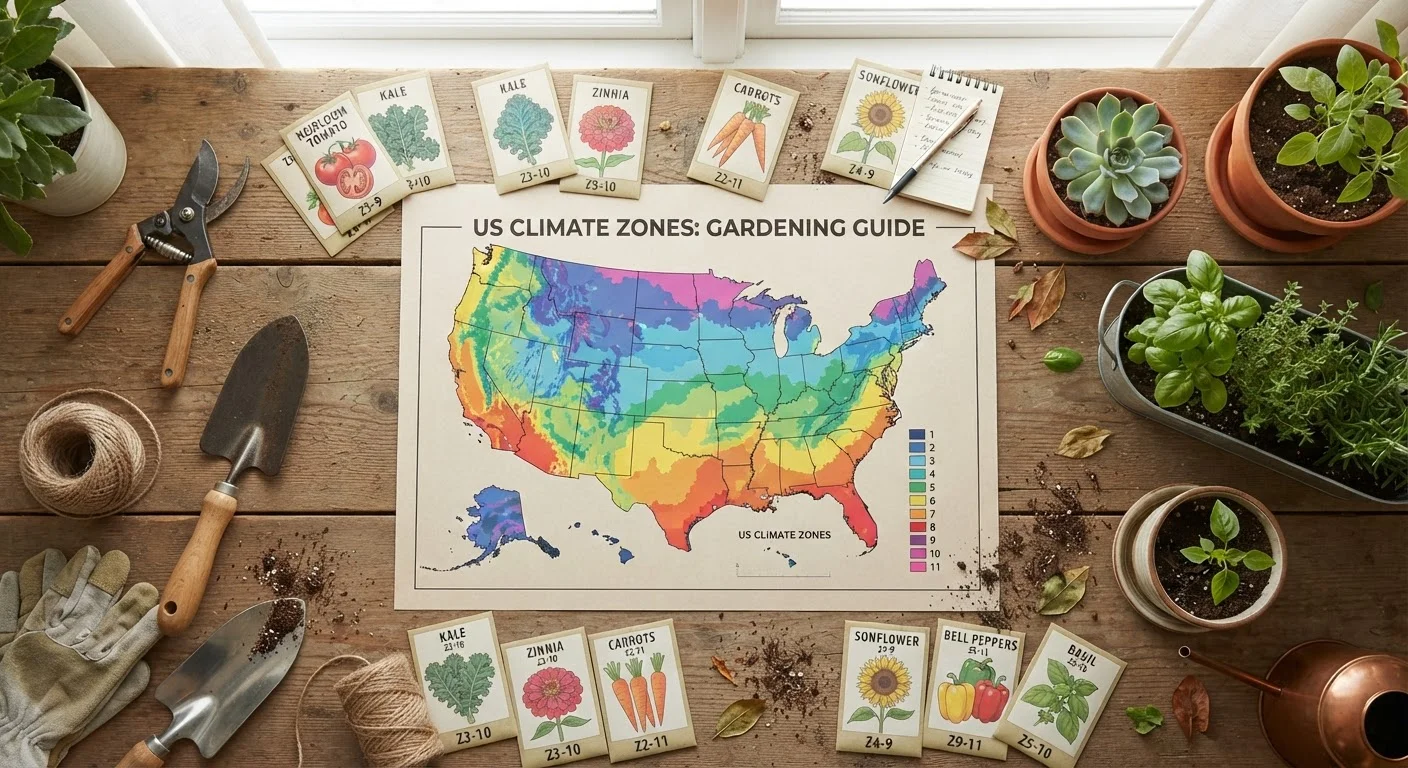
What Hardiness Zones Actually Measure
Every gardener has bought a plant, brought it home with excitement, and watched it die over winter. In many cases, the culprit is a mismatch between the plant's cold tolerance and the local climate - a mismatch that a hardiness zone label is specifically designed to prevent.
The USDA Plant Hardiness Zone Map is built on a straightforward measurement: the average of the coldest night recorded each year, averaged over a 30-year period. That single number determines which zone you live in. Zone 3b in Minnesota averages minimum winter lows between -35°F and -30°F. Zone 10a in coastal Southern California averages between 30°F and 35°F. The difference represents an enormous range in what plants can endure.
Importantly, zones describe cold survival only. They say nothing about summer temperatures, rainfall, humidity, soil drainage, or wind - all of which also shape whether a plant thrives. Think of your hardiness zone as the first filter you apply when choosing plants, not the last word.
13
Hardiness zones across the contiguous US and beyond
The USDA Plant Hardiness Zone Map covers the continental United States, Hawaii, Alaska, and Puerto Rico, spanning zones 1 through 13.
5°F
Temperature difference between each half-zone
Each lettered half-zone (a or b) within a numbered zone represents a 5°F difference in average annual minimum winter temperature.
30 years
Period of temperature data used to define zones
Zone assignments are based on a 30-year average of minimum annual temperatures, providing a stable long-term climate baseline rather than a single year's reading.
How to Find Your Zone and Read Plant Labels
Finding your zone is simple: enter your zip code into the USDA's interactive zone map online. You'll get a precise zone and half-zone designation within seconds. Your local cooperative extension office - a free public resource run through land-grant universities - can also confirm your zone and offer advice tailored to your county.
Once you know your zone, use it when shopping for perennials, shrubs, and trees - plants intended to return year after year. Look for the zone range on the plant tag, such as Zones 5-9. If your zone falls within that range, the plant should survive your winters. If your zone is colder than the lower number on the tag, the plant will likely not survive an average winter outdoors without protection.
Annuals - plants that grow, bloom, seed, and die within a single season - are not rated by hardiness zone because they don't need to survive winter at all. For annuals, focus instead on your frost dates. See how to read a seed packet to understand how frost date information is used alongside days-to-maturity figures.
Check the Zone Map After Major Updates
The USDA periodically revises the hardiness zone map as new temperature data accumulates - the most recent significant update was in 2023. If you're relying on a printed reference or older online source, it may not reflect current zone boundaries. Always use the official USDA interactive map for the most accurate designation for your zip code.
Microclimates: Why Your Yard May Behave Differently
Your official zone is an average across a geographic area, but your individual yard has its own microclimates - small pockets where temperatures, wind, and moisture differ from the surrounding region. Understanding these pockets can meaningfully expand what you're able to grow.
Common warm microclimates include:
- South-facing walls that absorb and radiate heat, extending the growing season and sheltering borderline-hardy plants.
- Urban heat islands - densely built neighborhoods that stay measurably warmer than rural surroundings.
- Raised beds, which drain faster and warm earlier in spring.
Common cold microclimates include low-lying areas where cold air settles on still nights - sometimes called frost pockets - and exposed hilltops buffeted by wind. A frost pocket can experience temperatures several degrees colder than a spot just 20 feet away.
Mapping your yard's microclimates over a season or two helps you place plants strategically. Tender perennials go near the warm wall; cold-hardy vegetables thrive in the open bed. If you're also preparing your property for seasonal shifts, the principles in our winterizing guide apply to garden beds and outdoor planting areas as much as to household systems.
Putting Your Zone to Work in the Garden
Knowing your zone prevents the most common and frustrating plant-buying mistake: choosing a beautiful shrub or perennial that your winters will kill. Beyond that basic filter, here's how to put the information to practical use:
- Shop zone-first. Before falling in love with a plant at the nursery, check its zone range. If it's rated for warmer zones, plan to treat it as an annual or skip it unless you're committed to winter protection.
- Push one zone warmer strategically. With mulching, burlap wrapping, or container gardening (moving plants indoors), experienced gardeners sometimes succeed with plants one half-zone outside their official range. This works best in warm microclimates and with plants on the borderline.
- Choose locally grown stock when possible. Plants propagated in your region are often better acclimated to local conditions than those shipped from distant climates.
- Use zone as a starting point, not the whole answer. Pair it with knowledge of your soil, sun exposure, and watering habits. Our guide to soil, sun, and space covers those foundational factors in depth.
A homeowner in Chicago (Zone 6a) wants to plant lavender, which is commonly listed as hardy to Zone 5. She plants it in a raised bed against her south-facing brick house.
A gardener in Atlanta (Zone 8a) buys a stunning Japanese maple labeled Zones 5-9 and plants it in full sun on an exposed slope.
A family in Minneapolis (Zone 4b) wants to grow a fig tree, which is generally rated for Zone 6 and warmer.
Frequently Asked Questions
Visit the USDA Plant Hardiness Zone Map website and enter your zip code. The tool instantly displays your zone and half-zone. Your local cooperative extension service can also confirm your zone and provide regionally specific planting guidance.
It tells you what plants can survive your winters, not what will necessarily flourish. Summer heat, humidity, soil type, and moisture all affect plant performance. Hardiness zones are a starting filter, not a complete growing guide.
Often yes, but only as annuals - plants that complete their life cycle in one season - or with winter protection such as mulching or bringing containers indoors. Without protection, a plant rated for a warmer zone will likely be killed by frost.
A microclimate is a localized area where conditions differ from the surrounding region - think a south-facing brick wall that stays warmer, or a low frost pocket in your yard. These spots can effectively shift your growing conditions by half a zone in either direction.
No. The USDA Hardiness Zone Map measures cold - specifically minimum winter temperatures. The AHS Plant Heat Zone Map measures the number of days above 86°F. Both pieces of information together give a fuller picture of your climate.
The USDA updates the map periodically as temperature data accumulates; the most recent major revision was in 2023. Because climate patterns shift gradually, it's worth checking the current map rather than relying on older printed references.
The content on this site is provided for informational purposes only and should not be considered a substitute for professional advice. While we strive to provide accurate and up-to-date information, we make no guarantees regarding its completeness or accuracy. Always consult a qualified professional for advice specific to your circumstances before making any decisions.