

The Information Packed Into That Small Envelope
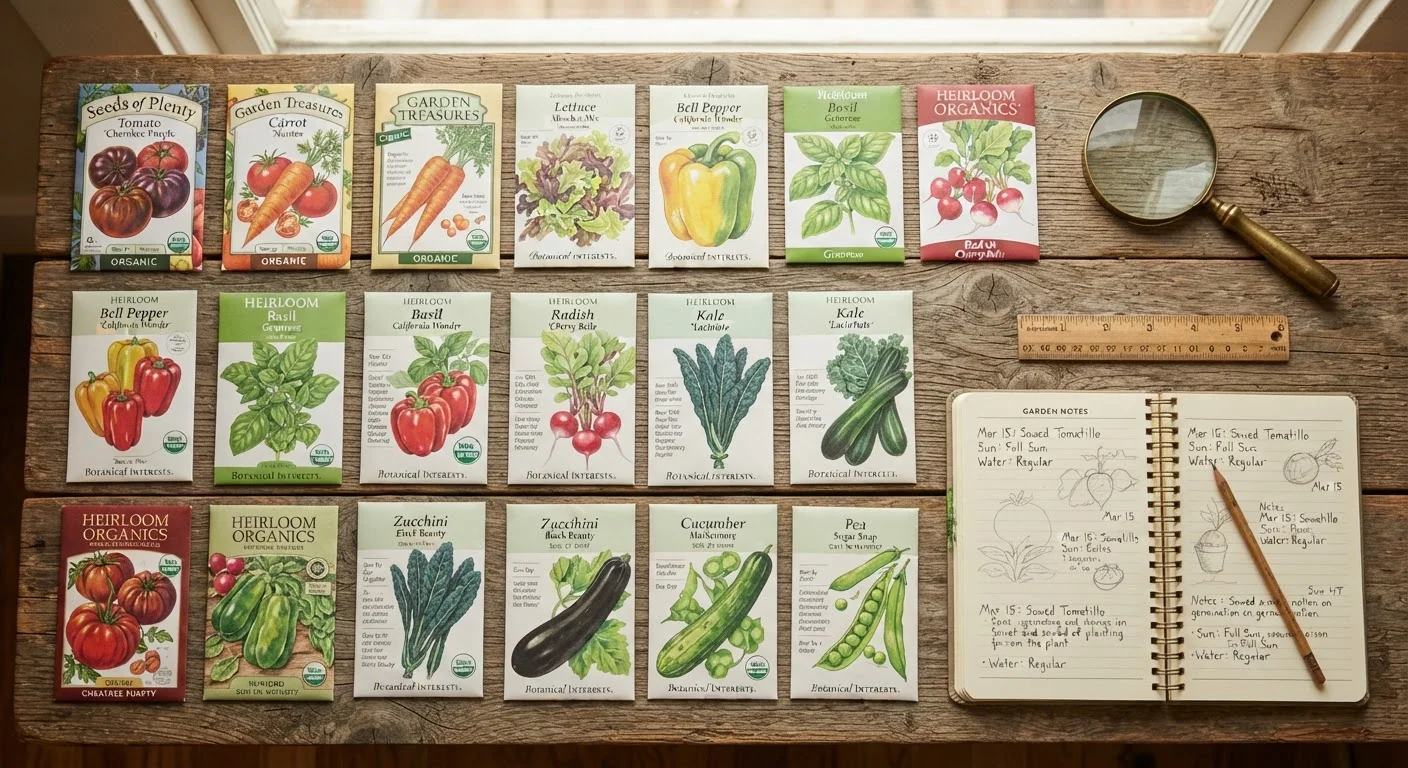
Seed packets look simple - a colorful photo on the front, a wall of text on the back. But every number, abbreviation, and symbol printed there is a practical instruction. Learning to read them turns a confusing label into a reliable planting guide, whether you're growing tomatoes for the first time or adding a new variety to an established garden.
| Days to Germination | Time for seeds to sprout after planting |
| Days to Maturity | Time from sowing (or transplanting) to first harvest |
| Germination Rate | Percentage of seeds expected to sprout (lab-tested) |
| F1 Hybrid | Cross-bred variety; seeds don't breed true |
| OP (Open-Pollinated) | Breeds true; seeds can be saved for next season |
| Full Sun Symbol | Filled circle = 6+ hours direct sunlight daily |
Before you press a single seed into soil, check out our guide to soil, sun, and space - the fundamentals on the packet will make much more sense once you understand what your garden bed can actually offer.
Days to Germination and Days to Maturity
These two numbers are among the most important on the packet, and they are often confused with each other.
- Days to germination tells you how long after planting to expect seedlings to break the soil surface. A range - such as "7-14 days" - is normal because temperature, moisture, and seed depth all affect the pace. If nothing sprouts by the outer edge of that range, check conditions before replanting.
- Days to maturity (sometimes labeled "days to harvest") counts from transplanting into the garden to first harvest for crops typically started indoors, or from direct sowing for crops planted straight into the ground. This number helps you work backward from your first expected frost date to know whether a variety will ripen before cold weather arrives.
Pairing days-to-maturity figures with your local frost calendar is especially important for shorter growing seasons. See how hardiness zones affect your growing window to map that timing precisely.
Planting Depth, Spacing, and Row Distance
Seed packets nearly always specify three spatial measurements, each serving a distinct purpose.
- Planting depth
- How deep beneath the soil surface to place the seed. A common rule of thumb is two to three times the seed's diameter, but always defer to the packet. Very fine seeds (like lettuce or carrots) are often pressed onto the surface and barely covered.
- Plant spacing
- The distance to leave between individual plants once thinned or transplanted. Crowding reduces air circulation and increases disease risk; too much space wastes growing area.
- Row spacing
- The distance between parallel rows, designed to give you room to walk, weed, and water without compacting the soil around roots.
If you're growing in raised beds or intensive plots rather than traditional rows, you can often use the plant-spacing figure in all directions - a technique called grid planting. Our spring garden prep checklist covers how to map this out before planting season begins.
Germination Rate, Sun Symbols, and Other Markings
Several additional details appear on packets that gardeners frequently overlook.
Days to Maturity
The number of days from transplanting (or direct sowing) until a crop is ready to harvest. Use this figure alongside local frost dates to choose varieties that will fully ripen in your growing season.
Germination Rate
The percentage of seeds that sprouted in a controlled lab test. A higher rate means more of your planted seeds are likely to emerge, though real-world results depend on temperature, moisture, and soil conditions.
F1 Hybrid
A first-generation cross between two distinct parent plant lines. F1 hybrids often show vigorous growth and disease resistance, but seeds saved from them will not consistently reproduce the parent's traits.
Open-Pollinated (OP)
Varieties pollinated naturally by wind, insects, or hand - producing seeds that reliably reproduce the parent plant. Heirloom varieties are a subset of open-pollinated seeds.
Thinning
Removing excess seedlings after germination to achieve proper plant spacing. Thinning reduces competition for water, nutrients, and light, resulting in healthier, more productive plants.
Direct Sow
Planting seeds directly into outdoor garden soil rather than starting them indoors first. Days-to-maturity counts begin from the direct sow date for crops suited to this method.
Germination Rate
Usually expressed as a percentage (e.g., "85% germination"), this figure represents the proportion of seeds in a controlled test that sprouted successfully. It is not a guarantee for your garden - actual results vary with conditions - but a rate below roughly 70% signals older or lower-quality seed stock. Sow more seeds than you need to compensate.
Sun and Water Icons
A filled circle typically means full sun (6 or more hours of direct sunlight daily); a half-filled circle means partial sun or partial shade (3-6 hours); an empty circle means full shade. These are general guidelines, not absolutes. Proper watering practices matter just as much as sun exposure once plants are in the ground.
Packet Date and Lot Number
The "packed for" or "sell by" year tells you when the seeds were tested. Most vegetable seeds remain viable for 2-5 years if stored in a cool, dry place, though viability declines over time. The lot number is a quality-control reference - rarely relevant to home gardeners but useful if you need to contact a seed company about a product issue.
Hybrid vs. Open-Pollinated
"Hybrid" (often marked F1) means the seeds were bred from two distinct parent lines to produce specific traits like disease resistance or uniform size. Seeds saved from hybrids will not reliably reproduce the parent plant. "Open-pollinated" or OP varieties, including heirlooms, can be saved and replanted with consistent results - a consideration for gardeners who want to build a seed-saving practice.
The content on this site is provided for informational purposes only and should not be considered a substitute for professional advice. While we strive to provide accurate and up-to-date information, we make no guarantees regarding its completeness or accuracy. Always consult a qualified professional for advice specific to your circumstances before making any decisions.