

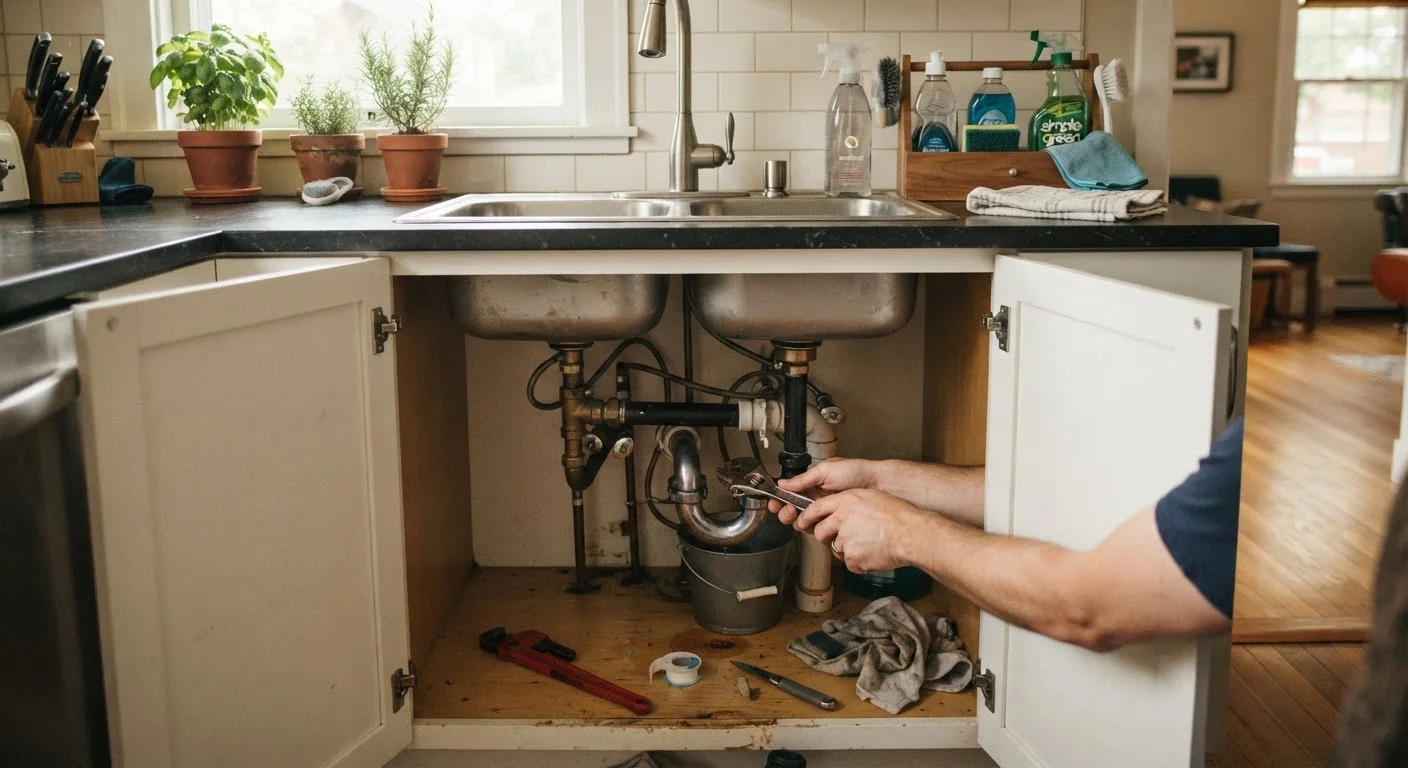
Why Plumbing Myths Are So Expensive
Plumbing folklore spreads fast - passed down from neighbors, misread online forums, and well-meaning relatives. The problem is that many of these widely accepted beliefs actively damage pipes, drains, and water heaters, turning small maintenance oversights into major repair bills. Just as insulation myths cost homeowners comfort and money, plumbing misconceptions chip away at your home's integrity quietly - until a plumber's invoice makes the cost impossible to ignore.
The myths below aren't obscure edge cases. They're everyday habits millions of homeowners practice, often with complete confidence that they're doing the right thing.
Myth
Running water while using the garbage disposal flushes everything through safely, including grease.
Fact
Running water moves grease temporarily, but it solidifies further down the pipe, causing stubborn buildup and clogs over time.
Grease behaves like a liquid when warm and a solid when it cools. Even with cold water running, grease coats the interior of pipes and accumulates layer by layer. Over months or years, this creates a narrowed passage that eventually blocks entirely. The correct approach is to collect cooking grease in a container and dispose of it in the trash. Reserve the disposal for solid food scraps only, and always use cold water - cold helps solidify any residual grease so it breaks apart more easily in the disposal rather than coating the pipe walls.
Myth
Products labeled 'flushable' - like wipes and certain hygiene products - are safe to flush.
Fact
'Flushable' is a marketing term, not an engineering standard. Most of these products do not break down like toilet paper and are a leading cause of sewer clogs.
Unlike toilet paper, which is designed to disintegrate rapidly in water, most wipes - even those labeled flushable - retain their fibrous structure long enough to catch on pipe joints, tree roots, or buildup within the sewer line. Municipal water utilities across the country report that these products are among the top contributors to sewer blockages and pump failures. In your home, they can accumulate into a dense mass called a fatberg when combined with grease, eventually requiring professional hydro-jetting to remove. Stick to toilet paper only - no exceptions.
Myth
Chemical drain cleaners are the easiest and safest way to clear a clogged drain.
Fact
Chemical drain cleaners generate heat and can corrode older pipes, weaken PVC joints, and create hazardous conditions - especially if mixed with other products.
The active ingredients in most chemical drain cleaners - typically sodium hydroxide or sulfuric acid - work by generating a chemical reaction that breaks down organic material. That same reaction can degrade pipe surfaces, particularly in older homes with metal plumbing or aging PVC. Repeated use progressively weakens the pipe structure. These products also pose a direct safety risk: splashing can cause chemical burns, and mixing different products can create toxic gas. A manual drain snake or a plumber's auger is safer, more effective on physical clogs, and won't degrade your plumbing infrastructure.
Myth
A small, slow drip from a faucet is harmless and not worth fixing right away.
Fact
A single dripping faucet can waste thousands of gallons of water per year and may signal a larger internal failure if left unaddressed.
It's easy to dismiss a slow drip as a minor annoyance, but the cumulative water loss adds up quickly. According to EPA WaterSense data, a faucet dripping at one drop per second wastes approximately 3,000 gallons annually - comparable to more than 180 showers. Beyond the water bill impact, persistent drips often indicate a worn washer, O-ring, or cartridge that, if ignored, can cause the valve seat to corrode and turn a simple washer replacement into a full faucet rebuild or replacement. Addressing drips promptly is one of the most cost-effective forms of home maintenance.
Myth
You only need to worry about pipes freezing in extremely cold climates.
Fact
Pipes in poorly insulated areas - like garages, crawl spaces, or exterior walls - can freeze even in mild climates when temperatures briefly dip below 32°F.
Pipe location matters far more than regional climate. A pipe running through an uninsulated garage wall or a crawl space floor is vulnerable even during a single overnight freeze, regardless of how warm the average winter is in your area. When water freezes inside a pipe, it expands with enough force to crack or burst the pipe entirely. The resulting water damage - often hidden behind walls or under floors - can cost thousands of dollars to remediate. Insulating exposed pipes with foam pipe insulation, particularly in unconditioned spaces, is an inexpensive precaution that pays dividends in any region that sees freezing temperatures.
What You Should Actually Do Instead
Correcting these habits doesn't require expensive tools or professional training. The most impactful changes are straightforward: dispose of fats and oils in a sealed container rather than the sink, run your garbage disposal only with cold water and solid food scraps, and treat any product labeled 'flushable' with healthy skepticism unless it's toilet paper.
For persistent slow drains, a manual drain snake or a simple baking soda and hot water flush is far safer than a store-brand chemical cleaner. If a clog is recurring, that's a signal to call a licensed plumber - recurring blockages usually indicate a deeper issue in the line that surface fixes cannot reach.
Don't Mix Chemical Drain Cleaners
Never combine different brands or types of chemical drain cleaners, and never use them in a drain that already contains standing water with another product. The resulting chemical reaction can produce toxic gas or cause the liquid to erupt from the drain. If a chemical cleaner hasn't worked after one attempt, stop and use a mechanical solution or contact a plumber.
When it comes to your water heater, consult your owner's manual or a professional before adjusting temperature settings. Manufacturers typically recommend 120°F as a balance between scalding risk and bacterial control, but local conditions and household needs vary.
Finally, never ignore a slow drip. A faucet leaking at just one drip per second can waste more than 3,000 gallons of water per year according to EPA WaterSense estimates. Replacing a worn washer or cartridge is a manageable DIY task for most homeowners - and far cheaper than the water bill accumulation or the water damage that can follow an ignored leak. If you've noticed other seemingly reasonable household habits quietly draining your finances, our coverage of costly ownership decisions that seem reasonable explores similar themes across other areas of home life.
The content on this site is provided for informational purposes only and should not be considered a substitute for professional advice. While we strive to provide accurate and up-to-date information, we make no guarantees regarding its completeness or accuracy. Always consult a qualified professional for advice specific to your circumstances before making any decisions.