

Why the Pace of Introduction Matters
Cats are territorial by nature. Unlike dogs, who often work out social hierarchies through direct interaction, cats rely heavily on scent and spatial familiarity to feel secure. When a new cat appears suddenly in a shared space, the resident animal experiences a genuine threat to their territory - and the newcomer, already stressed by a change of environment, has no established footing from which to negotiate.
The structured, multi-phase approach described below gives each animal time to process the other's presence at their own pace. It is not slow for its own sake - it is slow because rushing is the primary reason introductions fail. Most households that report lasting conflict between pets skipped or compressed at least one phase. Two to four weeks is a realistic minimum for a smooth transition; some cats - particularly those with limited prior social exposure - may need longer.
If you are also bringing a small animal such as a rabbit or bird into a cat household, the dynamics are meaningfully different. See our guide on introducing a small pet to a home with cats or dogs for that specific situation.
Visit the Vet Before Introductions Begin
Before your new cat meets your resident pet, schedule a veterinary exam to rule out contagious illness, parasites, or undiagnosed conditions. Introducing a sick cat to a healthy household can have serious consequences. Your vet can also advise on whether either animal's behavioral history calls for a modified approach.
What You'll Need Before You Start
Good preparation is what makes the step-by-step process work. Gather your supplies and set up the base room before the new cat's arrival - ideally the day before - so the space is calm and settled when they come home.
What you will need
Baby gate or door barrier
Allows visual and limited physical contact between animals while preventing full confrontation during early stages.
Separate litter boxes
Prevents resource guarding and reduces stress - one box per cat plus one extra is the standard recommendation.
Interactive wand toys
Used during shared-space sessions to redirect focus and create positive associations with the other animal's presence.
Soft cloths for scent swapping
Transfers each animal's facial scent to the other's territory, building familiarity before visual contact.
Step-by-Step Introduction Process
Follow the steps below in order. Each phase builds on the last, and none should be skipped even if early signs look encouraging. Patience here pays dividends in long-term household harmony.
Set up a dedicated base room for the new cat
Before the new cat arrives, prepare a quiet room - a spare bedroom or bathroom works well - with everything they need: food, water, a litter box, a scratching surface, and comfortable resting spots. This is their safe haven for the first phase of the introduction. Keep the door closed at all times. See our room-by-room setup checklist for a full list of what to have ready before arrival.
Allow scent exchange without visual contact
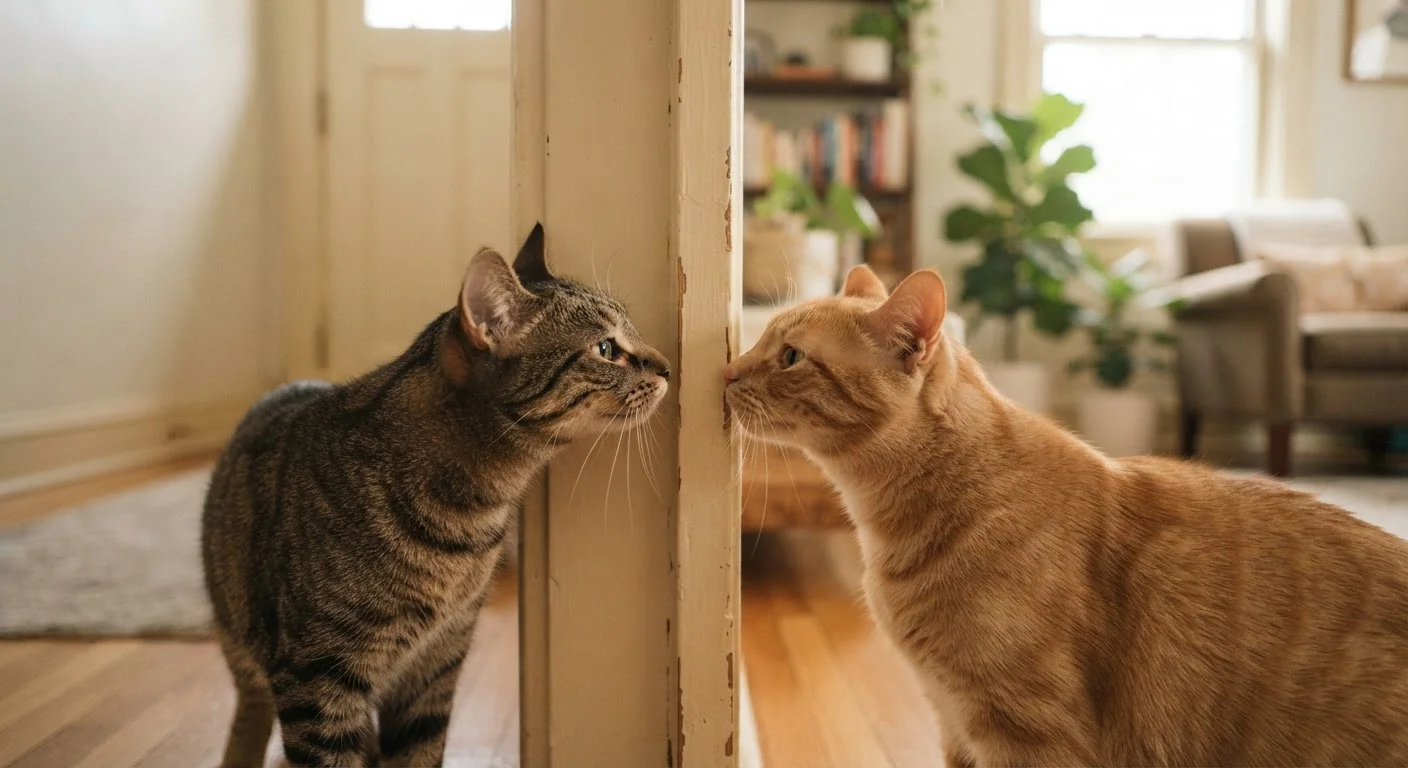
For the first three to seven days, let the animals smell each other only through the gap under the door. Feed both pets on opposite sides of the closed door so they associate each other's scent with something positive. Swap bedding between the two spaces every day or two to accelerate familiarity.
Introduce a shared scent object
Use a soft cloth to collect scent from each animal's cheek area and place it near the other animal's food bowl. This scent-swapping technique mirrors how cats naturally investigate newcomers. Do this daily throughout the base-room phase.
Move to supervised visual introductions
Once both animals seem calm at the door - no sustained hissing, eating normally, and behaving relaxed in their spaces - crack the door slightly or use a baby gate to allow visual contact. Keep sessions very short (five minutes or less) and stay calm yourself. Conduct these sessions at mealtimes so both animals are focused on food rather than each other.
Allow brief, supervised shared-space sessions
Open the door and let the new cat explore the common areas while you supervise. Keep the base-room door open so the new cat can retreat at will. Use a wand toy to engage both animals simultaneously - parallel play builds positive associations without requiring direct interaction. End each session before either animal shows signs of stress.
Gradually extend shared time and reduce supervision
Over the following one to two weeks, lengthen the free-roaming sessions as both animals demonstrate consistent calm. Ensure each cat still has private access to their own resources - separate feeding stations, multiple litter boxes, and elevated resting spots where a less confident cat can retreat. Full unsupervised cohabitation should only happen once you've seen sustained, stable behavior across multiple days.
Use Scent Swapping to Speed Familiarity
Rub a soft cloth gently along the new cat's cheeks and leave it near the resident pet's food bowl - and vice versa. Cats communicate heavily through scent, and this simple technique can compress the timeline of acceptance. Repeat daily during the base-room phase.
Troubleshooting Common Setbacks
Some hissing, swatting, and posturing during early shared-space sessions is entirely normal and does not mean the introduction has failed. These are communication signals, not attacks. As long as neither animal is being chased, cornered, or injured, continue at the current pace.
If one cat stops eating, hides for more than a day, or shows signs of illness - such as changes in litter box habits - return to an earlier phase and extend it. Stress can suppress immune function, so it is worth consulting your veterinarian if either animal seems genuinely unwell rather than simply adjusting.
Resident dogs require a similar graduated approach. If your household includes a dog, structured crate use during early cat introductions can help manage the dog's access and give the new cat safe, dog-free zones to decompress. Understanding your cat's longer-term lifestyle - including whether they will be indoor-only - also shapes how you set up their permanent space. Our article on indoor vs. outdoor cats covers those considerations in detail.
Do Not Force Physical Contact
Holding one cat toward another or confining both animals in a small space without an escape route dramatically increases the risk of injury and long-term fear responses. Always allow each cat to retreat on their own terms. If either animal shows sustained aggression, stop the session and extend the current phase by several more days.
The content on this site is provided for informational purposes only and should not be considered a substitute for professional advice. While we strive to provide accurate and up-to-date information, we make no guarantees regarding its completeness or accuracy. Always consult a qualified professional for advice specific to your circumstances before making any decisions.