

Why a Room-by-Room Approach Works
Trying to groom a dog from nose to tail in one sitting is exhausting for both of you. Spreading tasks across different spaces - bathroom for bathing, living room for brushing, kitchen for nail trims - creates natural checkpoints and keeps sessions short enough that your dog stays relaxed. Think of it less as a chore and more like a structured routine, similar to how a consistent skincare routine benefits from being broken into manageable daily steps.
Before you start, gather your tools and make sure your dog has had a chance to exercise and settle. A tired, calm dog is far easier to work with than one that's pent up and restless.
What you will need
Bathroom: Bathing and Ear Care
The bathroom is the natural hub for wet work. How often your dog needs a bath varies widely - most dogs do well with a bath every four to six weeks, though dogs with skin conditions or heavy outdoor activity may need more or less frequent washing. Always use a shampoo formulated specifically for dogs; human products can disrupt their skin's pH balance.
After the bath, while your dog is still calm, is an ideal time to check and clean the ears. Gently lift the ear flap and look for redness, dark debris, or a yeasty odor. Use a veterinarian-approved ear-cleaning solution and a cotton ball - never a cotton swab inserted into the canal. Wipe only what you can see. If you notice persistent odor, discharge, or your dog is shaking its head frequently, consult your vet before continuing home ear care.
Know When to Stop and Call Your Vet
Home grooming is not a substitute for veterinary care. If you notice skin that is red, flaky, or has unusual lumps; ears with persistent odor or discharge; nails that are extremely overgrown or curved into the paw pad; or teeth with heavy brown tartar and inflamed gums - these warrant a professional evaluation. Continuing to groom over an underlying medical condition can cause additional harm.
Living Room: Brushing by Coat Type
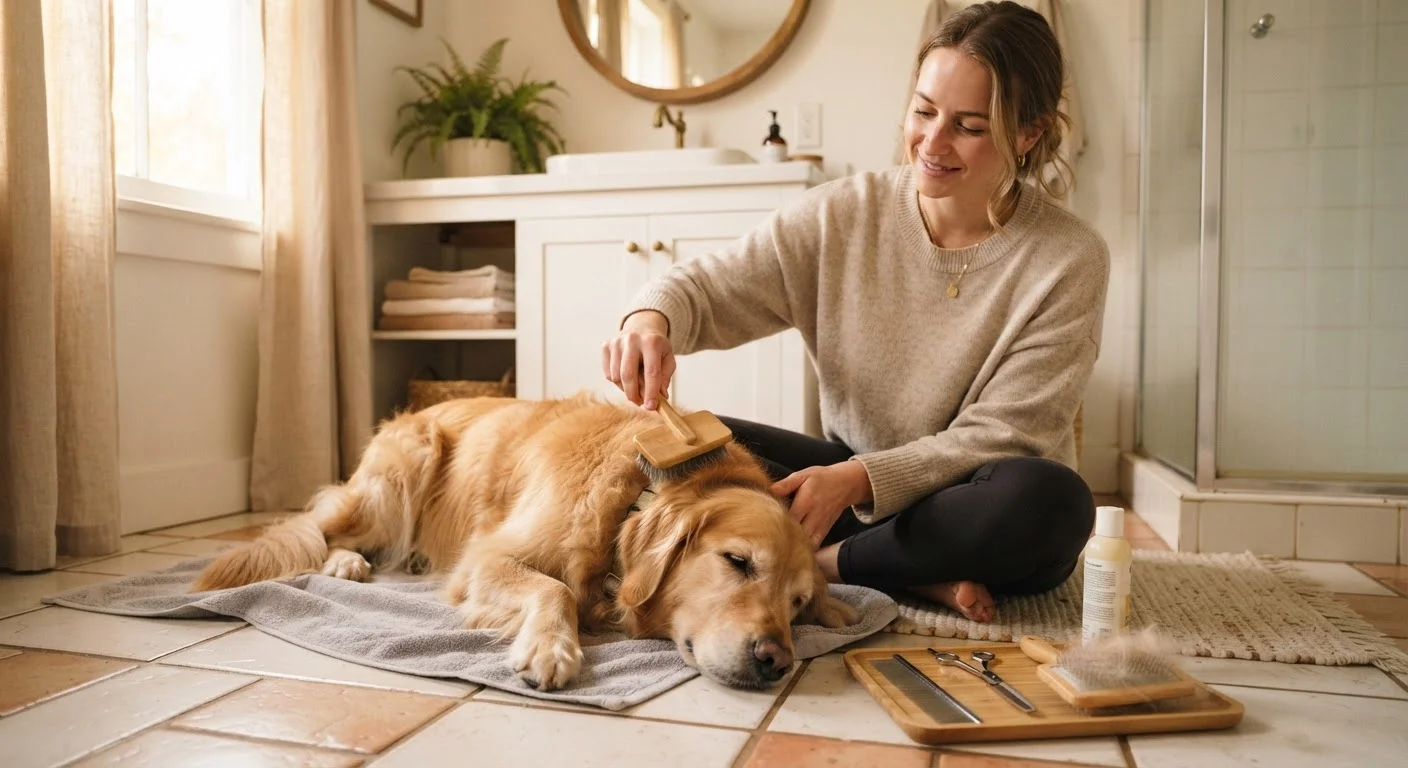
Regular brushing is the single most impactful thing you can do for your dog's coat health. It removes loose fur, distributes natural oils, prevents mats, and gives you a chance to check the skin for lumps, ticks, or irritation.
- Short, smooth coats (Beagles, Boxers): a rubber curry brush or bristle brush once a week is usually enough.
- Medium double coats (Labrador Retrievers, German Shepherds): a slicker brush and an undercoat rake two to three times a week, more during shedding season.
- Long or silky coats (Golden Retrievers, Yorkies): daily brushing with a pin brush and a wide-toothed comb to prevent painful mats at the skin level.
- Curly or wavy coats (Poodles, Doodles): daily brushing with a slicker brush to prevent tight mats, plus professional trimming every six to eight weeks.
Always brush in the direction of hair growth and work in sections. If you encounter a mat, use a detangling spray and work from the ends inward - never yank through a tangle.
Slicker brush
Removes loose fur and minor tangles from medium, long, and curly coats.
Undercoat rake or de-shedding tool
Reaches through the topcoat to remove dense undercoat on double-coated breeds.
Wide-toothed comb
Checks for hidden mats after brushing, especially in feathered areas like behind the ears and the legs.
Guillotine or scissor nail clippers
Trims dog nails cleanly without splitting or crushing.
Styptic powder
Stops minor nail bleeding quickly if the quick is accidentally nicked.
Dog toothbrush and toothpaste
Removes plaque and supports dental health between professional cleanings.
Ear-cleaning solution (veterinarian-approved)
Gently loosens wax and debris from the visible ear canal without causing irritation.
Kitchen: Nail Trims and Dental Care
Hard flooring and good lighting make the kitchen a practical spot for nail trims and tooth brushing. Nails that click on the floor are too long and can alter your dog's gait over time. Aim to trim every three to four weeks using a guillotine or scissor-style clipper appropriate to your dog's nail size. Clip small amounts at a time to stay clear of the quick - the blood vessel running through each nail. On light-colored nails, the quick is visible as a pink core. On dark nails, clip conservatively and stop if you see a dark center dot appear in the cut surface.
For dental care, daily brushing with a dog-formulated toothpaste is the gold standard recommended by veterinary dental specialists. If daily brushing isn't realistic, even three to four times a week offers meaningful benefits. Use a finger brush or soft-bristled dog toothbrush and let your dog lick the toothpaste first to build a positive association. Never use human toothpaste - xylitol and fluoride are toxic to dogs.
Consistent grooming also gives you a baseline understanding of your dog's normal appearance, which makes it easier to spot early changes worth discussing with your vet - much like the systematic approach described in a complete veterinary visit guide for tracking pet health over time.
Build a Grooming Log
Keep a simple note on your phone or a small notebook with dates of baths, nail trims, and ear checks. Tracking the schedule helps you stay consistent and gives your vet useful information if a skin or ear issue arises. It also makes it easier to notice patterns, like ears that need cleaning more frequently than usual.
Keeping Your Dog Cooperative Over Time
The biggest barrier to a successful home grooming routine isn't technique - it's a dog who has learned to dread the process. Start young if possible, but even adult dogs can learn to tolerate and even enjoy grooming with patient, reward-based conditioning. Introduce tools one at a time, pair each new sensation with treats, and keep early sessions under five minutes. End on a positive note before your dog shows signs of stress.
If your dog has a coat type that requires professional grooming - most curly and long-coated breeds do - a good home routine between appointments keeps the work manageable for your groomer and less stressful for your dog. If grooming ever results in growling, snapping, or extreme distress, stop and consult your veterinarian or a certified professional dog trainer rather than pushing through.
The content on this site is provided for informational purposes only and should not be considered a substitute for professional advice. While we strive to provide accurate and up-to-date information, we make no guarantees regarding its completeness or accuracy. Always consult a qualified professional for advice specific to your circumstances before making any decisions.