

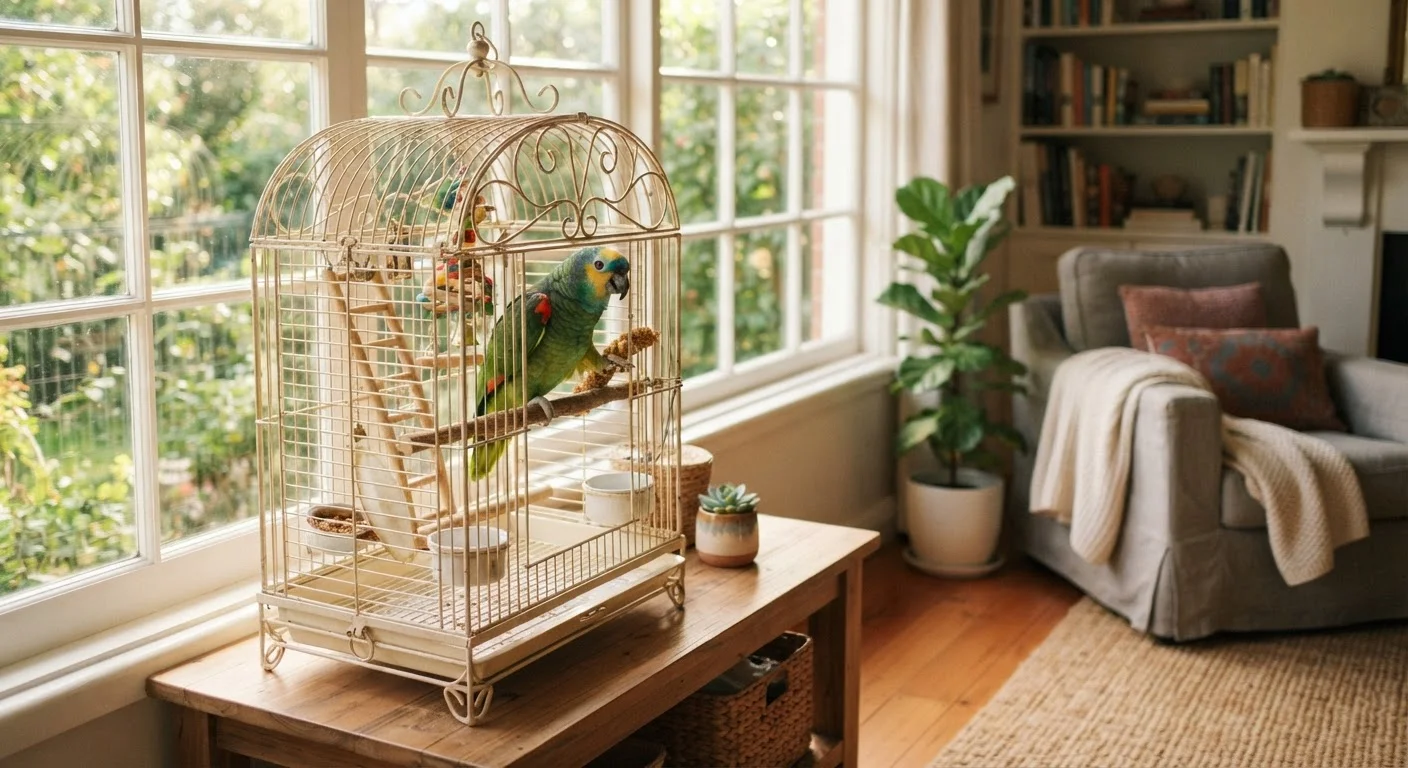
Why Location Is More Than a Decorating Choice
Most new bird owners focus on cage size, perches, and toys - and rightly so. But cage placement is just as consequential. Birds are sensitive to environmental cues: light cycles, ambient noise, temperature fluctuations, and the presence of people or other animals all shape their baseline stress level. A well-furnished cage in the wrong location can still leave a bird chronically anxious, under-stimulated, or physically uncomfortable.
Unlike mammals, birds have highly efficient respiratory systems that make them especially vulnerable to airborne irritants and rapid temperature shifts. Their behavioral and hormonal rhythms are also tightly tied to light exposure. These biological realities make the where of cage placement a genuine welfare consideration, not just an aesthetic one.
If you've noticed your bird engaging in repetitive behaviors or vocalizing more than usual, reading your bird's body language can help you identify whether environmental stress may be a factor.
Best Practices for Safe, Comfortable Placement
Position the cage against a solid wall rather than in the center of a room.
Birds feel more secure when at least one side of their cage has a stable backing. Open, exposed positions trigger vigilance responses because birds instinctively watch for threats from multiple directions, elevating their baseline stress.
Keep the cage in a room with regular, predictable human activity.
Social exposure to household routines - conversation, movement, television - provides mental stimulation and mimics flock interaction. Birds that observe daily activity without being overwhelmed are less prone to boredom-related behaviors.
Avoid placing cages near air vents, exterior doors, or drafty windows.
Birds cannot tolerate the rapid temperature swings that drafts create. Even a few degrees of sudden change can stress the immune system, and chronic cold drafts have been associated with increased susceptibility to respiratory illness.
Ensure the cage receives ambient natural light but is not in direct, sustained sunlight.
Natural light supports healthy sleep-wake cycles and vitamin D synthesis in birds. However, glass-filtered direct sun can raise cage temperatures dangerously fast, especially in enclosed spaces.
Keep the cage in a room free from cooking fumes, aerosols, and scented products.
Birds have highly efficient respiratory tracts that absorb airborne compounds rapidly. Fumes from overheated non-stick cookware, cleaning sprays, and even scented candles can cause acute toxicity or chronic respiratory irritation.
Quick Actions You Can Take Today
Good placement doesn't require a major overhaul. Small adjustments often make a measurable difference in how settled and engaged your bird appears.
If you share your home with cats or dogs, cage placement takes on an added dimension. Even a calm dog observing the cage from across the room can put a bird in a sustained state of alertness. See our guidance on introducing a new small pet to a home with cats or dogs for strategies that protect everyone.
Common Placement Mistakes and How to Avoid Them
~75°F
Comfortable ambient temperature range for most pet birds
Most avian veterinary guidelines recommend maintaining cage-area temperatures between roughly 65°F and 80°F, with minimal fluctuation throughout the day.
12 hrs
Recommended daily light-dark cycle for pet birds
Avian behavioral research consistently supports approximately 12 hours of light and 12 hours of darkness to maintain healthy hormonal and sleep cycles in companion birds.
The kitchen is one of the most frequently cited placement mistakes among bird owners. Cooking fumes - including smoke, aerosol sprays, and fumes from overheated non-stick cookware - can be acutely toxic to birds. Even scented candles or air fresheners in adjacent rooms may cause respiratory irritation over time.
Isolated rooms present a different problem: social deprivation. Birds, especially species like parakeets and cockatiels, are flock animals. A cage tucked in a spare bedroom limits meaningful interaction and can contribute to feather-destructive behavior. If you're still deciding which species fits your lifestyle, our comparison of parakeet vs. cockatiel covers how each species handles varying levels of social engagement.
Elevated Placement Matters Too
The height of the cage within a room also affects your bird's sense of security. Cages positioned at or slightly above human eye level tend to make birds feel safer than those placed on the floor or at ankle height, where they're more exposed to foot traffic and the visual presence of other pets. Ideally, the main perch level should sit at roughly chest height for the primary caregiver.
Finally, direct, unfiltered sun through glass can overheat a cage quickly - especially in summer months. Ambient natural light near a window is beneficial; sustained direct exposure without shade is not. Position the cage so the bird can move toward or away from light as needed.
The content on this site is provided for informational purposes only and should not be considered a substitute for professional advice. While we strive to provide accurate and up-to-date information, we make no guarantees regarding its completeness or accuracy. Always consult a qualified professional for advice specific to your circumstances before making any decisions.