

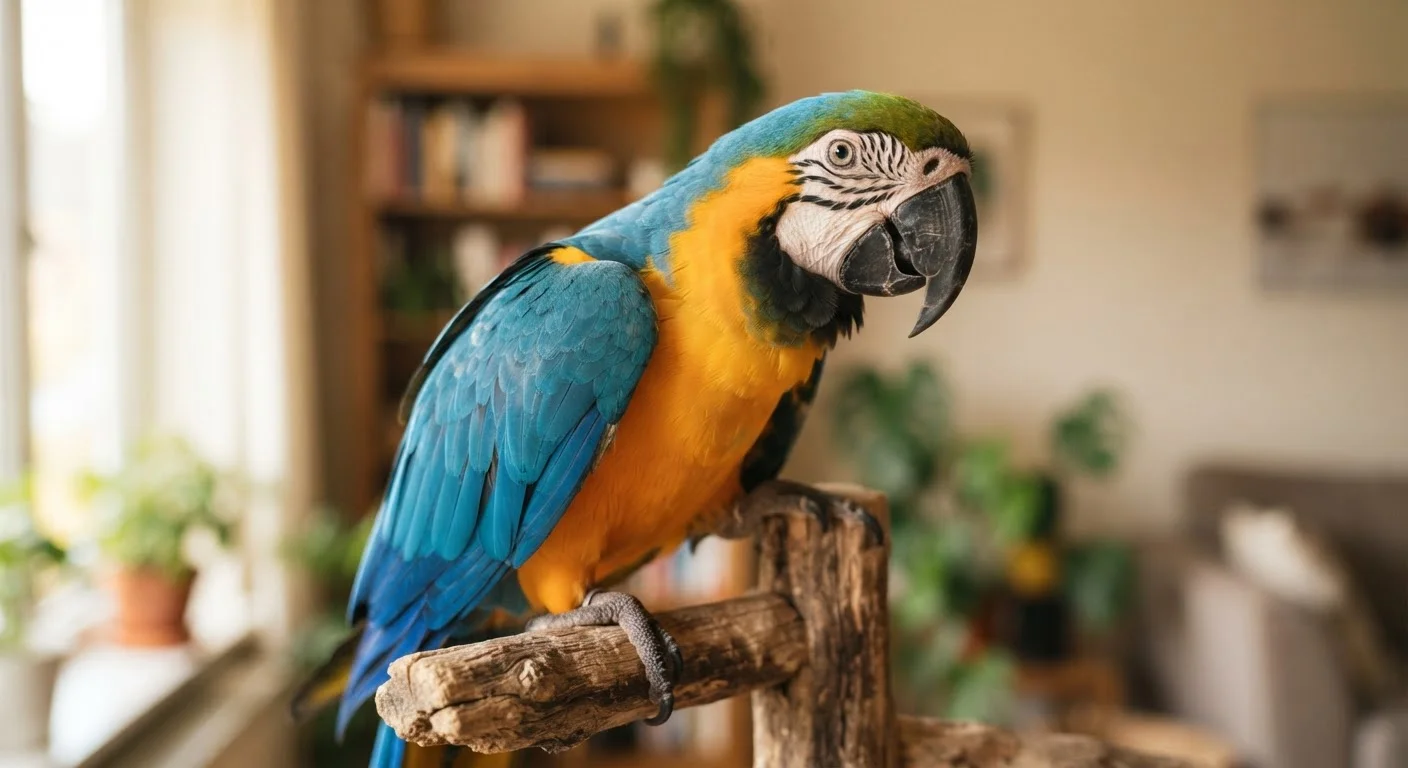
Why Reading Bird Body Language Matters
Birds evolved as prey animals, which means they are hardwired to hide vulnerability. In the wild, showing weakness attracts predators - so even domestic pet birds often mask early signs of stress or illness until the situation becomes serious. That makes your observational skills one of the most practical tools in your care routine.
Unlike dogs or cats, birds communicate largely through subtle postural shifts and vocalizations rather than dramatic gestures. The more time you spend watching your bird in everyday, relaxed situations, the better you'll recognize when something is off. Consider also how cage placement affects your bird's stress levels, since environment shapes behavior in ways that can make signals harder to interpret.
~20%
Birds showing illness signs before owners notice
Avian veterinarians commonly note that birds mask symptoms, and many cases present in advanced stages by the time owners recognize something is wrong.
Over 20
Distinct vocalizations documented in some parrot species
Research in avian communication has identified that some parrot species use context-specific calls that vary based on social situation and emotional state.
70%+
Of bird communication is nonverbal
Behavioral studies suggest the majority of bird-to-bird and bird-to-human communication relies on posture, feather position, and movement rather than vocalization alone.
Feather Signals: The First Thing to Watch
A bird's plumage is its most expressive physical feature. Here's what different feather states typically indicate:
- Smooth, flat feathers: Alert and comfortable - your bird is engaged with its surroundings.
- Slightly puffed feathers: Relaxed or preparing to sleep - normal in a calm environment.
- Prolonged or exaggerated fluffing: Possible illness, cold, or chronic stress. This warrants closer observation.
- Feathers held tightly against the body: Fear or submission - the bird is trying to appear smaller.
- Raised crest (in cockatiels, cockatoos, or similar species): Context-dependent. A relaxed crest held slightly up signals curiosity; a fully erect crest often means excitement or alarm.
If you're deciding between species with very different feather and crest behavior, our comparison of parakeets and cockatiels covers how each communicates differently.
A cockatiel owner notices her bird raising its crest fully and pinning its eyes while she approaches with a new toy.
A parakeet that normally chatters throughout the day sits quietly on its perch for most of the afternoon with feathers slightly puffed.
A conure leans toward its owner, bobs its head, and grinds its beak softly at the end of the evening.
A lovebird tucks its head feathers tight against its body and turns away when a child reaches into the cage.
Eyes, Posture, and Beak: Reading the Details
Beyond feathers, several additional cues carry significant meaning:
Eye Pinning
Rapid dilation and constriction of the pupils - called eye pinning or flashing - signals intense emotional arousal. It can accompany excitement, playfulness, or agitation. Always look at the broader context before interpreting it.
Body Posture
A bird leaning toward you with relaxed feathers is generally inviting interaction. A bird leaning away, crouching low, or turning its back is asking for space. Tail fanning (spreading the tail wide) often accompanies territorial or aggressive displays.
Beak Behavior
- Beak grinding: A soft, rhythmic sound while settling in - a reliable sign of contentment.
- Beak clicking or snapping: A warning. The bird is signaling it does not want to be approached.
- Open beak with panting: May indicate overheating, respiratory distress, or fear - worth monitoring closely.
Body language principles are surprisingly species-specific. For contrast, see how cats use posture and eye contact in a very different way.
What Vocalizations Tell You
Sound is a core part of avian communication. Learning your bird's personal vocal repertoire matters as much as knowing species-wide norms.
- Singing or chattering: Contentment and social engagement - typically a positive sign.
- Contact calls (short, repeated notes): The bird is checking in, often when it can't see you. Responding periodically reassures it.
- Screaming or alarm calls: Distress, boredom, or a perceived threat. Persistent screaming that doesn't resolve with interaction or environmental adjustment deserves attention.
- Unusual silence: A normally vocal bird that goes quiet may be unwell or deeply stressed.
If you notice a sudden or sustained change in your bird's vocalization pattern alongside other physical signals, review our guidance on signs that a small pet needs veterinary attention.
Keep a Simple Behavior Log
Spend one or two minutes each day jotting down notes on your bird's feather state, activity level, and vocalizations. Even a brief, informal record helps you spot gradual changes that might otherwise go unnoticed. Patterns become obvious in writing when they're hard to catch in real time.
Putting It All Together
No single signal should be read in isolation. A fluffed bird that is also singing and eating normally is probably just comfortable. A fluffed bird that is also quiet, unsteady, or has changed droppings is a different matter entirely.
Build a habit of brief daily observation - watch your bird interact, vocalize, and move before you engage directly. Over time, you'll develop a reliable baseline for what's normal for your individual animal. When that baseline shifts noticeably, that's your cue to investigate further, starting with a call to an avian-experienced veterinarian.
This article provides general educational information about bird behavior and is not a substitute for professional veterinary advice. If you have concerns about your bird's health or behavior, consult a qualified avian veterinarian.
Frequently Asked Questions
Brief fluffing is normal - birds puff up to regulate body temperature or settle in for a nap. However, a bird that stays fluffed for extended periods, especially with other signs like lethargy or loss of appetite, may be ill. If the behavior persists more than a day, consult an avian veterinarian.
Eye pinning - rapid alternating dilation and contraction of the pupils - typically signals strong emotion. It can indicate excitement, playfulness, or, in some contexts, agitation or aggression. Read it alongside posture and vocalization to understand what your bird is feeling.
Beak grinding - a soft, rhythmic scraping sound - is generally a sign of contentment and relaxation, often heard just before a bird falls asleep. It's considered a positive signal in most parrots and parakeets.
A frightened bird typically cowers, leans away, holds feathers tight to the body, and may pant or tremble. An aggressive bird usually leans forward, fans its tail, raises its wings slightly, and may pin its eyes rapidly. Both states can lead to biting, so it's best to give the bird space and time to calm down.
Some vocalization is normal and healthy. But a bird that screams persistently, changes its call pattern dramatically, or becomes unusually silent may be stressed, bored, lonely, or unwell. Rule out environmental causes first - cage placement, noise, and social interaction all play a role.
Contact an avian veterinarian if your bird shows prolonged fluffing, labored breathing, tail bobbing, loss of balance, significant changes in droppings, sudden aggression, or a marked drop in activity or vocalization. Birds can decline quickly, so early attention matters.
The content on this site is provided for informational purposes only and should not be considered a substitute for professional advice. While we strive to provide accurate and up-to-date information, we make no guarantees regarding its completeness or accuracy. Always consult a qualified professional for advice specific to your circumstances before making any decisions.