

Our Verdict
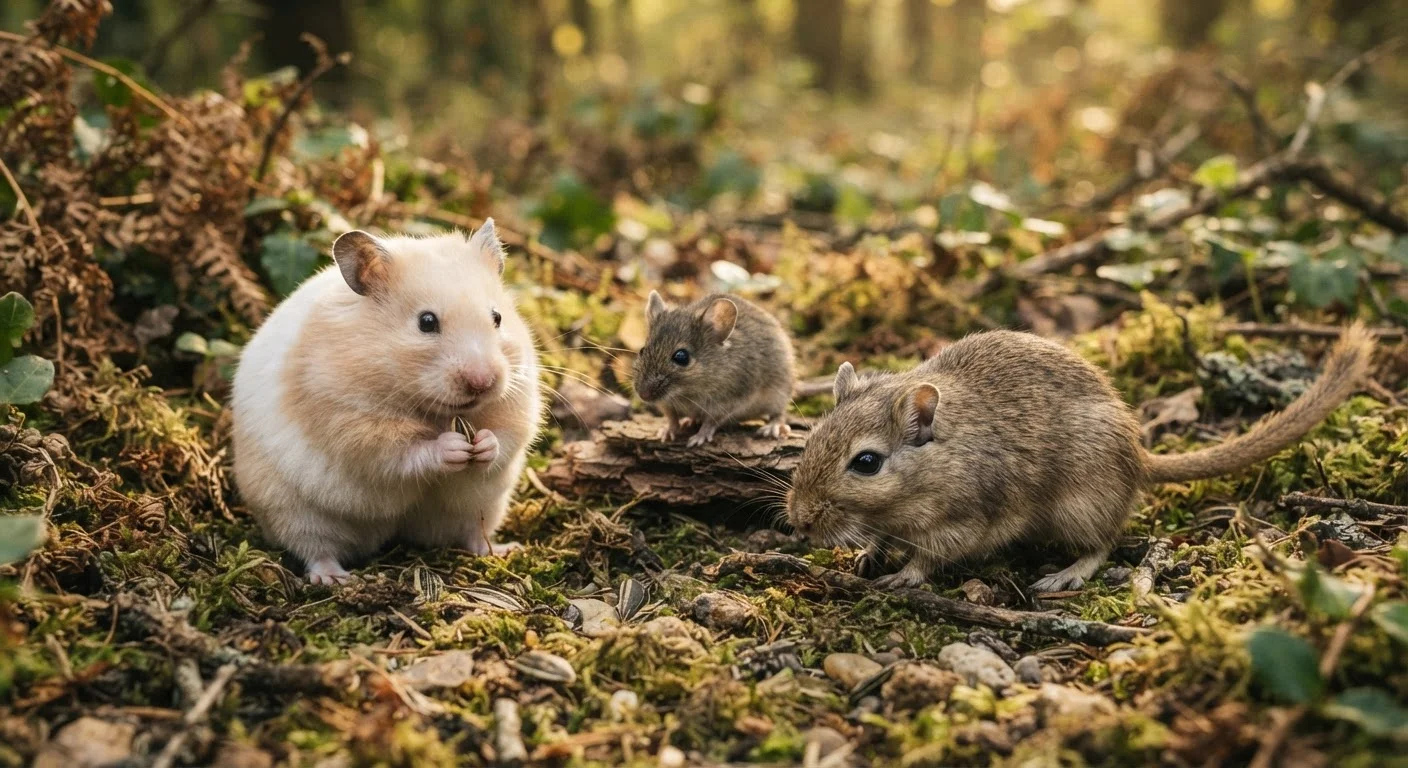
Hamsters, gerbils, and mice each have distinct social structures that directly determine how they should be housed and handled. Forcing any of these animals into the wrong social setup - solitary confinement for gerbils or group housing for hamsters - causes measurable stress and can be dangerous. Matching their living arrangements to their natural behavior is the single most impactful welfare decision an owner can make.
| Best for | Recommended |
|---|---|
| Owners who want a hands-on, one-on-one pet relationship | Hamsters |
| Owners who enjoy watching animals interact and bond | Gerbils |
| Owners interested in small colony dynamics with lower individual-handling demand | Mice |
Why Social Structure Matters for Small Rodents
Walk into any pet store and you'll often see hamsters, gerbils, and mice grouped near one another - small, furry, and superficially similar. But their social lives are fundamentally different, and those differences have real consequences for housing, enrichment, and overall welfare.
Getting this wrong is one of the most common mistakes new small-pet owners make. A gerbil kept alone will often show signs of chronic stress. A hamster kept with a cagemate may end up in a life-threatening fight. These aren't edge cases - they reflect hard-wired behavioral tendencies shaped by each species' ecology in the wild. See our small pet reference guide for a broader look at habitat and care basics across popular species.
| Hamsters | Gerbils | Mice | |
|---|---|---|---|
| Natural social structure | Solitary | Family group colonies | Social groups |
| Recommended housing | One per enclosure | Same-sex pairs or small groups | Same-sex female groups; males need caution |
| Risk of cohabitation | High - fighting likely | Low if introduced correctly | Moderate - sex-dependent |
| Enrichment focus | Solo burrowing, foraging, wheels | Social play, communal burrowing | Group nesting, climbing, exploration |
| Stress from isolation | None - preferred | High - avoid isolation | Moderate - benefits from company |
| Ease of group management | Simple - no group needed | Straightforward with bonded pair | Easy for females, challenging for males |
Hamsters: Solitary by Design
Syrian hamsters - the most commonly kept species in the US - are territorial solitary animals in the wild. They mark and defend burrow systems that span large areas, and encounters between adults rarely end peacefully. In captivity, that instinct doesn't disappear. Housing two Syrian hamsters together, even if they seemed fine as juveniles, frequently results in serious fighting, injury, and death as they mature.
Dwarf hamster species (such as Russian Dwarf and Roborovski) are sometimes described as more tolerant of company, and same-sex pairs kept together from a young age can occasionally cohabitate. However, even these pairings require close monitoring and the genuine ability to separate animals at the first sign of tension. Many veterinary and welfare organizations still recommend single housing as the safest approach for all hamster species.
This solitary preference doesn't mean hamsters are low-enrichment pets. They are highly motivated to burrow, forage, and explore. A large enclosure with deep substrate, a quality running wheel, and varied enrichment items addresses those needs far more effectively than social housing.
Watch for Aggression Warning Signs
Even in species suited to group living, conflict can emerge. Chasing, mounting, fur-pulling, or huddling in corners are signs that animals may need to be separated. Always have a backup enclosure ready when housing any small rodents together, so you can act quickly if tensions escalate.
Gerbils: Built for Companionship
Gerbils are obligate social animals. In the wild, Mongolian gerbils - the species almost universally kept as pets - live in family groups and rely on social grooming, play, and coordinated burrowing for both physical and psychological health. A lone gerbil is a stressed gerbil, and that stress can manifest as repetitive behaviors (such as corner-digging or bar-gnawing) and a shortened lifespan.
Same-sex pairs are the standard recommendation for pet gerbils, ideally littermates or animals introduced using a split-cage method while young. Bonded gerbil pairs spend significant time grooming each other, sleeping in contact, and exploring together - behaviors that are genuinely rewarding to observe and that support the animals' welfare.
Group sizes beyond pairs are possible but increase the risk of declanning - a process where established groups break down into aggressive factions, often suddenly and without obvious warning. For most owners, a bonded pair is the sweet spot between social fulfillment and manageable complexity.
Mice: Colony Animals With Nuance
Domestic mice are social animals most naturally suited to group living, but sex plays a large role in how that plays out in practice. Female mice generally cohabitate peacefully in groups and actively benefit from companionship - they tend to be calmer, more exploratory, and healthier when housed with other females.
Male mice are a different matter. Intact males housed together frequently fight, sometimes severely, especially once they reach sexual maturity. Some owners successfully keep bonded male littermates together, but this requires adequate space, no resource competition, and close observation. Introducing unfamiliar adult males is rarely successful without significant conflict.
A group of female mice in a well-enriched enclosure can be one of the most behaviorally interesting small-pet setups available - the animals display a rich range of social interactions, play, and communal nesting. If you're also navigating how a new small pet fits into a multi-pet household, our guide on introducing a new small pet to a home with cats or dogs covers that transition safely.
Practical Housing Takeaways
Understanding each species' social structure leads directly to better housing decisions. For hamsters, the priority is space and solo enrichment - a large tank or bin cage with deep bedding and a generously sized wheel. For gerbils, plan for a pair minimum and choose an enclosure that allows communal burrowing. For mice, a same-sex female group in a well-ventilated cage with nesting material, hides, and climbing opportunities offers excellent welfare outcomes.
Across all three species, enclosure size matters more than most owners initially expect. Minimum size guidelines published by animal welfare organizations have grown substantially in recent years as research has clarified activity needs. When in doubt, larger is better. For more on how housing choices affect small-pet welfare more broadly, see our overview on rabbit housing approaches - many of the spatial reasoning principles apply across species.
This article is for general informational purposes only and does not constitute veterinary advice. Consult a qualified exotic animal veterinarian for guidance specific to your pet's needs.
The content on this site is provided for informational purposes only and should not be considered a substitute for professional advice. While we strive to provide accurate and up-to-date information, we make no guarantees regarding its completeness or accuracy. Always consult a qualified professional for advice specific to your circumstances before making any decisions.