

What Hazard Lights Are Actually Designed to Do
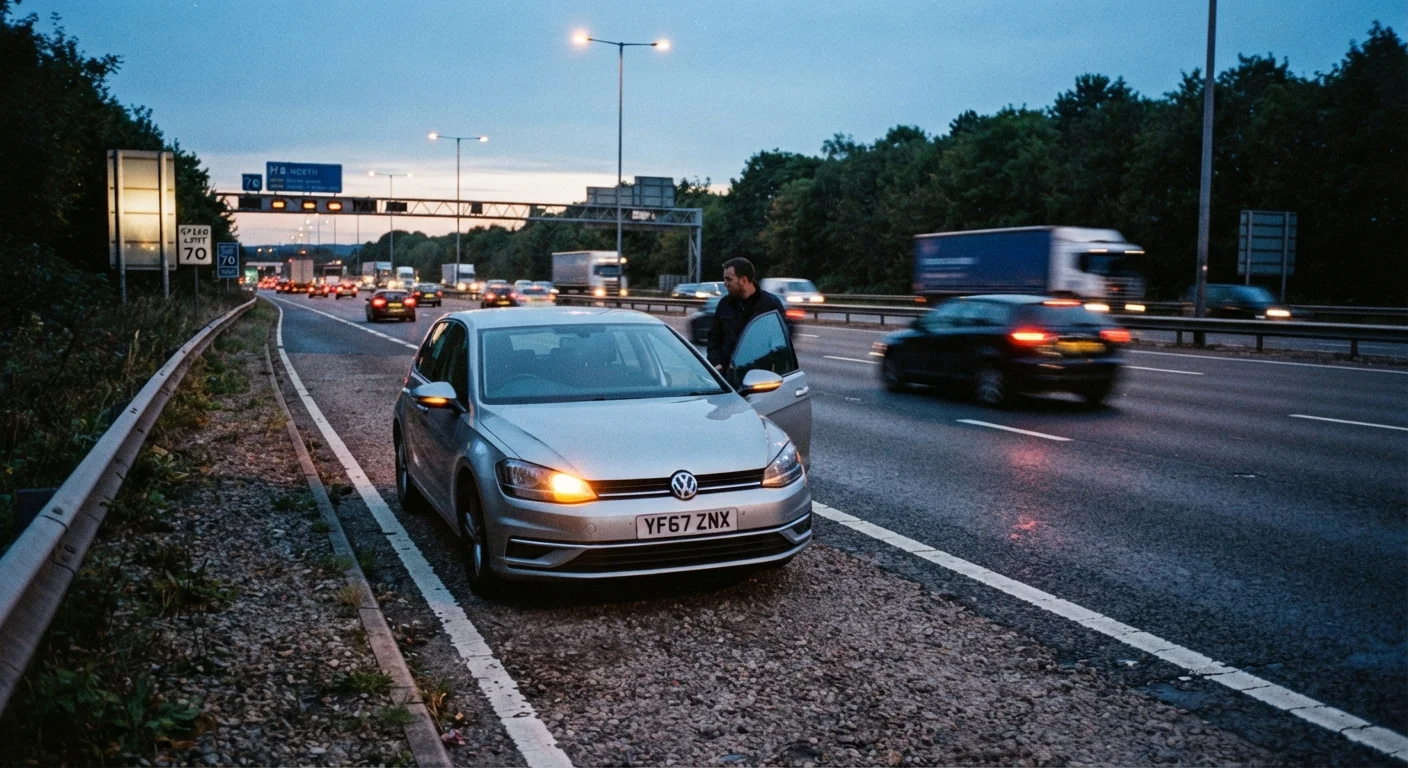
Hazard lights - technically called emergency flashers - exist for a specific purpose: to alert other drivers that your vehicle is an unexpected obstacle in or near traffic. They make all four turn-signal indicators flash simultaneously, creating a highly visible warning pattern. This design is well-suited to situations where your car is stopped on the shoulder, blocking a travel lane after a breakdown, or positioned in a spot where drivers approaching from behind need extra time to react.
The principle is straightforward. When a vehicle is stationary and poses a danger to moving traffic, hazard lights communicate one clear message: this vehicle is not moving - adjust accordingly. That simplicity is what makes them effective in the right context. It's also why misuse erodes their value so quickly.
For a broader look at vehicle warning systems, see Reading Your Dashboard Warning Lights - many of the same situations that illuminate dashboard warnings are also situations where hazard lights become relevant.
Common Myths About Hazard Light Use
Despite how often drivers reach for the hazard button, misconceptions about when and how it should be used are widespread. The myths below reflect some of the most common - and most consequential - misunderstandings on American roads today.
Myth
Turning on hazard lights in heavy rain makes you more visible and safer.
Fact
Hazard lights in moving traffic mask your brake lights and turn signals, reducing critical communication with other drivers.
In many U.S. states - including California, Virginia, and Illinois - driving with hazard lights activated in rain is actually prohibited. The reason is practical: when all four corners of a vehicle are flashing identically, other drivers cannot tell whether you are braking, turning, or maintaining speed. Brake lights, the most important collision-prevention signal a moving vehicle has, become indistinguishable from the flashing pattern. Low beams and reduced speed are the correct response to reduced visibility in rain.
Myth
Using hazards on the highway during slow traffic warns drivers behind you and is helpful.
Fact
While the intent is protective, hazards during slow-moving traffic eliminate your ability to signal lane changes and create visual noise that reduces signal clarity.
During traffic slowdowns, the driver behind you needs to see your brake lights - not a uniform flash from all four corners. Consistent braking signals are far more informative than hazard lights in this context. Additionally, the moment you need to change lanes or exit, your turn signal is unavailable until you switch hazards off. At highway speeds, that transaction takes time you may not have.
Myth
Hazard lights are universally legal and appropriate whenever you feel unsafe.
Fact
Hazard light regulations vary by state, and "feeling unsafe" while driving at speed is not a valid trigger for their use.
State laws differ on when hazard lights are permitted while a vehicle is in motion. Some states prohibit use during normal precipitation; others restrict them to stationary vehicles. Checking your state's specific vehicle code is worthwhile, because relying on general assumptions can result in both unsafe behavior and, in some cases, traffic violations. The feeling of added safety from flashing lights doesn't change the mechanical reality that your other signals are now masked.
Myth
Hazard lights are a good substitute for proper headlight use in fog or low visibility.
Fact
Headlights - particularly properly aimed low beams or dedicated fog lights - are the correct response to low-visibility conditions.
Hazard lights flash, which is disorienting to oncoming drivers and provides no consistent illumination of the road ahead. Headlights on low beam cut through fog without reflecting glare back at the driver, while also making the vehicle visible from the front and rear via tail lamps. High beams in fog actually reduce visibility by reflecting off suspended water droplets. The correct hierarchy is: low beams on, speed reduced, following distance increased. Hazards add confusion, not clarity, in this scenario.
When Hazards Create More Risk Than They Prevent
The most common hazard-light error in the U.S. is activating them while driving through heavy rain. The instinct feels reasonable - visibility is poor, so more blinking lights seem helpful. But the practical effect is often the opposite. When multiple vehicles in a lane all have their hazards running, individual brake signals become invisible. A driver ahead who slows suddenly may give no distinguishable warning to the car behind. The hazards drown out the very signal that prevents rear-end collisions.
Hazards Disable Your Turn Signals Entirely
While hazard lights are active, pressing either turn signal lever will not produce a visible directional indicator for other drivers. If you need to change lanes or turn while hazards are on, you must switch them off first. Failing to do so leaves surrounding drivers with no indication of your intended movement - a particularly hazardous situation at speed or in intersections.
A related problem occurs on highways during slow-moving traffic. Some drivers activate hazards to warn those approaching from behind - but this disables turn signals entirely. If traffic suddenly clears and a lane change is needed, there's no way to signal intent without first switching off the hazards. That moment of ambiguity, brief as it sounds, matters at speed. For insight into how signaling and lane dynamics interact at highway speeds, Merging onto a Highway Without Causing a Problem covers where drivers most commonly go wrong.
Road conditions that reduce visibility - like the scenarios described in Invisible Hazards: Road Conditions That Drivers Consistently Underestimate - do call for caution, but that caution should take the form of reduced speed and increased following distance, not hazard lights while in motion.
The Correct Situations for Hazard Light Use
Clear, consistent criteria for using hazard lights exist, and they center on one question: is the vehicle stationary or nearly stationary in an unexpected location?
- Broken down on the shoulder or roadway: This is the primary intended use. Activate hazards immediately and, where safe, set out road flares or reflective triangles.
- Pulled over for an emergency stop: Even if you're off the travel lane, hazards help signal to approaching drivers that your vehicle is occupied and stationary.
- Part of a funeral procession: Many states legally permit hazard use in organized processions to keep the group visible and cohesive.
- Temporarily blocking a lane for loading: In some urban contexts, brief hazard use while legally stopped for loading or an emergency is accepted practice - though local rules vary.
One rule worth internalizing: if your vehicle is moving at normal traffic speed, hazard lights are almost never the right tool. Low-visibility driving - including heavy rain, dense fog, or nighttime conditions - calls for properly adjusted headlights and slower speeds. Night Driving Is Genuinely More Dangerous-Here's Why explains how visibility compounds risk after dark and what genuinely helps.
The content on this site is provided for informational purposes only and should not be considered a substitute for professional advice. While we strive to provide accurate and up-to-date information, we make no guarantees regarding its completeness or accuracy. Always consult a qualified professional for advice specific to your circumstances before making any decisions.