

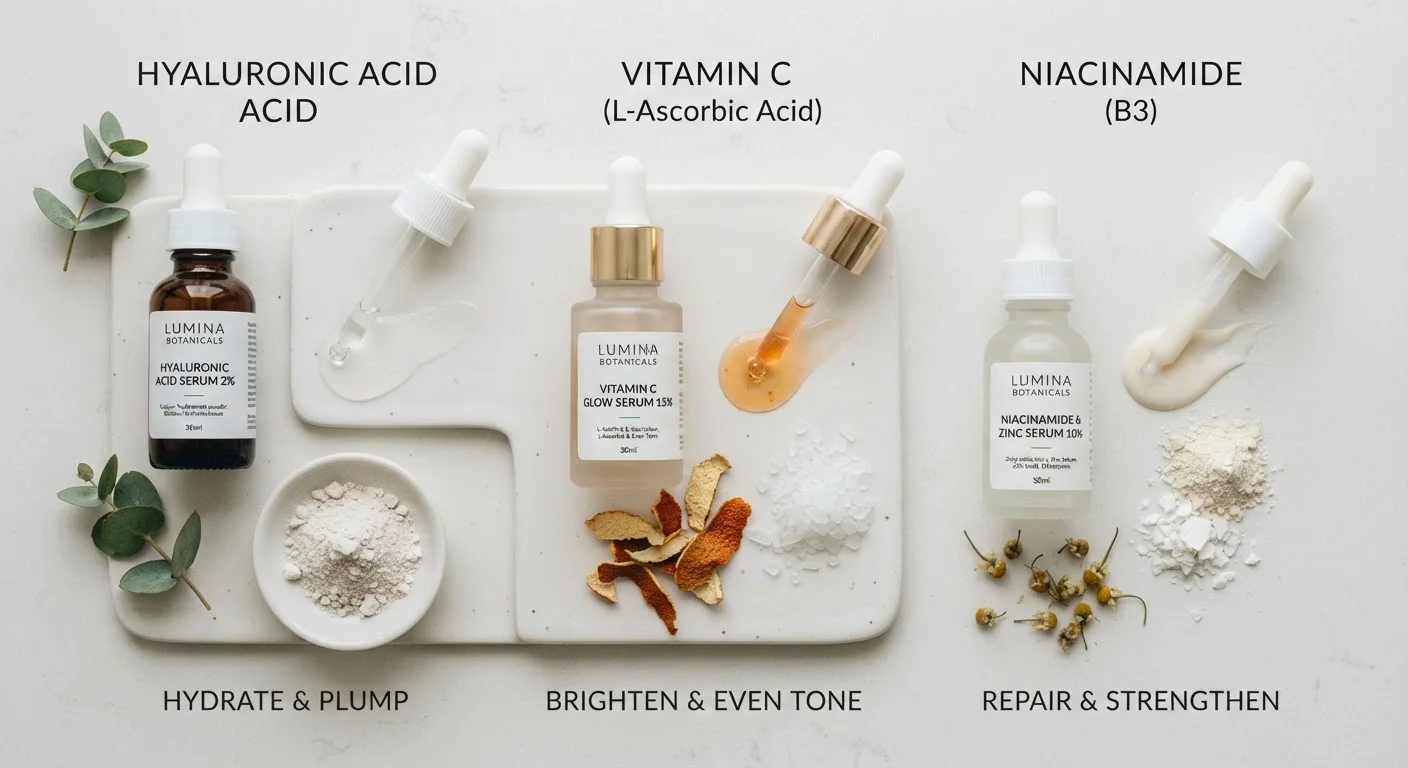
Why Active Ingredients Matter
Walk down any skincare aisle and you'll see the same handful of terms repeated on packaging: retinol, AHA, BHA, vitamin C. These are called active ingredients — compounds that have a measurable effect on how skin functions, rather than just sitting on the surface. Knowing what each one actually does (and doesn't do) helps you build a routine that's appropriate for your skin rather than one based on marketing language.
Before diving in, one important note: active ingredients are potent. Many people experience irritation, dryness, or sensitivity when they first use them — especially at higher concentrations. If you have a skin condition, are pregnant, or take prescription medications, consult a dermatologist before adding actives to your routine. This guide is for general educational reference, not personal medical advice.
For a broader foundation, see our step-by-step guide to building a skincare routine before deciding which actives belong in your regimen.
Active Ingredient
A cosmetic or pharmaceutical ingredient that has a documented, measurable effect on skin function or structure. Active ingredients are distinct from base or carrier ingredients that primarily deliver texture or stability.
Retinol
An over-the-counter vitamin A derivative that promotes skin cell turnover. It is milder than prescription retinoids and is commonly used to address texture, fine lines, and uneven tone over time.
Alpha Hydroxy Acid (AHA)
A class of water-soluble exfoliating acids, including glycolic and lactic acid, that work by breaking down the bonds holding dead skin cells on the surface. They are generally suited to dry or sun-damaged skin types.
Beta Hydroxy Acid (BHA)
An oil-soluble exfoliating acid — most commonly salicylic acid — that can penetrate into pores to dissolve sebum and dead cell buildup. Frequently used for oily or acne-prone skin.
L-Ascorbic Acid
The most bioavailable form of vitamin C used in topical skincare. It functions as an antioxidant and plays a role in collagen support, but is prone to oxidation when exposed to air and light.
Cell Turnover
The natural process by which the skin sheds old surface cells and replaces them with newer ones. This cycle slows with age; some active ingredients are used to support or accelerate it.
Antioxidant
A compound that neutralizes free radicals — unstable molecules generated by UV exposure and pollution that can damage skin cells. Vitamin C is one of the most studied topical antioxidants.
Tretinoin
A prescription-strength retinoid (vitamin A derivative) significantly more potent than over-the-counter retinol. It requires a prescription and medical oversight due to its strength.
The Four Core Actives: What They Do
Retinol is a vitamin A derivative that works by accelerating the skin's natural cell turnover cycle. It's widely studied for its role in reducing the appearance of fine lines and uneven texture over time. Retinol is available over the counter, but prescription-strength retinoids (like tretinoin) are significantly more potent and require a doctor's guidance. Over-the-counter retinol is generally well tolerated when introduced gradually, though dryness and flaking are common at first.
Alpha Hydroxy Acids (AHAs) — such as glycolic acid and lactic acid — are water-soluble exfoliating acids derived mostly from natural sources. They work on the skin's surface by loosening the bonds between dead skin cells, allowing them to shed more efficiently. AHAs are commonly used to address dullness, dry patches, and uneven skin tone. Because they can increase sun sensitivity, sunscreen use becomes especially important when incorporating them.
Beta Hydroxy Acids (BHAs) — most commonly salicylic acid — are oil-soluble, which means they can penetrate into pores rather than working only on the surface. This makes BHAs particularly useful for oily or acne-prone skin, where clogged pores are a common concern. Salicylic acid also has mild anti-inflammatory properties.
Vitamin C (usually in the form of L-ascorbic acid or its derivatives) is an antioxidant that helps neutralize free radical damage from UV exposure and environmental pollution. It's also involved in the body's natural collagen synthesis process. Topical vitamin C is commonly used to address dark spots and dullness, though it can be unstable — look for products in opaque or airtight packaging to preserve potency.
| Retinol typical OTC concentration | 0.025% – 1% (American Academy of Dermatology general guidance) |
| AHA most studied for exfoliation | Glycolic acid |
| BHA most common in skincare | Salicylic acid |
| Vitamin C effective pH range | pH 2.5 – 3.5 (Widely reported in cosmetic chemistry literature) |
| AHAs increase UV sensitivity | Yes — daily SPF recommended (FDA advisory on AHA photosensitivity) |
| Retinol best applied | Evening, to dry skin |
Pairing and Layering: What to Know
Not all active ingredients are meant to be used together. Some combinations — like retinol and AHAs used simultaneously — can compound irritation significantly. Others, like vitamin C applied in the morning and retinol at night, are commonly used as complementary routines precisely because they're applied at separate times.
A useful general approach: start with one active at a time, use it a few times per week, and give your skin at least four to six weeks to adjust before adding anything else. This also makes it much easier to identify what's working (or causing a reaction).
For a detailed look at which combinations to approach with caution, our reference on ingredients that don't play well together is a practical next read. You can also learn more about how to interpret concentration and formulation on a product label through our guide on decoding a skincare label.
This article is for general informational purposes only and is not a substitute for professional medical or dermatological advice. Always consult a qualified healthcare provider before making significant changes to your skincare routine, particularly if you have sensitive skin, a diagnosed condition, or are pregnant.
The content on this site is provided for informational purposes only and should not be considered a substitute for professional advice. While we strive to provide accurate and up-to-date information, we make no guarantees regarding its completeness or accuracy. Always consult a qualified professional for advice specific to your circumstances before making any decisions.