

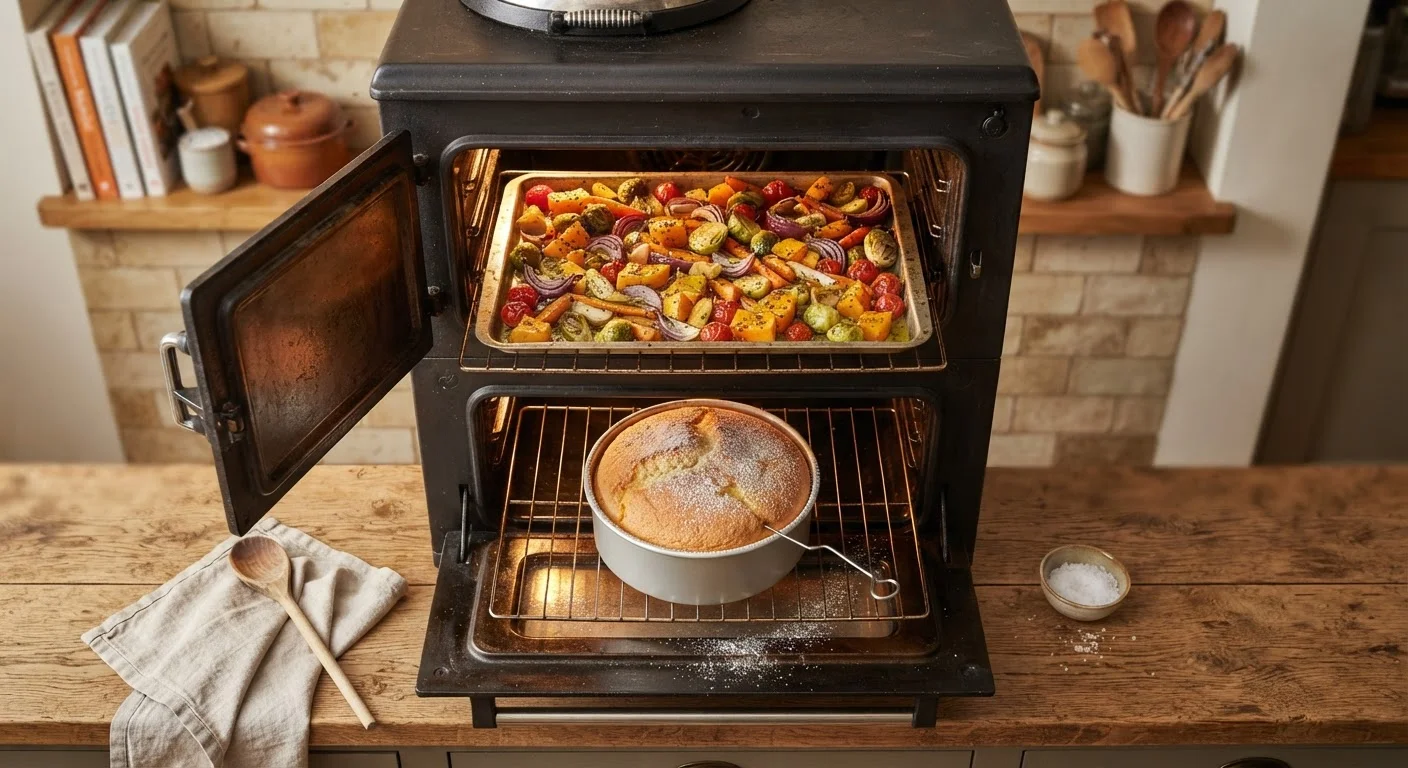
Option A
Roasting
The high-heat technique that builds color and concentrates flavor.
Best for: Best for meats, poultry, root vegetables, and anything you want caramelized and browned on the outside.
Option B
Baking
The precise, structure-driven method for foods that need to set and rise.
Best for: Best for breads, cakes, casseroles, and dishes where internal structure and even heat matter most.
Same Oven, Different Logic
Roasting and baking both use the same appliance and the same type of heat - dry, circulating air inside a closed oven. So why do we use different words? Because the technique, temperature, and intended result are meaningfully distinct in ways that affect how food actually cooks.
Think of it this way: the oven is the tool, but roasting and baking are two different strategies for using it. Understanding that distinction gives you a clearer mental model for following recipes - and for troubleshooting when something isn't cooking the way you expected. If you're also curious how heat behaves outside the oven, pan temperature plays an equally important role in everyday cooking.
| Criterion | Roasting | Baking |
|---|---|---|
| Typical temperature range | 400°F - 450°F | 325°F - 375°F |
| Primary food types | Meats, poultry, vegetables | Breads, cakes, casseroles |
| Main goal | Surface browning and flavor concentration | Even structure and internal set |
| Precision required | Moderate - flexible timing | High - chemistry-dependent |
| Pan type | Shallow pan or rack | Loaf pan, cake pan, baking dish |
| Moisture behavior | Moisture evaporates to crisp surface | Moisture retained within structure |
What Makes Roasting Distinct
Roasting is generally defined by higher temperatures - typically 400°F to 450°F - and is almost always applied to foods that start out structurally solid: cuts of meat, whole poultry, root vegetables, and dense produce like Brussels sprouts or squash. The goal is surface browning.
That browning happens through two chemical processes: the Maillard reaction (a complex interaction between amino acids and sugars that creates savory, toasty flavors) and caramelization (the breakdown of sugars under heat). Both require sustained high heat, which is exactly what roasting delivers.
285°F
Approximate temperature for Maillard browning to begin
Food science research identifies this as the threshold at which surface proteins and sugars begin producing complex flavor compounds.
320°F
Temperature at which caramelization starts in most sugars
Culinary science texts note that different sugars caramelize at slightly different points, but most begin breaking down around this range.
Roasting also relies on airflow. Using a rack or a shallow pan - rather than a deep pot - allows heat to circulate around the food rather than trapping steam underneath it. Trapped steam leads to braising, not roasting. This is why a sheet pan lined with tightly packed vegetables can turn soggy: the food steams instead of browns.
What Makes Baking Distinct
Baking occupies a lower, more moderate temperature range - typically 325°F to 375°F - and is applied to foods where internal structure is the point. Bread needs to rise and set. Cake needs to go from batter to a stable crumb. Quiche needs to firm up without curdling. These outcomes depend on careful, even heat rather than aggressive surface browning.
Precision matters more in baking. Leaveners like baking soda and baking powder activate at specific temperatures; oven-spring in bread dough happens in a narrow window. A temperature that's too high will set the crust before the interior can catch up, leaving you with a dense center or a burnt top. A temperature too low can prevent proper rise altogether.
This is also why baking recipes tend to be more detailed about pan size, rack position, and exact bake time. These aren't arbitrary restrictions - they're built-in safeguards for a chemistry-driven process. For a broader look at how different heat-based techniques compare, stovetop cooking methods each carry their own logic worth understanding.
Where the Line Gets Blurry
The truth is, there's some genuine overlap. Recipes for chicken breast or salmon sometimes say "bake at 400°F" - a temperature that would technically qualify as roasting. Some cookbooks use the terms interchangeably for certain dishes, which is why context and food type matter more than the label alone.
A useful rule of thumb: if the primary goal is surface color and concentrated flavor, you're roasting. If the primary goal is setting structure from the inside out, you're baking. When in doubt, follow the recipe's temperature and timing - those specifics matter more than the terminology.
If you want to expand your overall kitchen confidence, understanding how simmering and boiling differ is another practical building block that pairs well with oven technique.
The content on this site is provided for informational purposes only and should not be considered a substitute for professional advice. While we strive to provide accurate and up-to-date information, we make no guarantees regarding its completeness or accuracy. Always consult a qualified professional for advice specific to your circumstances before making any decisions.