

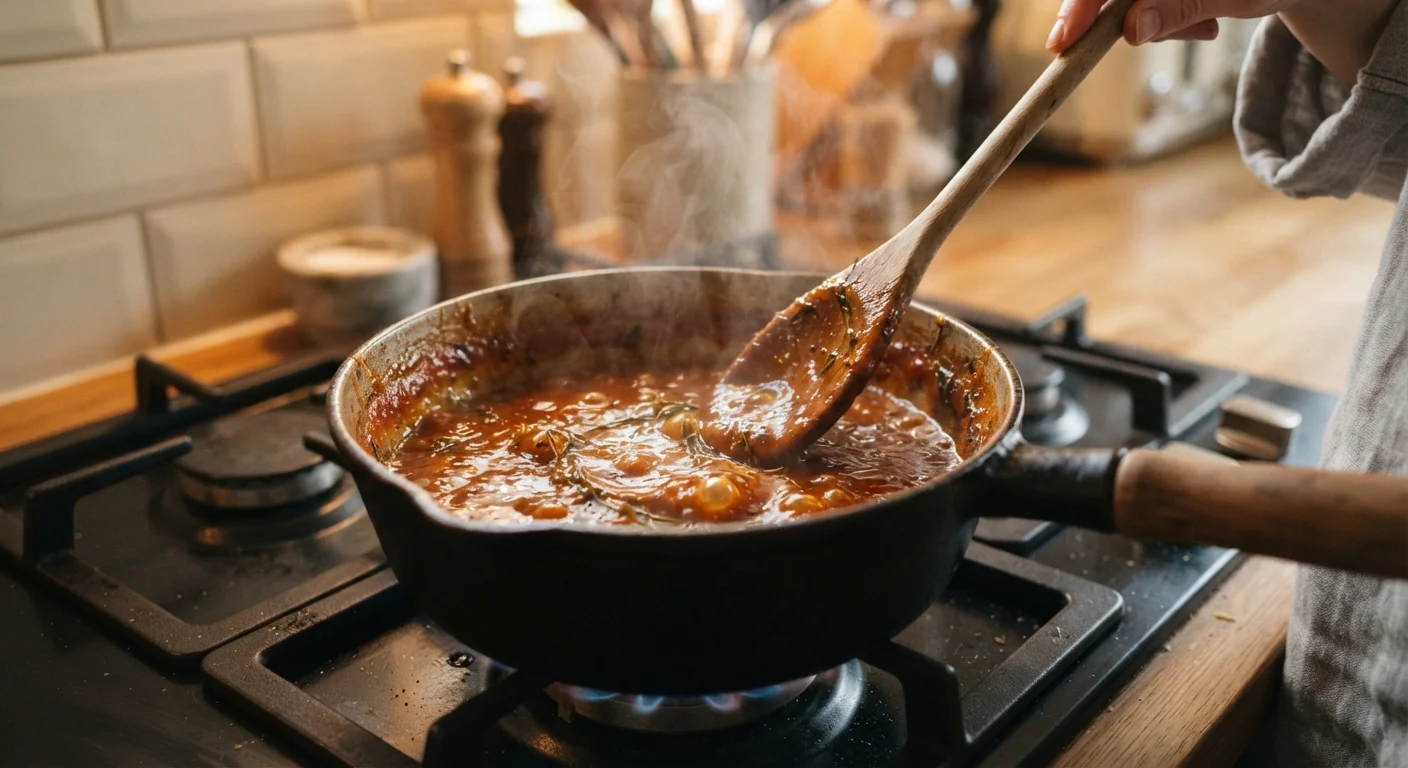
Why Thickening Technique Matters
A thin sauce or watery soup isn't just a texture problem - it often means flavor hasn't fully come together either. Thickening is one of those kitchen skills that looks simple from the outside but has real nuance once you start cooking. The wrong method at the wrong moment can leave a sauce gluey, cloudy, or broken.
The good news is that there are only a handful of reliable approaches, and once you understand how each one works, you'll know instinctively which to reach for. Whether you're finishing a pan sauce or rescuing a soup that turned out too thin, the methods below give you a practical toolkit. For context on heat management that directly affects these techniques, see how simmering and boiling differ - it matters more than most beginners expect.
Cornstarch Slurry
A cornstarch slurry is made by mixing equal parts cornstarch and cold water - typically one tablespoon of each per cup of liquid - before whisking it into a simmering sauce or soup. The cold water prevents clumping; never add dry cornstarch directly to a hot liquid.
Once added, keep the heat at a steady simmer and stir continuously. The sauce will thicken within one to two minutes. Cornstarch produces a glossy, translucent finish, making it ideal for Asian sauces, fruit pie fillings, and light pan sauces. Avoid prolonged boiling after adding it - overcooking can actually break the thickening and make the sauce thin again.
Always mix cornstarch with cold water first - never add it dry to a hot liquid.
Flour-and-Butter Roux
A roux is a cooked mixture of equal parts flour and fat (typically butter) that forms the backbone of classic sauces like béchamel and velouté, as well as gumbo and many gravies. Unlike a slurry, a roux is built at the start of cooking, not added at the end.
Melt the butter over medium heat, add the flour, and stir constantly for one to two minutes until the mixture smells slightly nutty and looks pale golden. Then gradually whisk in your liquid - broth, milk, or stock - a little at a time to prevent lumps. The longer you cook a roux before adding liquid, the darker and more complex (but less thickening power) it becomes. A white roux thickens the most; a dark brown roux is used primarily for flavor.
A roux cooked longer becomes darker and more flavorful, but loses some thickening power.
Reduction
Reduction is the simplest thickening method: you apply heat and let water evaporate, which concentrates both the flavor and the body of the liquid. No additional ingredients required.
To reduce a sauce, bring it to a gentle simmer - not a rolling boil, which can make proteins in meat-based stocks turn cloudy and bitter - and let it cook uncovered, stirring occasionally. A sauce reduced by half will be noticeably thicker and more intensely flavored. This method works beautifully for wine sauces, pan drippings, and tomato-based dishes. The main drawback is time: reducing a thin stock can take 20-40 minutes. It also concentrates saltiness, so season lightly until the reduction is complete. Timing your salt correctly is especially important here.
Season lightly before reducing - salt concentrates along with everything else in the pan.
Puréeing Part of the Dish
This technique works especially well for soups, stews, and bean-based dishes. By blending a portion of the cooked ingredients - usually about one-third of the total volume - and stirring it back in, you create body and creaminess using nothing but what's already in the pot.
Use an immersion blender directly in the pot (with the heat off and the blender submerged before turning it on), or carefully ladle batches into a countertop blender, leaving the lid slightly ajar covered with a towel to allow steam to escape. This method is naturally gluten-free and dairy-free, and it deepens flavor by incorporating caramelized bits into the liquid. It's particularly effective with lentil soups, minestrone, and potato-based chowders.
Blending just one-third of a soup and stirring it back transforms texture without losing chunky character.
Beurre Manié (Kneaded Butter)
A beurre manié (pronounced bur mahn-YAY) is a classic French technique that functions as a quick fix for sauces and soups that need thickening at the last minute. Mix equal parts softened butter and flour together with your fingers until they form a smooth paste, then whisk small pieces of it into a simmering liquid.
Unlike a roux, the flour in a beurre manié isn't pre-cooked, so you'll need to simmer the sauce for at least two minutes after adding it to eliminate the raw flour taste. It integrates smoothly, adds a subtle richness from the butter, and is far easier to control than a slurry - you can add it a small piece at a time until you reach exactly the consistency you want. It's a reliable rescue technique for braises and stews.
Beurre manié is a precise, adjustable thickener - add it piece by piece to control consistency.
Egg Yolk Liaison
An egg yolk liaison is used in classic French cooking to thicken and enrich cream-based sauces without making them heavy or floury. Whisk one or two egg yolks together with a small amount of heavy cream, then slowly add a ladleful of the hot sauce to the yolk mixture while whisking constantly - this process is called tempering, and it raises the yolk's temperature gradually so it doesn't scramble.
Once tempered, stir the yolk mixture back into the pot over low heat and cook gently, stirring, until the sauce coats the back of a spoon. Never let the sauce boil after adding the liaison - high heat will cause the eggs to curdle. This technique works best in cream soups, blanquette de veau, and other dishes where a velvety, rich finish is the goal.
Temper egg yolks slowly with hot liquid before adding them to the pot - or risk scrambled sauce.
Choosing the Right Method for Your Dish
There's no single best thickener - the right choice depends on what you're making, how much time you have, and the final texture you want. Delicate cream sauces and Asian-style stir-fry sauces benefit from cornstarch's glossy finish. Hearty gravies and béchamel-based dishes call for a roux built at the beginning. Long-simmered braises and tomato-based ragùs often thicken best through patient reduction.
Test Thickness Before Committing
Before deciding a sauce needs more thickener, dip a metal spoon into it and run your finger across the back - if the line holds cleanly, the sauce is likely thick enough. Many cooks over-thicken because they judge texture while the sauce is still too hot. Remember that most sauces continue to thicken slightly as they cool.
Understanding your ingredients is just as important as your technique. Building a flavor foundation with aromatics, fat, and heat gives your sauce the depth worth preserving - so pick a thickening method that enhances rather than masks it. And if you're working from a recipe that calls for a specific method, reading it carefully will help you avoid common misreads that lead to clumps or broken sauces.
The content on this site is provided for informational purposes only and should not be considered a substitute for professional advice. While we strive to provide accurate and up-to-date information, we make no guarantees regarding its completeness or accuracy. Always consult a qualified professional for advice specific to your circumstances before making any decisions.