

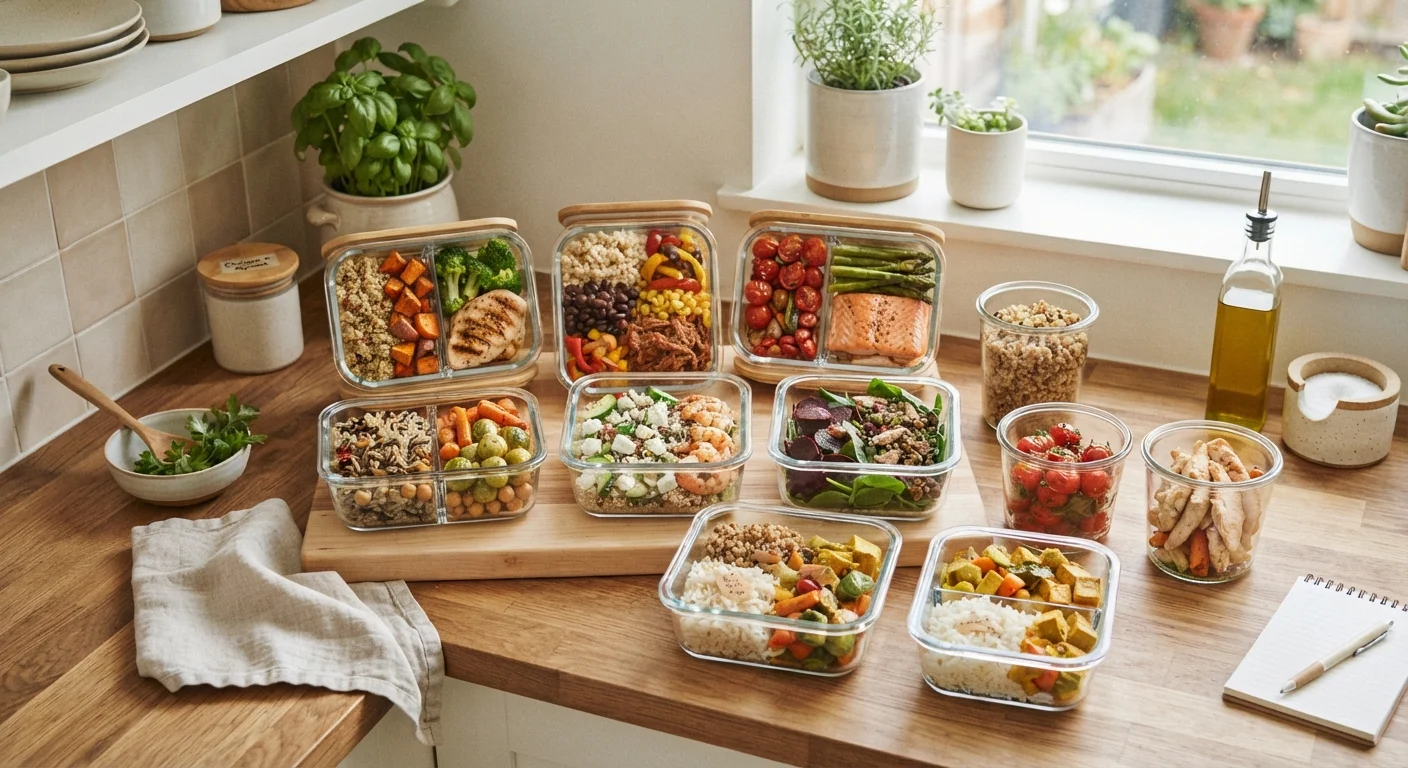
What Batch Cooking Actually Involves
At its core, batch cooking is a time-shifting strategy. Rather than spending 30-60 minutes cooking each evening, you consolidate that labor into a single longer session and reclaim your weeknights. The session typically covers three to five meals or a set of versatile components - cooked grains, a pot of beans, a sheet pan of roasted vegetables, a braised protein - that can be mixed and matched across multiple meals.
This differs meaningfully from simply making double portions of dinner. A true batch cooking session is planned in advance, with an eye toward how individual components will rotate through different meals. A batch of cooked farro, for instance, might serve as a grain bowl base on Monday, a side dish on Tuesday, and a soup addition on Wednesday.
If you are new to structured food planning, the fundamentals of meal planning provide a useful foundation before you begin cooking in bulk.
3-4 days
Safe refrigerator life for most batch-cooked meals
Per widely cited food safety guidance, cooked foods stored at or below 40°F (4°C) in airtight containers remain safe to eat for 3-4 days.
2-3 hrs
Typical time for a full batch cooking session
Experienced batch cooks report completing a week's worth of meals in roughly 2-3 hours when tasks are overlapped and planned in advance.
30-40%
Estimated reduction in daily cooking time
Nutrition educators and culinary coaches commonly cite significant weeknight time savings when a structured batch session replaces nightly from-scratch cooking.
Why the Approach Works for Busy Households
The efficiency of batch cooking comes from eliminating repetitive setup and cleanup. Every time you cook a meal from scratch, you spend time gathering ingredients, preheating equipment, and washing dishes. In a single batch session, those fixed costs apply once to a week's worth of food rather than five or six times.
There is also a cognitive benefit. When dinner is already cooked, the nightly question of "what are we eating?" disappears. For households managing work, childcare, or irregular schedules, that reduction in daily decision-making carries real practical value.
Batch cooking also tends to support more intentional eating habits. When ready-made food is accessible in the fridge, reaching for a home-cooked meal becomes easier than ordering out on a tired Tuesday night. This does not guarantee outcomes, but it does lower the practical barrier.
Start Small Before Going All-In
If batch cooking feels overwhelming, begin with just one or two versatile components - a pot of grains and a sheet pan of roasted vegetables - rather than planning five full meals. This lower-stakes session helps you figure out what your household actually eats repeatedly before you commit to cooking larger volumes.
When Batch Cooking Is Not the Right Fit
Batch cooking is not a universal solution, and it is worth being honest about its limitations. People who tire quickly of eating the same food - or households with very different taste preferences - may find that a week's worth of identical components feels monotonous by midweek.
It is also less suited to lifestyles with highly unpredictable schedules. If your week regularly veers off plan - unexpected dinners out, travel, irregular meal times - batch-cooked food may go to waste rather than get eaten. In those cases, lighter ingredient prepping (washing and chopping vegetables, portioning proteins) may offer more flexibility without the commitment of fully cooked meals.
For a direct comparison of both strategies, see batch cooking vs. prepping ingredients to weigh the trade-offs against your actual schedule.
Structuring a Batch Cooking Session
A productive session starts before you enter the kitchen. Choose three to five recipes or component types that use overlapping ingredients and that you know reheat well. Check your storage situation - you will need enough airtight containers to hold everything safely.
Inside the session, work in parallel: start whatever takes longest first (a braise, a pot of beans, a slow-roasting protein), then layer in quicker tasks around it. Grains typically cook in 20-45 minutes unattended, making them easy to run alongside other tasks.
Cooling food properly before refrigerating is important from a food safety standpoint. Allow hot food to cool to near room temperature - typically within two hours - before sealing and storing. Label containers with the date so you have a clear sense of what to use first.
For a structured way to think through your full week before cooking anything, the before-you-start checklist walks through the practical questions worth asking. And once you have cooked, sequencing which meals to eat on which days - using the freshest ingredients earliest - can further reduce food waste through smarter meal sequencing.
Batch cooking sits within the broader toolkit covered in cooking basics - once the fundamentals are solid, scaling up to a full session becomes considerably easier.
Frequently Asked Questions
Most people complete a batch cooking session in 2-3 hours. The key is overlapping tasks - roasting vegetables in the oven while grains cook on the stovetop and proteins marinate. Planning your menu in advance cuts session time considerably.
Most cooked foods remain safe to eat for 3-4 days when stored in airtight containers in a refrigerator set at or below 40°F (4°C), according to general food safety guidelines. Foods intended for later in the week can be frozen immediately after cooling.
Grains (rice, farro, quinoa), legumes (lentils, chickpeas, black beans), roasted or steamed vegetables, soups, stews, and braised or baked proteins all reheat well. Delicate items like dressed salads, fried foods, or soft-cooked eggs are better prepared fresh.
The terms are often used interchangeably, but there is a meaningful difference. Batch cooking produces fully cooked food ready to reheat and eat. Meal prepping is a broader category that can include raw ingredient prep - chopping vegetables, marinating proteins - without any cooking at all.
No specialized equipment is required. A sheet pan, a large pot, a cutting board, and a set of airtight storage containers are sufficient for most sessions. A slow cooker or instant pot can expand your options but are not necessary to begin.
Yes - planning meals in advance means buying only what you will use, and cooking ingredients before they spoil reduces waste significantly. Thoughtful sequencing of meals throughout the week amplifies this benefit further.
The content on this site is provided for informational purposes only and should not be considered a substitute for professional advice. While we strive to provide accurate and up-to-date information, we make no guarantees regarding its completeness or accuracy. Always consult a qualified professional for advice specific to your circumstances before making any decisions.