

Our Verdict
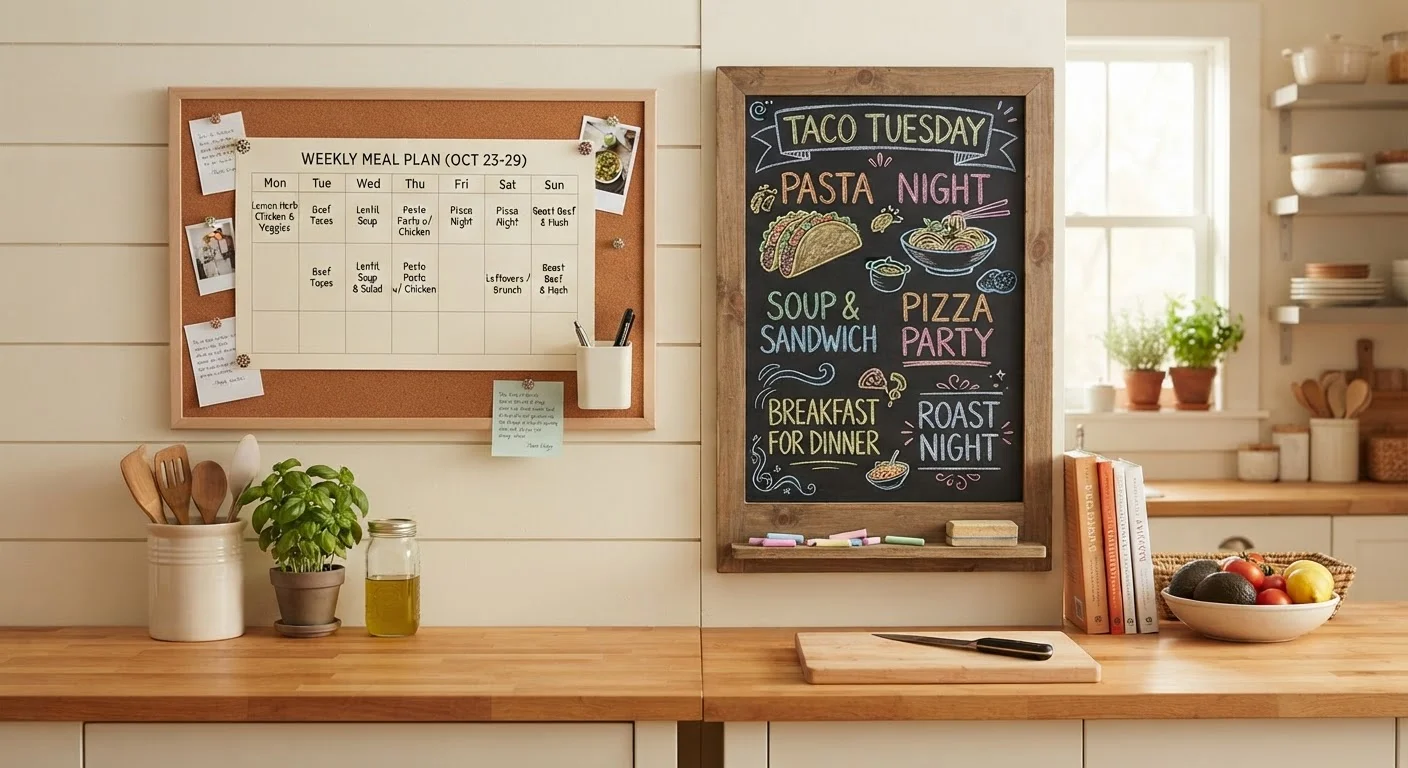
Rigid weekly menus deliver maximum efficiency for households with predictable schedules and clear cooking goals. Theme nights strike a balance between structure and spontaneity, making them ideal for families who need guardrails without rigidity. For most busy households, a hybrid of both approaches - fixed menus on routine days, theme categories on variable ones - tends to be the most sustainable long-term solution.
| Best for | Recommended |
|---|---|
| Those with consistent weekly schedules and a desire to minimize daily decisions | Rigid Weekly Menus |
| Families with unpredictable evenings, picky eaters, or varying energy levels | Flexible Theme Nights |
| New meal planners looking for an approachable starting point | Flexible Theme Nights |
| Households managing detailed nutrition goals or specific dietary requirements | Rigid Weekly Menus |
What Each Approach Actually Looks Like
A rigid weekly menu means assigning a specific meal to every dinner slot - and sometimes lunches and breakfasts too - before the week begins. Monday is lemon herb chicken with roasted vegetables. Wednesday is black bean soup. Every meal is chosen, ingredients are bought precisely, and the week runs on a script.
Flexible theme nights work differently. Instead of locking in a recipe, you assign a broad category to each evening: Meatless Monday, Taco Tuesday, Pasta Wednesday, Stir-Fry Friday. Within that category, the specific dish is decided the day of, based on what's in the fridge, how much time you have, and what sounds appealing.
If you're new to planning altogether, our practical primer for busy households covers the foundational habits that make either approach workable.
Rigid Weekly Menus: Strengths and Limitations
The clearest advantage of a rigid menu is decisional efficiency. When every meal is pre-assigned, there is no 5 p.m. scramble to figure out dinner. Your grocery list maps precisely to the week's meals, reducing both food waste and impulse purchases. For households tracking nutrition goals or managing dietary restrictions, this level of specificity also makes it much easier to ensure balance across the week.
The drawbacks are real, though. Life rarely follows a script. A late meeting, a child's unexpected activity, or simply not being in the mood for what's planned can make a rigid menu feel like a chore rather than a tool. When the plan breaks down on Tuesday, the rest of the week can unravel quickly - especially if you've bought ingredients for sequential meals that share components.
Avoid Over-Engineering Your Rigid Menu
A common pitfall with rigid menus is planning meals that are too ambitious for weeknights. If Tuesday's plan calls for a slow braise that needs two hours, it will likely get abandoned. Match recipe complexity to the actual time and energy you'll realistically have on each day - not your Sunday-planning optimism.
Rigid menus also demand more upfront planning time each week. For cooks who enjoy spontaneity or whose household preferences shift frequently, the maintenance cost can outweigh the benefits.
Flexible Theme Nights: Strengths and Limitations
Theme nights reduce friction at the point of decision. Knowing it's pasta night narrows the field instantly - you're choosing between spaghetti and baked ziti, not between thirty unrelated options. This structure is loose enough to accommodate mood and inventory without requiring rigid advance planning. Families with children often find theme nights easier to build participation around: kids who reject a specific dish may still embrace the concept of "taco night" and happily customize their own plate.
Grocery shopping with theme nights requires a slightly different mindset. Rather than buying exact quantities for named recipes, you stock a broader range of versatile pantry staples - canned tomatoes, dried pasta, tortillas, beans - that can flex across multiple dishes within a theme. This does mean some educated guessing on quantities, and households that aren't practiced at this can end up with excess or gaps.
Stock a Flexible Pantry for Theme Nights
Theme nights work best when your pantry already holds the building blocks. Keep a rotating stock of versatile staples - dried pasta, canned legumes, tortillas, coconut milk, and jarred sauces - so any evening's theme can come together from what's already on hand. This reduces mid-week grocery runs without requiring precise advance planning.
For households where schedules shift constantly, the strategies in building plans that survive unpredictable weeks pair naturally with a theme-night foundation.
Comparing the Two Side by Side
Choosing between these approaches comes down to a few key variables: how predictable your week is, how much planning bandwidth you have on weekends, and how much variety your household needs day to day.
| Rigid Weekly Menus | Flexible Theme Nights | |
|---|---|---|
| Planning time required | Higher - specific recipes chosen weekly | Lower - categories set once, dishes decided daily |
| Grocery shopping precision | Very precise, minimal guesswork | Requires stocking versatile staples |
| Adaptability to schedule changes | Low - disruptions cascade | High - swap within theme easily |
| Best for nutrition tracking | Excellent - full visibility ahead of time | Moderate - depends on dish chosen |
| Family buy-in and variety | Can feel repetitive if not rotated | Naturally encourages variety within themes |
| Beginner-friendliness | Moderate - requires recipe knowledge | High - categories are intuitive |
Most households don't fall cleanly into one camp. A practical middle ground is to apply rigid planning to your two or three most hectic nights - when a specific, already-thought-through meal removes all friction - while using theme categories on nights where flexibility genuinely helps. Our before-you-start checklist can help you identify which nights in your week call for which approach.
Beyond dinner, the ripple effects of consistent planning - on grocery spending, food waste, and weeknight stress - are worth understanding. See how meal planning affects more than just dinnertime for a fuller picture.
The content on this site is provided for informational purposes only and should not be considered a substitute for professional advice. While we strive to provide accurate and up-to-date information, we make no guarantees regarding its completeness or accuracy. Always consult a qualified professional for advice specific to your circumstances before making any decisions.