

Why One Set of Principles Can Work Across Different Diets
The nutrition landscape is crowded with competing frameworks - Mediterranean, plant-based, low-glycemic, omnivore - and each has genuine research behind it. Yet when you look at what the evidence consistently supports, a handful of structural principles show up across virtually all of them. Understanding those principles gives you a reliable foundation whether you eat meat daily, follow a vegetarian lifestyle, or are somewhere in between.
For a deeper look at how major dietary patterns compare on key nutrition metrics, see how evidence-backed eating patterns stack up. If you're newer to nutrition fundamentals, this beginner's nutrition guide offers a solid starting point before diving in.
The goal here is not to prescribe a diet. It's to give you a practical framework that travels with you regardless of how your food choices evolve.
Core Practices for Structuring a Balanced Plate
These principles are grounded in broadly accepted nutrition science and apply whether you're cooking a weeknight dinner or rethinking your overall eating habits.
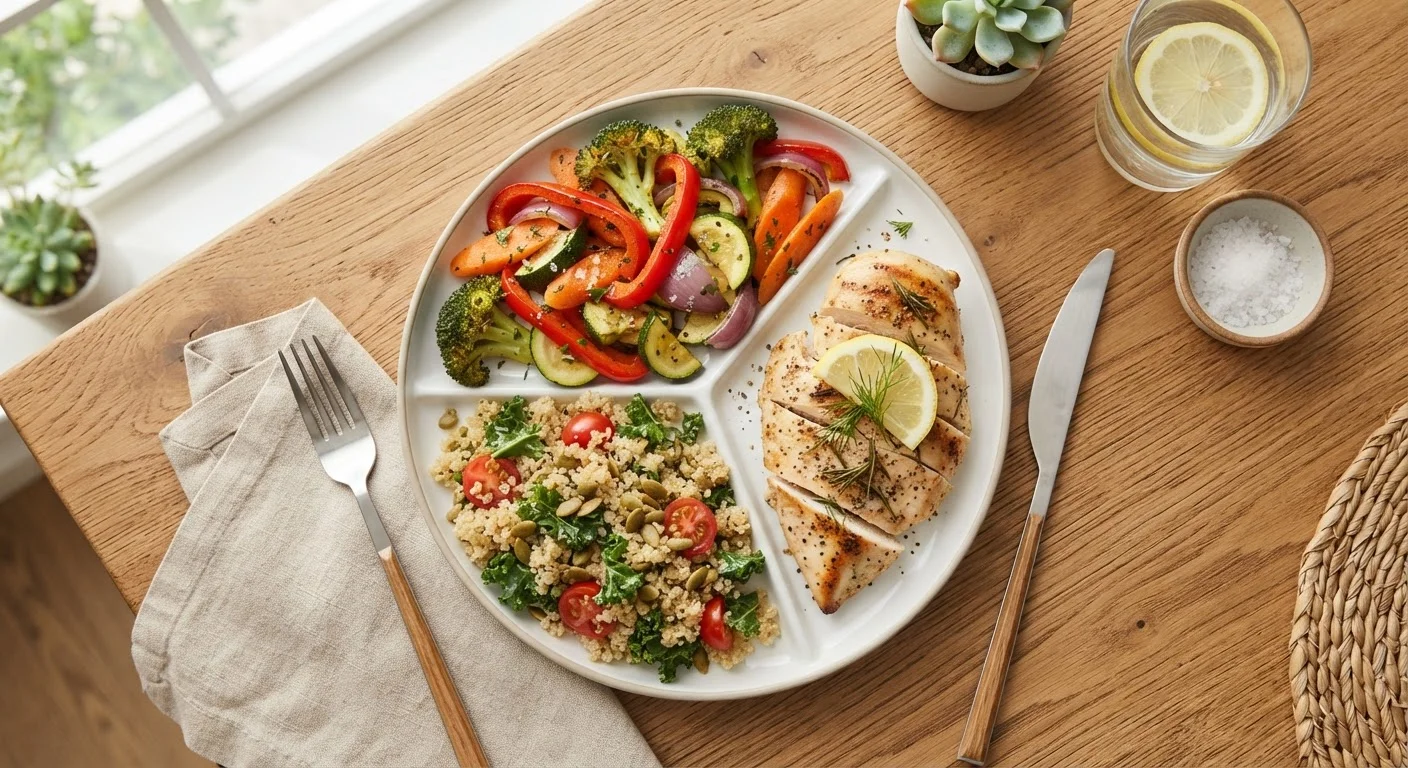
Fill half your plate with vegetables and fruit at most meals.
Vegetables and fruit deliver fiber, vitamins, minerals, and antioxidants that support nearly every body system. Prioritizing them by volume naturally reduces space for calorie-dense, lower-nutrient foods without requiring precise tracking.
Choose whole or minimally processed grains and carbohydrates over refined versions.
Whole grains retain fiber and micronutrients that are stripped during refining. Fiber slows digestion, supports gut health, and contributes to steady energy levels between meals.
Include a quality protein source at every meal.
Protein supports muscle maintenance, satiety, and enzyme function. Spreading protein intake across meals - rather than concentrating it in one - is associated with more effective use by the body, according to nutrition research.
Incorporate healthy fats rather than eliminating fat altogether.
Dietary fat is essential for absorbing fat-soluble vitamins (A, D, E, and K) and supporting brain and cell function. Sources such as avocado, nuts, seeds, and olive oil provide unsaturated fats associated with cardiovascular benefits in multiple large dietary studies.
Vary your food choices across the week, not just within a single meal.
Different plant foods feed different gut bacteria and supply different micronutrients. Eating a wide variety of whole foods over several days builds a more nutritionally complete diet than rotating a narrow set of 'healthy' staples.
Use water and low-calorie beverages as your primary hydration source.
Sweetened drinks - including fruit juices and flavored coffees - add significant sugar and calories without the satiety that solid food provides. Staying well hydrated also supports digestion, cognitive focus, and physical performance.
Quick Actions You Can Take Today
Knowing the principles is one thing - acting on them is another. The following quick wins don't require a pantry overhaul or a new meal plan. Each one can shift the nutritional quality of your meals starting with your next plate.
For a practical look at what these principles look like across seven days of real eating, see a week of balanced eating. If you're cooking for one and managing food waste is a concern, meal planning strategies for solo eaters addresses both portion sizing and variety without overcomplicating your routine.
Putting It All Together
A balanced plate is less about rigid rules and more about proportions, variety, and consistency. No single meal defines your nutritional health - patterns across days and weeks do. Whether you're exploring plant-based eating or simply trying to eat a bit more thoughtfully, these principles give you a repeatable structure to work from.
Flexibility Is Part of a Sustainable Pattern
Rigid adherence to any single meal structure tends to be harder to maintain long-term than a flexible, principle-based approach. Research on dietary adherence suggests that allowing for variation - and not labeling individual meals as failures - supports more consistent eating habits over time. Aim for a pattern you can sustain across weeks and months, not perfection at every single sitting.
Building basic cooking confidence also helps. When you know how to prepare simple, whole-ingredient meals, the principles above become much easier to execute. Cooking basics for home cooks covers the foundational techniques that make balanced eating more accessible and less time-consuming.
This article is for general informational and educational purposes only and is not a substitute for personalized nutrition or medical advice. Consult a qualified healthcare professional or registered dietitian for guidance specific to your health needs.
The content on this site is provided for informational purposes only and should not be considered a substitute for professional advice. While we strive to provide accurate and up-to-date information, we make no guarantees regarding its completeness or accuracy. Always consult a qualified professional for advice specific to your circumstances before making any decisions.