

Our Verdict
Each of the eating patterns reviewed here has genuine research support, but they serve different goals and suit different people. The Mediterranean pattern has the broadest long-term evidence base; plant-forward eating offers flexibility and environmental benefits; low-glycemic approaches are particularly well-studied for blood sugar management. Rather than picking one as definitively superior, the research points toward a consistent theme: whole, minimally processed foods form the foundation of any health-supportive diet.
| Best for | Recommended |
|---|---|
| Those seeking a broadly evidence-backed, sustainable long-term eating style | Mediterranean Pattern |
| Readers interested in reducing animal products while maintaining nutritional adequacy | Plant-Forward Pattern |
| Individuals managing blood sugar levels or carbohydrate sensitivity | Low-Glycemic Pattern |
| Those who prefer structured meal planning with clear weekly variety | Dietary Patterns Hybrid Approach |
Why Eating Patterns Matter More Than Single Foods
Nutrition research has shifted significantly over the past few decades. Rather than focusing on individual nutrients - fat grams, vitamin C milligrams - scientists now study dietary patterns: the overall combination of foods people eat consistently over time. This shift reflects a more realistic picture of how food affects health.
Eating patterns are also easier to evaluate across large populations. Landmark studies like the PREDIMED trial and numerous cohort studies have followed thousands of participants over years, revealing associations between overall dietary habits and outcomes like cardiovascular disease, type 2 diabetes, and longevity. No single food causes or prevents disease, but habitual patterns show measurable signals.
For everyday Americans, this means the most useful question isn't "Is this food good or bad?" but rather "What does my overall pattern look like?" Understanding how different well-studied approaches compare helps you make more informed decisions - without needing to overhaul your life overnight. See how common nutrition myths hold up against the science for related context.
Three Well-Researched Eating Patterns Compared
The following patterns represent three of the most studied dietary approaches in peer-reviewed nutrition science. Each has distinct characteristics, but they share meaningful overlap.
| Mediterranean | Plant-Forward | Low-Glycemic | |
|---|---|---|---|
| Primary food emphasis | Olive oil, fish, vegetables, legumes | Vegetables, legumes, whole grains | Non-starchy veg, legumes, intact grains |
| Animal product inclusion | Moderate (fish, poultry, dairy) | Minimal to none (varies by type) | Flexible - quality over quantity |
| Fat approach | High healthy fat (olive oil, nuts) | Generally lower in saturated fat | Not specifically restricted |
| Carbohydrate focus | Whole grains preferred | Whole grains and legumes emphasized | Low glycemic index foods central |
| Research evidence base | Extensive long-term RCT and cohort data | Strong observational and cohort data | Well-studied for blood sugar outcomes |
| Ease of adoption | Moderate - requires ingredient shift | Variable - flexible versions are easier | Moderate - requires carb awareness |
| Best-studied health outcome | Cardiovascular disease reduction | Chronic disease risk reduction | Blood glucose and insulin regulation |
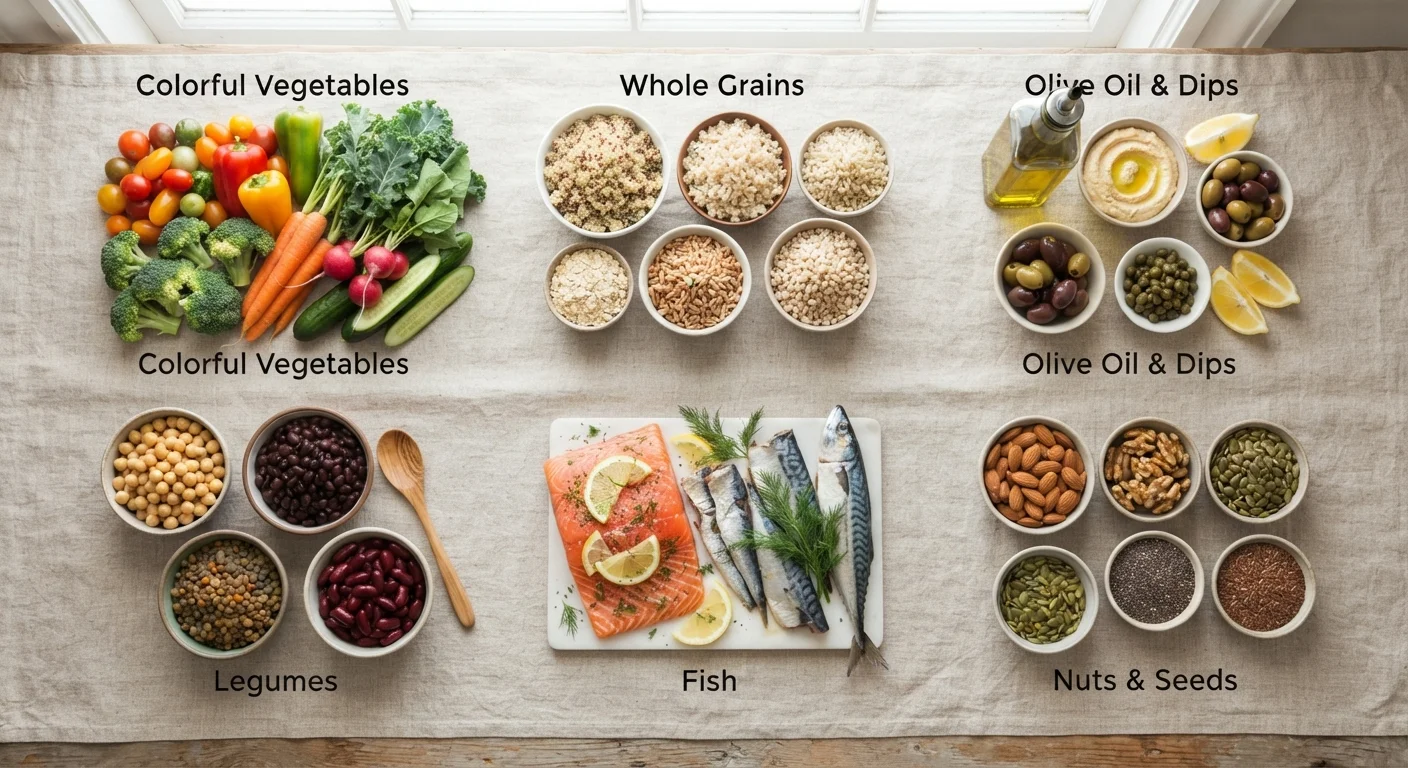
The Mediterranean pattern emphasizes olive oil, fish, legumes, vegetables, whole grains, and moderate amounts of dairy and red wine - with red meat used sparingly. It's associated in large studies with reduced cardiovascular risk and better cognitive outcomes over time.
The plant-forward pattern (which includes vegetarian and flexitarian approaches) centers plant foods while allowing varying degrees of animal products. It's linked to lower rates of certain chronic diseases and tends to be lower in saturated fat. For a deeper look, this practical guide to plant-based eating covers key nutrients and common pitfalls.
The low-glycemic pattern prioritizes foods that produce slower, more stable rises in blood glucose - legumes, non-starchy vegetables, intact whole grains - while limiting refined carbohydrates and added sugars. It's particularly well-studied in the context of blood sugar regulation and insulin sensitivity.
What the Patterns Share - and Where They Differ
Despite different emphases, these three patterns converge on several principles. All de-emphasize ultra-processed foods, refined grains, and added sugars. All encourage generous vegetable intake and adequate dietary fiber. And all have been linked - to varying degrees - with reduced inflammatory markers in clinical research.
Where they diverge is in their approach to animal products, fat sources, and carbohydrate quality. The Mediterranean pattern is notably permissive of healthy fats (olive oil, nuts, fatty fish), while strict plant-forward diets minimize all animal-derived foods. Low-glycemic eating doesn't restrict fat or protein sources per se, but places significant emphasis on carbohydrate quality and portion size.
Start With Overlap, Not Restriction
If you're unsure which pattern to explore, focus first on what these approaches share: more vegetables, more legumes, fewer refined carbohydrates, and less ultra-processed food. Incremental shifts toward these shared principles tend to be more sustainable than attempting a complete overnight overhaul. Small, consistent changes compound meaningfully over months and years.
These differences mean no single pattern fits everyone. Someone managing type 2 diabetes may find low-glycemic principles particularly useful; someone prioritizing heart health may gravitate toward Mediterranean eating; someone reducing their environmental footprint may prefer a plant-forward approach. Evidence-based plate-building principles apply across all of these frameworks.
It's also worth noting that dietary patterns interact with unconscious habits. Common eating behaviors people develop without realizing it - like distracted snacking or skipping meals - can undercut even a well-chosen dietary pattern.
Making Research Work in Real Life
Translating population-level research into personal choices requires some humility. Studies measure associations, not certainties, and individual responses to diet vary based on genetics, gut microbiome composition, medications, activity level, and food access. What works well for one person may not be optimal for another.
A few durable principles hold across the research landscape, regardless of which pattern you explore:
- Prioritize whole, minimally processed foods - see how the whole foods vs. ultra-processed spectrum is defined for useful framing.
- Eat a wide variety of plant foods - diversity in plant intake is associated with greater gut microbiome diversity.
- Consider your protein sources thoughtfully - animal, plant, and mixed protein sources each have distinct nutritional profiles.
- Plan ahead where possible - structured meal planning helps any dietary pattern become sustainable rather than aspirational.
If you have a specific health condition, are pregnant, or are managing a chronic disease, consult a registered dietitian or physician before making significant dietary changes. General nutrition research is educational - it is not a substitute for personalized medical guidance.
This article is for general informational and educational purposes only and does not constitute medical or dietary advice. Always consult a qualified healthcare professional before making significant changes to your diet, especially if you have an existing health condition.
The content on this site is provided for informational purposes only and should not be considered a substitute for professional advice. While we strive to provide accurate and up-to-date information, we make no guarantees regarding its completeness or accuracy. Always consult a qualified professional for advice specific to your circumstances before making any decisions.