

Why Think in Weeks, Not Meals
Most nutrition advice focuses on individual meals - swap the white rice, add a vegetable, cut the sugar. But nutrition science actually supports a broader view: what you eat across a full week matters more than whether any single meal hits a textbook ideal. The body absorbs and uses nutrients over time, not in a one-hour window.
This matters because it removes a lot of unnecessary pressure. A lunch of crackers and cheese on a hectic Tuesday isn't a nutritional failure - it's one data point in 21 or more meals that week. The question is whether the week as a whole delivers a reasonable spread of protein, fiber, vitamins, minerals, and healthy fats.
For a deeper look at how major dietary patterns stack up on these principles, see how research compares major eating patterns. And if you're ready to put this into practice with actual planning, our before-you-start checklist for meal planning is a useful first step.
Think in Range, Not Rules
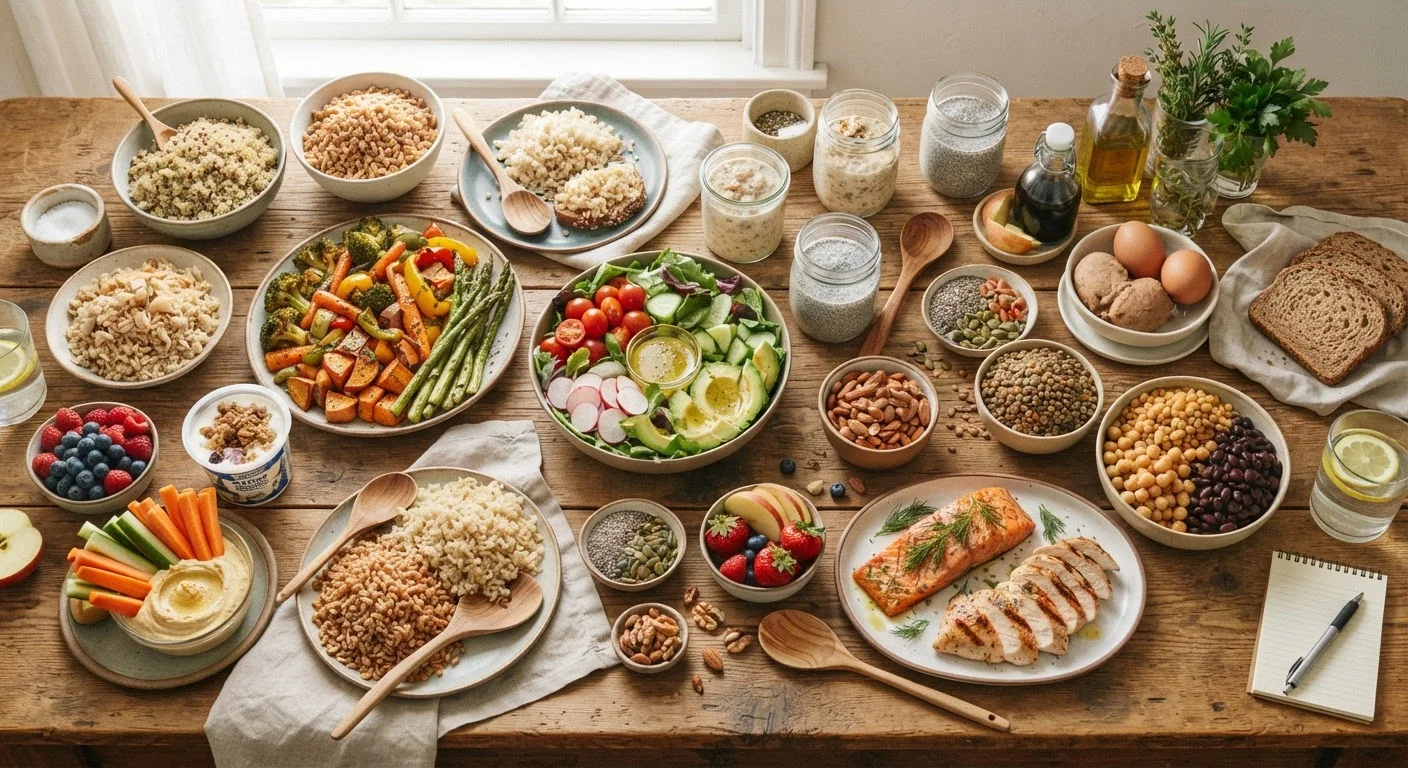
Nutritional variety isn't about hitting a checklist every day - it's about ensuring no major food group goes missing for several days running. A helpful mental model: if you could see the whole week laid out on a table, would there be reasonable color, texture, and protein diversity? That question is more useful than any per-meal calculation.
The Four Nutritional Pillars to Rotate
Rather than tracking every gram, a practical framework is to think about four categories that should appear regularly across your week:
- Protein sources: Vary these. Eggs, legumes, fish, poultry, tofu, and dairy all bring different amino acid profiles and micronutrients. Eating the same protein every day narrows your nutritional range.
- Fiber-rich carbohydrates: Whole grains, beans, lentils, oats, and starchy vegetables provide both soluble and insoluble fiber - supporting digestion and sustained energy. Refined carbohydrates aren't off-limits; they just shouldn't dominate.
- Colorful produce: Different colors in fruits and vegetables correspond to different phytonutrients. Rotating through greens, reds, oranges, purples, and yellows across the week covers more ground than eating the same salad daily.
- Healthy fats: Nuts, seeds, avocado, olive oil, and fatty fish contribute unsaturated fats that support heart and brain health. Small amounts spread across several meals is a reasonable approach.
These pillars don't require a spreadsheet. They're a mental checklist: by Friday, have I hit a reasonable range across each?
What you will need
What a Varied Week Looks Like in Practice
Here's a realistic, non-prescriptive sketch of how variety can unfold naturally across seven days - not a rigid plan, just an illustration of the principle in action.
Monday-Tuesday: Start the week with easy, repeatable meals. Oatmeal with fruit for breakfast covers fiber and a serving of produce. A grain bowl with roasted vegetables and a protein (chickpeas, chicken, or eggs) for lunch. Dinner can be a simple stir-fry built around whatever vegetables are in the fridge.
Wednesday-Thursday: Shift the proteins. If you ate poultry Monday, try fish or legumes mid-week. Swap the grain - if you had brown rice Tuesday, try quinoa or whole-wheat pasta. This is where color variety pays off: add a handful of spinach, roasted red peppers, or shredded purple cabbage to something you'd normally make plain.
Friday-Sunday: Weekends often bring more flexibility or more takeout. Neither is a problem. A restaurant meal can still cover protein and vegetables. Home cooking can get creative - a bean-based soup, a grain salad with nuts and dried fruit, or eggs with sautéed greens covers a lot of nutritional ground efficiently.
The goal isn't symmetry - it's that by Sunday evening, you've rotated through a reasonable range of food groups without forcing it. For practical support turning this kind of thinking into an actual weekly structure, see our weekly meal planning playbook.
Staying Flexible Without Losing the Thread
Life doesn't follow a nutrition template. Schedules shift, leftovers accumulate, and sometimes dinner is cereal. The practical skill isn't rigid adherence - it's noticing patterns and making small course corrections without drama.
If you realize by Thursday that you've had no leafy greens all week, toss a handful of spinach into an omelette or add frozen peas to pasta. If protein has been scarce, a snack of Greek yogurt or a handful of almonds fills a gap without a full meal overhaul.
For households where schedules are unpredictable, flexible strategies for busy weeks offer concrete ways to keep nutrition on track without a fixed plan. The broader meal planning hub also covers shopping, prep, and storage so the practical side stays manageable.
Variety Doesn't Mean Quantity
Adding more food groups to your week doesn't mean eating larger portions or more calories overall. The goal is substitution and rotation, not addition. If you're managing a specific health condition, working with weight, or have dietary restrictions, speak with a registered dietitian before making changes to your eating habits.
This article is for general informational and educational purposes only and is not a substitute for personalized advice from a registered dietitian or other qualified healthcare professional. Individual nutritional needs vary based on age, health status, and other factors. Please consult a professional for guidance tailored to your situation.
The content on this site is provided for informational purposes only and should not be considered a substitute for professional advice. While we strive to provide accurate and up-to-date information, we make no guarantees regarding its completeness or accuracy. Always consult a qualified professional for advice specific to your circumstances before making any decisions.