

Why Small Projects Make a Big Difference
Most homeowners assume that adding real value to a home requires a gut renovation or a significant contractor bill. In reality, some of the most effective improvements are modest in scope but substantial in impact - the kind you can plan on Friday and finish by Sunday afternoon.
These projects tend to target three things buyers and appraisers actually notice: maintenance signals (a well-kept home), energy performance, and visual appeal. When tackled thoughtfully, they also make daily living more comfortable right now.
If you're new to home improvement, our step-by-step guide for first-timers covers the planning and safety fundamentals worth reviewing before you pick up a tool. And if you're weighing whether to hire out any of these tasks, understanding the real trade-offs between DIY and contractors can sharpen that decision.
Refresh Caulking Around Windows and Doors
Deteriorated caulk is one of the most overlooked maintenance issues in American homes. Gaps and cracks around window frames and exterior door casings allow conditioned air to escape and moisture to enter - both of which quietly cost money over time.
Re-caulking requires no special skills: scrape out old material with a putty knife or caulk remover tool, clean the surface thoroughly, and apply a fresh bead of paintable or silicone-based exterior caulk. Smooth it with a damp finger and let it cure per the manufacturer's instructions. The whole process for an average home typically takes less than a day.
Beyond energy efficiency, fresh caulk signals to buyers that a home has been actively maintained - something inspectors and appraisers notice.
Fresh caulk signals active maintenance and quietly improves energy performance at the same time.
Install or Replace Weatherstripping on Exterior Doors
If you can feel a draft or see daylight around a closed exterior door, the weatherstripping has failed. Replacing it is one of the fastest comfort improvements a homeowner can make - and it directly reduces heating and cooling loss.
Most exterior door weatherstripping is either adhesive-backed foam tape or more durable V-strip (tension seal) material, both widely available at hardware stores. The door sweep at the bottom is equally important and straightforward to swap out. A well-sealed door also reduces noise and pest entry.
This project typically takes two to three hours per door and requires only basic tools: scissors, a utility knife, and sometimes a screwdriver.
A properly sealed exterior door reduces energy loss and is one of the easiest weekend wins available.
Paint or Refinish Your Front Door
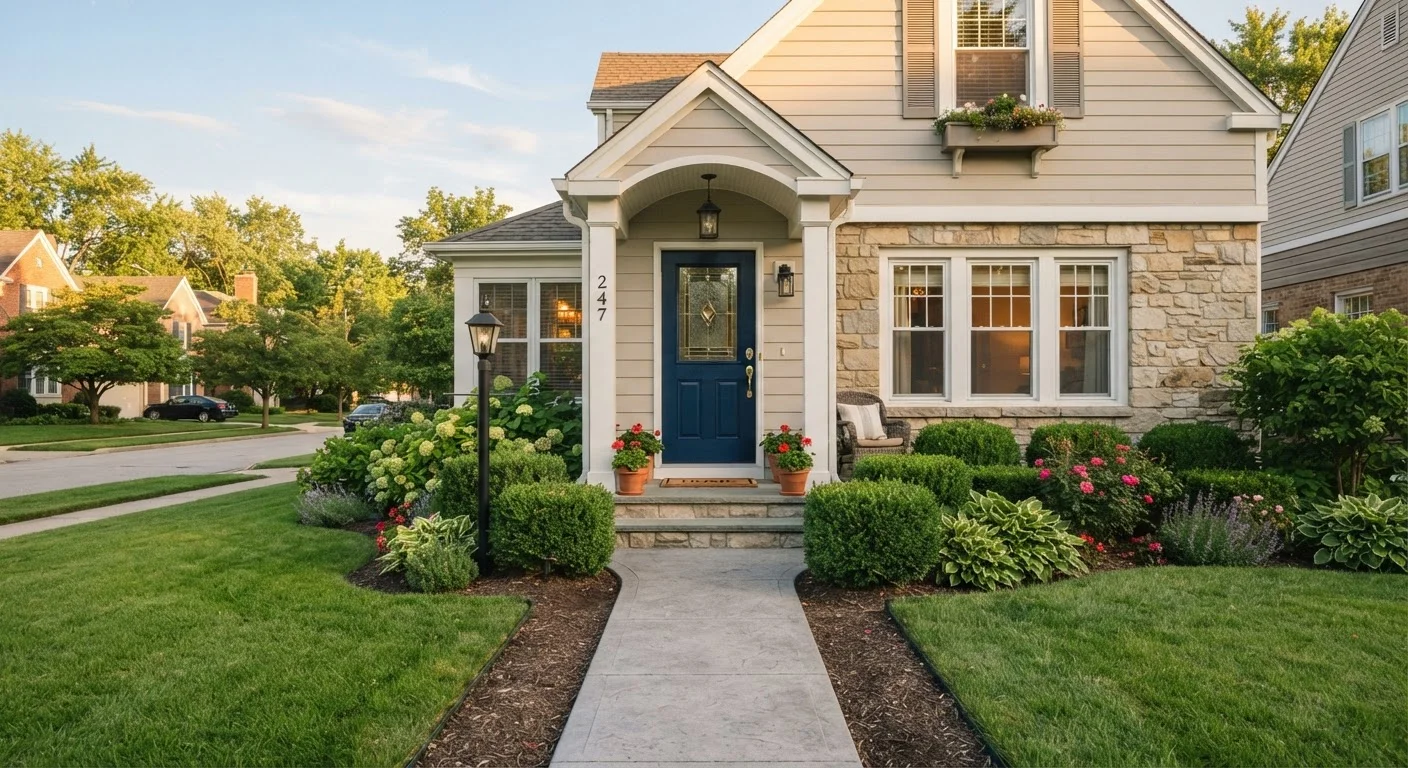
Curb appeal influences first impressions - of guests and prospective buyers alike. A front door in poor condition can undercut an otherwise well-maintained exterior, while a freshly painted one adds disproportionate visual appeal relative to the cost and effort involved.
Remove the door hardware before painting, sand lightly to ensure adhesion, and apply an exterior-grade paint or stain formulated for the door material (wood, fiberglass, or steel behave differently). Two thin coats generally produce better results than one thick one.
Color matters too: deep, saturated tones like navy, forest green, or classic black tend to photograph well and stand up to changing trends better than highly specific fashion colors.
A freshly painted front door delivers visual impact that far outpaces its modest time and material cost.
Clean and Inspect Gutters and Downspouts
Clogged or damaged gutters rank among the most common contributors to preventable home damage. When gutters fail to direct water away from the foundation, the results can include basement moisture, erosion, and fascia rot - all significantly more expensive to address than the maintenance itself.
A thorough gutter cleaning typically takes half a day and requires a stable ladder, gloves, a garden hose, and a bucket. While you're up there, check for loose fasteners, sagging sections, and whether downspouts discharge water at least a few feet from the foundation. Downspout extensions are inexpensive and easy to add.
For more on caring for your home's exterior structures, see our upkeep reference for decks, fences, and wood structures.
Keeping gutters clear and functional is one of the most cost-effective ways to prevent serious water damage.
Pressure-Wash Exterior Surfaces
Algae, mildew, and grime accumulation on driveways, walkways, siding, and decks aren't just cosmetic concerns - they can accelerate surface deterioration if left unaddressed. A pressure washing session can restore the appearance of these surfaces dramatically and signal strong upkeep to anyone visiting or evaluating the property.
That said, pressure washing isn't without risk. Using too much pressure on softer materials like wood siding or older painted surfaces can cause more harm than good. Understanding which surfaces tolerate higher pressure and which require a gentler touch is important before you start. Our detailed guide on what works and what doesn't when pressure-washing your exterior walks through the key distinctions.
Pressure washing restores curb appeal quickly, but matching pressure settings to surface type prevents costly damage.
Upgrade Lighting Fixtures in Key Rooms
Dated or inadequate lighting is one of the most commonly cited complaints in home walkthroughs. Swapping out an old fixture for a more modern option changes the feel of a room immediately and is a task most homeowners can handle confidently after turning off power at the breaker and following the fixture's installation instructions.
Focus first on high-traffic or high-visibility spaces: the entryway, kitchen, and primary bathroom tend to have the most impact. Look for fixtures that are appropriately scaled to the room - an undersized fixture in a large room reads as an afterthought, while an oversized one can feel overwhelming in a tight space.
Important: Any work involving your home's electrical wiring beyond a simple fixture swap - such as adding new circuits, moving junction boxes, or wiring that requires opening walls - should be evaluated by a licensed electrician. Always verify local code requirements before proceeding.
Updating lighting in key rooms is one of the fastest ways to modernize a home's interior feel.
Making the Most of Your Effort
The projects above share a common thread: they're achievable in a weekend, they address real functional or aesthetic needs, and they tend to hold up over time when done carefully. The key is finishing each one properly rather than rushing through several halfway.
Finish One Project Fully Before Starting Another
The most common weekend project mistake is spreading effort across too many jobs at once. A half-painted door or partially re-caulked window is worse than neither - it signals incomplete work to any future buyer and leaves the home more exposed in the interim. Pick the highest-priority project, complete it properly, then move to the next.
For a broader picture of how these weekend wins fit into your home's overall upkeep, the complete homeowner's maintenance overview is an excellent reference to keep on hand. And for anything that starts to feel beyond your comfort zone, knowing where the DIY line actually falls is a skill in itself.
The content on this site is provided for informational purposes only and should not be considered a substitute for professional advice. While we strive to provide accurate and up-to-date information, we make no guarantees regarding its completeness or accuracy. Always consult a qualified professional for advice specific to your circumstances before making any decisions.