

Our Verdict
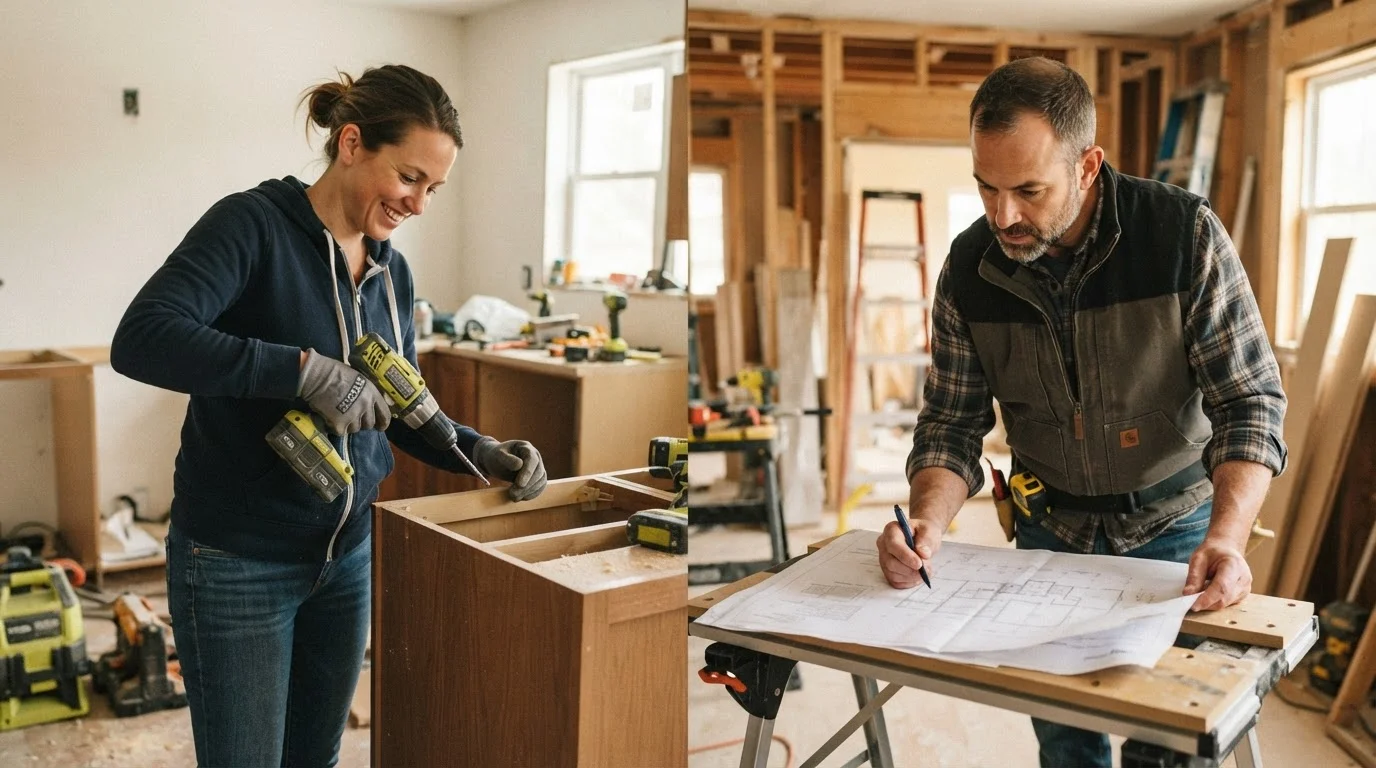
Neither DIY nor hiring a contractor is universally the right call - the best choice depends on the specific project, your skill set, and what's at stake if something goes wrong. For cosmetic upgrades and low-risk improvements, a prepared homeowner can do excellent work and build lasting confidence. For anything involving hazardous systems or code compliance, a licensed professional is worth every dollar.
| Best for | Recommended |
|---|---|
| Homeowners with basic tool experience tackling cosmetic or low-risk upgrades | DIY |
| Projects involving electrical, structural, plumbing, or roofing work | Hiring a Contractor |
| First-time homeowners building skills gradually with manageable projects | DIY |
| Anyone facing tight timelines, permit requirements, or unfamiliar systems | Hiring a Contractor |
Why This Decision Is Harder Than It Looks
Every homeowner eventually faces the question: should I handle this myself, or bring in a professional? The answer rarely comes down to a single factor. Cost matters, but so does safety, time, local code compliance, and your own honest assessment of your skill level.
The stakes vary enormously by project type. Repainting a bedroom and replacing a subfloor are both "home improvement" tasks - but they require completely different levels of expertise. Making a thoughtful, informed call starts with understanding the real trade-offs on both sides. For a deeper look at scoping a project from the beginning, see our first-time home improvement guide.
Where DIY Genuinely Makes Sense
A wide range of home projects are well within reach for the average homeowner who is willing to research the task, gather the right tools, and proceed methodically. Cosmetic work - painting, installing peel-and-stick tile, replacing cabinet hardware, patching drywall, caulking, and basic landscaping - generally involves low risk and forgiving learning curves.
Mid-complexity projects like installing a ceiling fan (in an existing junction box), assembling flat-pack furniture, laying floating flooring, or refreshing weatherstripping can also be handled confidently with preparation. The financial upside is real: labor often represents 40-60% of a contractor's total invoice, so doing the work yourself can be meaningful savings on the right project.
Start Small to Build Real Confidence
If you're newer to home improvement, choose a first project where a mistake is recoverable - painting, caulking, or installing a simple fixture. Completing one task successfully teaches you far more than researching ten. Document your process, keep your receipts, and note what took longer than expected. That knowledge compounds with every project you take on.
That said, honest self-assessment matters. Underestimating a project's complexity is among the most common and costly DIY mistakes. If a task requires specialized tools you'd only use once, or skills that take years to develop, the math often shifts. Our article on weekend projects that add real home value highlights upgrades that tend to be approachable and impactful.
When a Licensed Professional Is the Right Call
Some work should not be attempted as a DIY project regardless of enthusiasm or YouTube tutorials. Electrical panel work, gas line modifications, load-bearing structural changes, roof replacement, and main plumbing connections typically require permits, licensed trades, and inspections - for very good reason. Errors in these systems can cause fire, flooding, collapse, or toxic exposure.
Beyond safety, unpermitted work can create serious complications when you sell your home, file an insurance claim, or undergo a municipal inspection. Always verify local permit requirements before starting any substantial project. If you're unsure where the line falls, understanding which repairs genuinely require a pro is a useful reference.
| DIY | Hiring a Contractor | |
|---|---|---|
| Upfront cost | Lower (labor savings) | Higher (labor included) |
| Skill requirement | Varies; research needed | Handled by licensed professional |
| Time investment | Often significant | Managed by contractor |
| Safety risk | Higher for complex work | Lower with licensed trades |
| Permit & code compliance | Homeowner's responsibility | Typically managed by contractor |
| Quality control | Depends on homeowner skill | Backed by experience & warranty |
| Best project types | Cosmetic, low-risk upgrades | Electrical, structural, plumbing, roofing |
When hiring, get at least three written quotes, ask for license and insurance verification, and request references from comparable recent jobs. Understanding the scope of work before you compare bids is essential - otherwise you may be comparing very different things.
The Hidden Costs on Both Sides
DIY costs are easy to underestimate. Tool purchases, material waste from beginner errors, and the real value of your time all add up. A task that costs $300 in materials might take an inexperienced homeowner 20+ hours to complete - time that has its own value.
Contractor costs, meanwhile, can be managed more effectively with preparation. Understanding what's included in a quote, knowing when the project scope is likely to expand, and asking the right questions upfront reduces unwelcome surprises. Both paths carry financial risk; the key is knowing which risks you're better positioned to manage. This same logic applies across other types of decisions - much like weighing DIY versus professional car maintenance, context determines the smarter move.
Building Confidence Over Time
One of the most underrated benefits of taking on appropriate DIY projects is the cumulative knowledge and confidence they build. Homeowners who start with low-stakes tasks - swapping a faucet fixture, refreshing grout, installing a programmable thermostat - develop an intuition for how their home works. That foundation makes future decisions, including when to call a contractor, sharper and more informed.
The goal isn't to DIY everything - it's to make each decision with clear eyes. A skilled contractor is a genuine asset when the project warrants one. And a prepared, informed homeowner is equally capable of handling a meaningful range of improvements with excellent results.
The content on this site is provided for informational purposes only and should not be considered a substitute for professional advice. While we strive to provide accurate and up-to-date information, we make no guarantees regarding its completeness or accuracy. Always consult a qualified professional for advice specific to your circumstances before making any decisions.