

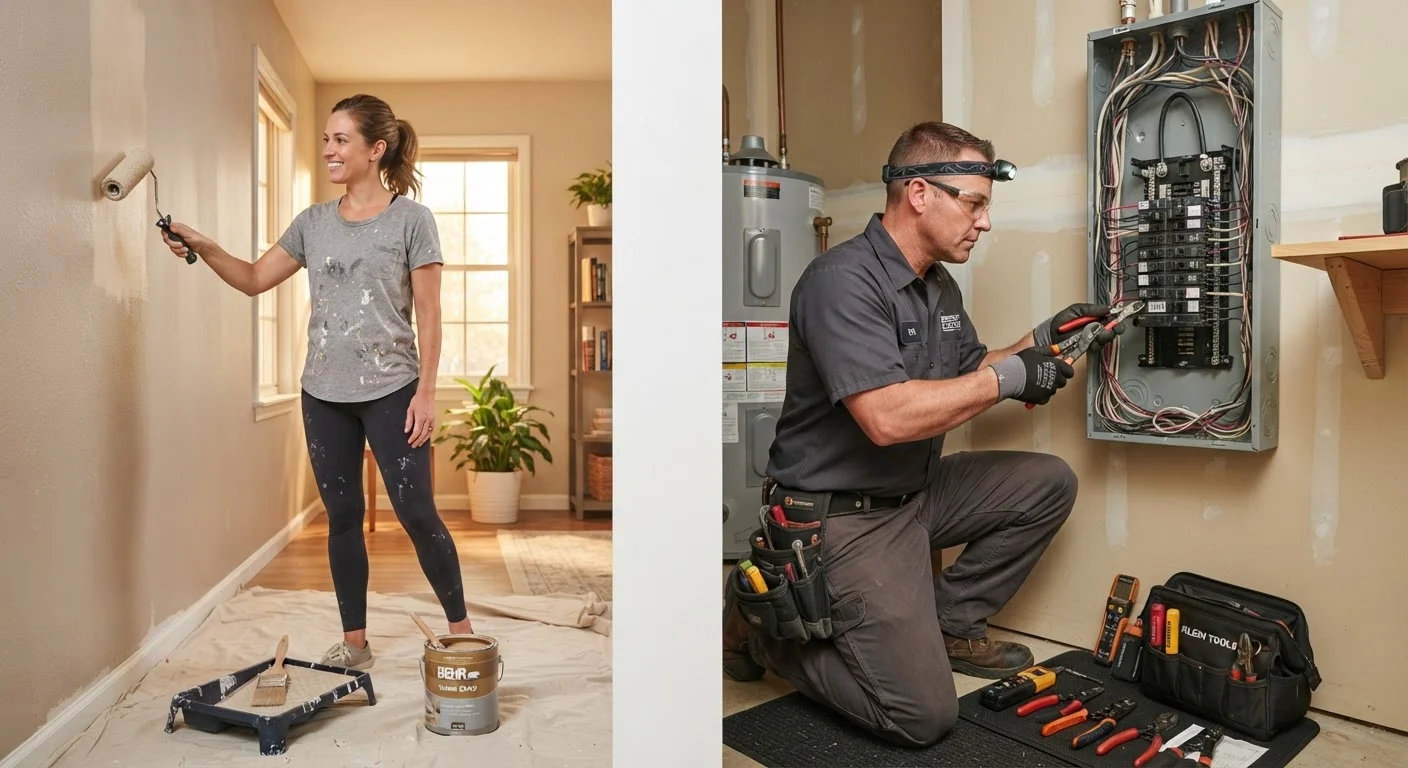
Why the DIY vs. Pro Decision Matters More Than You Think
Every homeowner eventually faces the same fork in the road: call a professional or handle it yourself? The decision affects your wallet, your schedule, your safety, and potentially your home's resale value. Unfortunately, a lot of conventional wisdom circulating online - and in casual conversation - gets this decision wrong in both directions.
Some homeowners avoid DIY out of unnecessary fear, spending money on jobs well within their abilities. Others tackle genuinely hazardous work with overconfidence, creating problems far costlier than the original repair. Understanding where the real line falls puts you in a much stronger position as a homeowner.
For a broader look at how to weigh these decisions across specific project types, see our guide on the real trade-offs between DIY and hiring a contractor.
Myth
If I can find a tutorial online, I can safely do any home repair myself.
Fact
Online tutorials vary wildly in accuracy and rarely account for local codes, older home conditions, or the skill required to execute safely.
Video tutorials are useful for learning concepts and low-stakes tasks like patching drywall or replacing a faucet. But they compress complex work into digestible clips, often skipping critical safety steps, permit requirements, or the judgment calls that come with experience. A tutorial filmed in one state may reflect codes completely different from yours. Use online resources as a supplement to - not a substitute for - professional guidance on complex or hazardous work.
Myth
Hiring a professional always costs more than doing it yourself.
Fact
DIY has real hidden costs - tools, materials, time, and the expense of correcting mistakes - that frequently exceed a professional quote.
The sticker shock of a contractor's estimate is real, but it often reflects labor, expertise, liability insurance, and warranty coverage that DIY simply doesn't include. A botched plumbing repair, for example, can lead to water damage that dwarfs the original job cost. Factor in tool purchases if you don't already own them, the value of your time, and the realistic possibility of error before concluding that DIY is cheaper.
Myth
Electrical work is only dangerous if you forget to turn off the breaker.
Fact
Household electrical systems carry risks - including arc faults, improper grounding, and code violations - that persist long after the power is switched off.
Turning off the correct breaker is necessary but far from sufficient. Improper wiring can create fire hazards that don't manifest for months or years, and errors in grounding or load calculations can damage appliances or cause shocks. Most jurisdictions require licensed electricians for panel work, new circuits, and service upgrades - and for good reason. Electrical DIY should generally be limited to tasks like replacing a like-for-like outlet or light switch, and only when you are confident in your understanding of the system.
Myth
Unpermitted work only matters if you plan to sell the house.
Fact
Unpermitted work can void your homeowner's insurance coverage for related claims and may create safety risks regardless of when you plan to sell.
Insurance policies typically include provisions that can reduce or deny claims for damage traceable to unpermitted modifications. If an unpermitted electrical circuit causes a fire, an insurer may argue reduced liability. Beyond insurance, unpermitted structural or mechanical work may simply be unsafe - permits exist precisely because inspections catch errors before they become hazards. The sale issue is real too, but it's far from the only reason permits matter.
Myth
Any repair that looks cosmetic is safe to DIY.
Fact
Some cosmetic repairs mask or interact with underlying systems - plumbing, wiring, or structure - that require professional assessment.
Replacing a water-stained ceiling tile looks cosmetic, but the stain signals an active leak that needs a plumber or roofer. Painting over peeling exterior trim seems simple until you discover rotted sheathing underneath. Before treating something as purely cosmetic, check whether it's a symptom of something deeper. When in doubt, get a professional assessment of the cause before proceeding with the surface fix.
Where Permits, Safety, and Liability Actually Come In
One of the most misunderstood aspects of home repair is the permit system. Permits exist to ensure that work affecting the structure, electrical system, plumbing, or gas lines of a home meets minimum safety standards - protecting both occupants and future buyers.
Skipping Permits Can Have Lasting Consequences
Completing regulated work without the required permits isn't just a technical violation - it can create complications when refinancing, selling, or filing an insurance claim. Some jurisdictions require that unpermitted work be removed or brought up to current code at the homeowner's expense. Always verify permit requirements with your local building or planning department before starting any significant project.
Work that typically requires permits includes electrical panel upgrades, additions, window replacements in some jurisdictions, structural wall removal, and HVAC installations. Requirements vary significantly by municipality, so always verify with your local building department before starting a project. Our article on home improvement permits covers this in plain language.
On the structural side, one of the most dangerous DIY mistakes involves walls. Before removing or modifying any wall, it's critical to understand whether it bears structural load. Our guide on understanding load-bearing walls explains how to identify them and why the stakes are high.
For homeowners ready to explore low-risk, high-reward weekend projects, our roundup of projects that add long-term value is a practical starting point.
Never DIY Gas Line Work
Gas line installation, repair, and modification must always be performed by a licensed professional. Gas leaks are invisible, can accumulate rapidly, and present serious explosion and carbon monoxide risks. No cost savings justify attempting gas line work without proper licensing and equipment. If you suspect a gas leak, leave the building immediately and contact your utility provider and emergency services.
The content on this site is provided for informational purposes only and should not be considered a substitute for professional advice. While we strive to provide accurate and up-to-date information, we make no guarantees regarding its completeness or accuracy. Always consult a qualified professional for advice specific to your circumstances before making any decisions.